Last verified: August 13, 2026. Entry rules are the fastest-moving facts on this site: visa-free lists, e-visa eligibility and the 90-day arithmetic all change by decree. I re-read the Moroccan foreign ministry and consulate pages behind every rule here, and update the date above each time.
The morocco visa requirements are simpler than most pages make them look, and the pages that make them look complicated are usually selling something: visa agencies, tour operators and third-party “processing” services that profit when the rules seem harder than they are. The actual rules fit on one page. This is that page, and every rule on it traces to an official source.
Disclosure: Some links in this guide may earn us a commission, at no extra cost to you. It never changes what we recommend.
One thing before the details: if a website offers to “process” your Morocco visa for a fee, close the tab. Visa-exempt travellers need nothing at all, and everyone else applies directly on the government’s own portal. The middlemen sell you back your own paperwork with a markup.
Key Takeaways
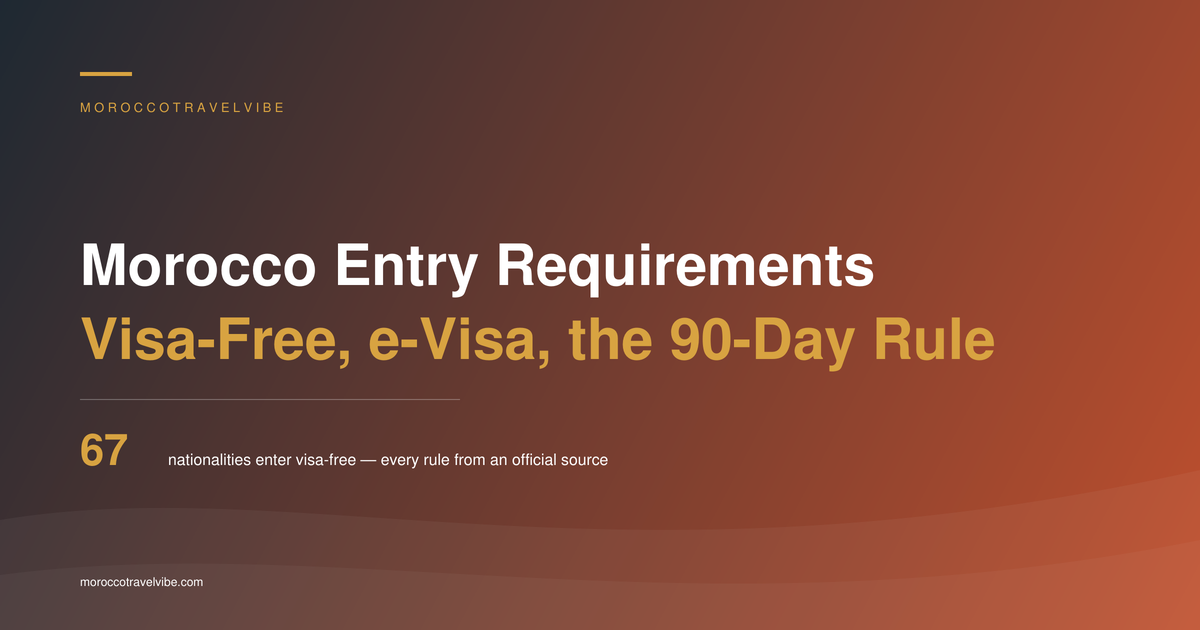
- The morocco visa requirements are simple for most readers: citizens of 67 countries and territories enter visa-free, most for 90 days. The US, UK, all of the EU and Schengen, Canada and Australia are all on the list
- A few exemptions are shorter: 60 days for the Dominican Republic, 30 for Hong Kong, Kazakhstan and the Maldives
- Everyone else applies through Morocco’s official e-Visa (launched July 2022) or a consular visa. Never through third-party “e-visa” sites
- Your passport needs to outlive your trip: the UK’s FCDO requires an expiry date at least 3 months after arrival
- The Morocco visa requirements include no digital nomad visa. The 90-day visa-free entry is the mechanism, and extensions run through a Moroccan police station
Table of Contents
Do you need a visa for Morocco?
Most likely not. As of August 2026, citizens of 67 countries and territories enter Morocco without a visa, per the kingdom’s consolidated visa policy. The list includes the United States, the United Kingdom, every EU and Schengen state, Canada, Australia, New Zealand, Japan and most of Latin America. The standard stay is 90 days. If your country isn’t exempt, you’ll use the e-Visa or a consular visa.
Not sure which branch you’re on? The Moroccan government runs an official eligibility checker at acces-maroc.ma: nationality, residence, passport type, and it tells you. Two minutes, no account, no fee.
Who enters Morocco visa-free in 2026?
As of 2026, Morocco’s visa-exemption list covers 67 countries and territories, and most of them get 90 days per stay: all 27 EU states plus the rest of Schengen, the UK, the US, Canada, Australia, New Zealand, Japan, the Gulf states, and most of Latin America. That covers the overwhelming majority of people reading this page.
The detail most guides skip: not every exemption is 90 days. The Dominican Republic gets 60. Hong Kong, Kazakhstan and the Maldives get 30. Small print, but if it’s your passport, it’s the only print that matters.
| Passport group | Visa-free stay |
|---|---|
| Most of the 67 (US, UK, EU/Schengen, Canada, Australia, Japan…) | 90 days |
| Dominican Republic | 60 days |
| Hong Kong, Kazakhstan, Maldives | 30 days |
| e-Visa and consular-visa holders | Stay length granted with the visa, shown at application |
The full country-by-country list lives on the consular portal, and the complete Morocco trip planning guide covers what to sort out once you know you’re in.
The Morocco e-Visa: who it’s for, and how to skip the middlemen
Morocco launched its official e-Visa on 10 July 2022, and it works two ways. Category A: citizens of a short list of countries can apply outright: India, Thailand, Israel, Jordan, Vietnam, Cambodia, Laos, Brunei, Benin and Guatemala. Category B: citizens of any country who hold a valid visa from the Schengen area, the US, UK, Ireland, Canada, Australia, New Zealand, Japan or Norway. That list comes from the official checker’s own form (acces-maroc.ma, retrieved 12 August 2026). It differs from what aggregators publish, which is the point of checking.
Here’s what we won’t print: a fee. Every dollar figure circulating for the Morocco e-Visa comes from third-party mills, not from the government, and the mills stack a “service charge” on whatever the real number is. Apply on the official portal, reached via acces-maroc.ma, and the current government fee shows before you pay it. The mills outrank the state on Google, which is exactly why this paragraph exists.
Is that inconvenient when you just want a number? Slightly. It’s also the difference between this page and the ones that made one up.
What do the morocco visa requirements mean at the border?
Less than the blogs claim. Three things get checked: your passport, your stamp, and occasionally your story.
Passport validity. The internet’s favourite “6 months beyond your stay” rule isn’t what the UK government publishes. In its Morocco entry requirements, current as of August 2026, the FCDO requires an expiry date at least 3 months after the date you arrive (GOV.UK, retrieved 12 August 2026). Other governments phrase it differently, and airline check-in desks enforce the strictest reading they know. So six months is comfortable practice, but three is the codified UK rule.
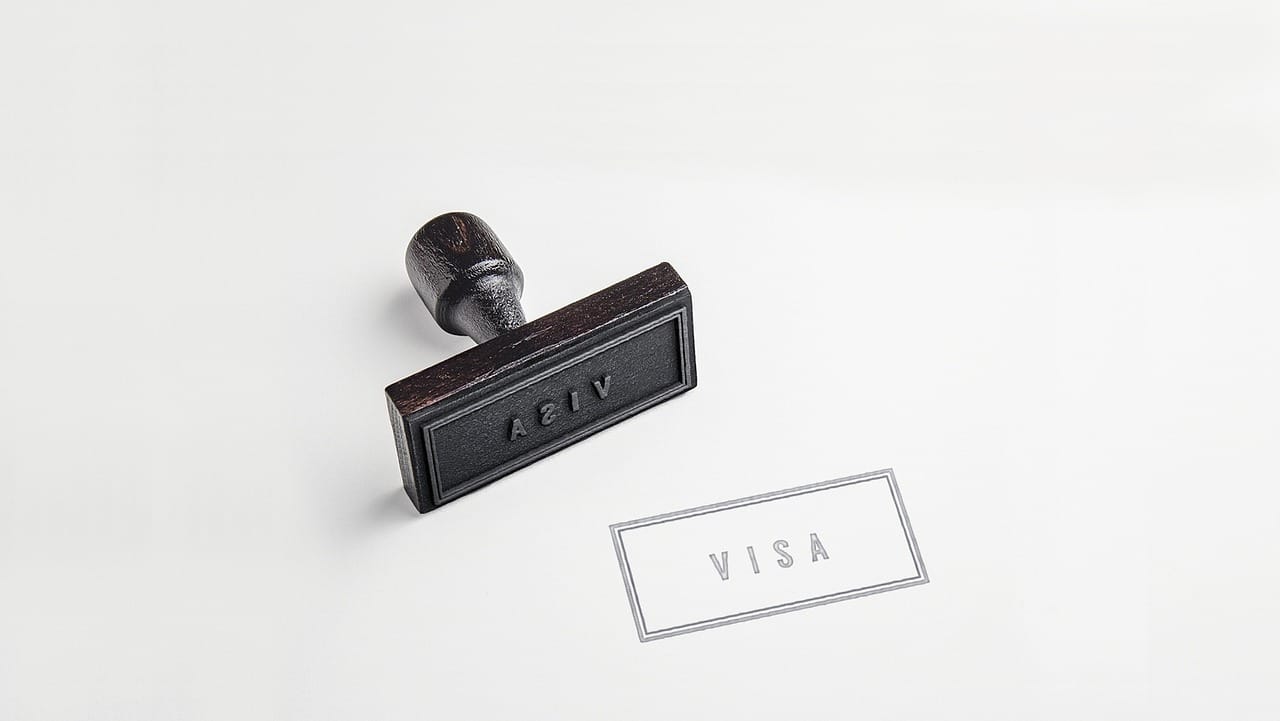
The entry stamp. The FCDO’s Morocco guidance carries a warning most packing lists skip: make sure the border official stamps your passport, because travellers without an entry stamp have had difficulty leaving Morocco. Check the stamp before you walk away from the booth. The date on it starts your 90 days, and it’s the first thing anyone official checks on your way out.
Proof of purpose. Accommodation bookings or an onward ticket can be requested. For most tourists they never are, but “can be” is the rule; keep your riad confirmation reachable.
The 90-day rule, extensions and overstays
You get 90 days per stay. Morocco’s own foreign ministry limits a tourist stay to three months and describes no Schengen-style rolling window, and neither does the FCDO. French consular guidance for residents in Morocco is the one official source that frames it as three months in any six. What governs repeat visits is border discretion, which is a different thing. Pretending it’s a codified formula is how blogs get people confidently misinformed.
Want to stay past 90 days legally? The FCDO’s instruction is one line: request an extension at a Moroccan police station. In practice that means the prefecture in the city where you’re staying, documents in hand, and a decision that is theirs to make, not yours to assume.
The Morocco visa requirements, entry, stay and overstay alike, are all governed by Loi 02-03, promulgated by Dahir n° 1-03-196 of 11 November 2003 and catalogued internationally in the ILO NATLEX database. Overstaying is the expensive version: expect a fine at exit, possible referral to a court date, and a harder conversation at your next entry. The full mechanics are their own page: extensions, visa runs, and what actually happens at the desk.
No, Morocco has no digital nomad visa
Morocco has no digital nomad visa in 2026. The pages advertising one are describing a product that does not exist. The real mechanism is the one this page already covered: 90-day visa-free entry for 67 nationalities, extendable by authorisation from the DGSN. That’s it. That’s the “nomad visa.”
Planning a longer stay around the 90-day boundary? For remote work, wintering or a slow loop down the coast, the long-stay guide is where the details live. If the plan is to stay properly rather than repeatedly re-enter, that runs through the carte d’immatriculation, a separate application made at the prefecture rather than anything you arrange at the border.
What changes before 2030
Morocco’s entry system is mid-upgrade, and the direction is more digital, checked earlier. The AEVM is an electronic travel authorisation for otherwise visa-exempt travellers. It currently applies to citizens of four countries: the Republic of the Congo, Ecuador, Ghana and Guinea. Official plans extend it to every visa-exempt nationality in time. If that lands before your trip, “visa-free” will still mean visa-free. You will just add a form before you fly, ESTA-style.
The driver is 2030: a World Cup on Moroccan soil, record arrivals every year since 2024, and airports being rebuilt to match. Entry systems, airports and the new high-speed rail are all tracked in our Morocco 2030 hub, including what it changes for ordinary trips.
Common questions
Do US citizens need a visa for Morocco?
No. As of 2026, US citizens enter Morocco visa-free for up to 90 days per stay under the kingdom’s visa-exemption list. You need a passport that outlasts your trip, an entry stamp at the border, and nothing else in advance. Check your specific case on the official acces-maroc.ma checker.
Do UK citizens need a visa for Morocco?
No. British citizens get 90 visa-free days, and the FCDO’s Morocco entry requirements (retrieved August 2026) ask for a passport expiry date at least 3 months after arrival. Blogs repeat 6 months, which is not the rule. The FCDO’s one hard warning: make sure you get an entry stamp.
How much does the Morocco e-Visa cost?
The honest answer: the official portal shows the current government fee when you apply, and no figure you’ll find on a third-party “Morocco e-visa” site should be trusted: those sites add service markups to the state fee. Apply only via the official portal, reached through acces-maroc.ma.
How long can you stay in Morocco without a visa?
90 days per stay for most of the 67 exempt nationalities, with shorter windows for a few (60 days for the Dominican Republic; 30 for Hong Kong, Kazakhstan and the Maldives). Staying longer means requesting an extension at a Moroccan police station before your 90 days run out.
Does your passport need six months’ validity for Morocco?
Not under the UK’s published rule. The FCDO requires an expiry date at least 3 months after you arrive (retrieved August 2026). Six months is still the comfortable choice, because airlines enforce the strictest version they know at check-in. But it’s practice, not the codified requirement.
What happens if you overstay in Morocco?
Expect a fine settled at exit, the possibility of a court referral, and questions at your next entry. Morocco publishes no forgiving grace period, and the entry stamp in your passport is the evidence everything gets measured against. The extension route through the police prefecture is cheaper in every sense.
The short version
The morocco visa requirements, minus the middlemen:
- The Morocco visa requirements exempt 67 nationalities: most for 90 days, a few for 60 or 30. The US, UK, EU, Canada and Australia are all on the list.
- Everyone else uses the official e-Visa or an embassy. Never a third-party “processing” site. They resell the government’s own form with a markup.
- Passport: expiry at least 3 months after arrival under the UK’s published rule; six months is comfortable practice. Get the entry stamp, and check it at the booth.
- No 90/180 rolling window appears in Morocco’s own guidance, and no digital nomad visa exists at all. Ninety days, extendable by authorisation from the DGSN, is the whole system.
Rules sorted? Then the actual planning starts with the complete Morocco trip planning guide, the honest read on safety if that’s your open question, and everything in this category at Trip Planning.
If a rule on this page no longer matches what an official source says, or what a border officer told you, tell us what and when. A dated correction from a reader beats a confident guess from anyone.
Entry rules on this page were verified against official sources on 13 August 2026. Rules pages are on a 30-day re-verification cycle; next due 12 September 2026.