Last verified: August 19, 2026. Overstay penalties and the extension procedure are set by decree and enforced unevenly, so this is a page where a stale line has real consequences. I re-read the foreign ministry and consulate guidance behind every rule here, and update the date above each time.
Morocco’s own foreign ministry says a tourist stay is limited to three months, and it names the office that can extend it. The French Embassy in Morocco tells its residents something stricter. Both statements are official, and only one of them is Morocco’s.
Disclosure: Some links in this guide may earn us a commission, at no extra cost to you. It never changes what we recommend.
This page is for people who want to stay visitors. Arriving is its own guide, and becoming resident is a separate legal track altogether. What follows is the third case, the one people fall into by accident: your 90 days are running out and you would like to still be here next month.
Three routes exist. Ask for more time, leave and come back, or stay past the date and deal with it later. Here is what each involves, with the source of every number attached.
Key Takeaways
- The Morocco 90-day rule is three months per stay, per Morocco’s foreign ministry, which states no six-month window. French consular guidance for residents does state one
- Extensions are official: Morocco’s foreign ministry requires authorisation from the DGSN, the national police. No source publishes the deadline, the documents or the length granted
- Overstaying is Article 42 of Loi 02-03: 2,000 to 20,000 dirhams and one to six months, doubled on a repeat
- Living here without a card is Article 43, and it is heavier: 5,000 to 30,000 dirhams and up to a year
- Leaving and returning is border discretion, and the Ceuta and Melilla crossings are under exceptional security this August
- If the honest answer to “how long” is “indefinitely”, the mechanism is the residence card
Table of Contents
What is the Morocco 90-day rule?
Visa-exempt visitors get up to 90 days, counted from the entry stamp, and what you are granted is a visit rather than a right to live here. That is the whole of it, and the number is not a tourist-industry convention.
It comes out of Loi 02-03, Morocco’s law on the entry and stay of foreigners, which exempts stays of three months or less from the requirement to register with the police. Cross that line and the registration obligation switches on. The academic literature on the law dates that obligation before the ninetieth day for anyone who entered without a visa.
One line of orientation, since it reaches this page constantly: no Moroccan digital nomad visa exists, and the 90 days are what remote workers actually use. Why that is, and what the law says about the alternatives, is the long-stay guide. Who gets the 90 days in the first place is the entry requirements guide.
Is it 90 days per entry, or 90 days in every 180?
The Morocco 90-day rule runs per entry, according to Morocco. The Moroccan state sets a three-month limit on each tourist stay and says nothing about a rolling six-month window. A French government page says otherwise, which is where the confusion comes from, so here is who says what.
| Source | Who it is written for | What it says the limit is |
|---|---|---|
| Morocco’s Ministry of Foreign Affairs | Everyone entering Morocco | A tourist stay is “limité à trois mois pour les étrangers qui sont dispensés du visa”: three months for visa-exempt visitors. No six-month window appears anywhere on the page |
| Morocco’s consular service | Visa holders | Each stay runs “entre un et quatre-vingt-dix jours”, one to ninety days. That applies per stay even on a one-year multiple-entry visa, which is the clearest statement of the per-entry reading we have |
| The UK government’s entry requirements | British visitors | “You can visit Morocco without a visa for up to 90 days for tourism.” No six-month window is mentioned |
| The French Embassy in Morocco, updated October 2025 | French nationals living in Morocco | A tourist stay “ne peut excéder trois mois consécutifs sur une période de six mois”: three consecutive months in any six-month period |
| Rabat Accueil, the association for foreigners in the capital | New arrivals settling in Rabat | Three months maximum per six consecutive months, in the same words. Their page dates from 2018 |
Read the table in order and the shape is clear. The sovereign source states a per-stay limit, and the six-month framing appears only in French guidance written for people who live here. We are not going to call the French Embassy wrong, because it is advising its own nationals on how repeat stays get treated in practice, and practice is not always what a ministry page says. But if you were waiting for someone to settle which one is the rule, Morocco’s own ministry is as close as this gets.
What you can act on is narrower and firmer. A single stay of up to 90 days is uncontested by anybody. Stacking stays inside one six-month window is where the readings diverge, which is precisely what a visa run does. And the person applying the rule is the officer at the desk when you come back, not a web page.
Can you extend your 90 days in Morocco?
Yes, and Morocco names the authority. Its Ministry of Foreign Affairs states that a foreigner who wants to stay beyond the validity of a visa, or beyond the three-month limit where no visa is required, “est tenu d’en demander l’autorisation auprès de l’autorité marocaine compétente”: you are required to request authorisation from the competent Moroccan authority, which the page identifies as the Direction Générale de la Sûreté Nationale, the national police. The stated reason is to avoid ending up in an irregular situation. The UK government describes the same thing from the practical end, telling travellers to request an extension at a Moroccan police station, which is where the DGSN meets the public.
So the process is official and the office is named. What no official source publishes is any of the detail: no filing deadline, no document list, no fee, and no statement of how much extra time an approval buys. Loi 02-03 does not describe a tourist extension either. What the statute covers is registration, the obligation to obtain a residence document before the ninetieth day, which is a different route with a different outcome.
They are published, confidently and everywhere, by companies that sell visa services. Those pages tell you to file 15 days before your 90 days expire, that you may be granted up to 90 more, and that a second extension needs a medical or family reason. Treat that as trade folklore until an official source says it. It may well be accurate, but the same class of page prints an overstay fine that contradicts the statute, which is not a reassuring track record.
You will be at the bureau des étrangers of the prefecture covering your address. Bring your passport, plus photocopies of the identity page and the entry stamp. Add proof of where you are living, and evidence you can support yourself. Go early in your last month rather than in your last week, and go in person.
If the request is refused, the honest alternative is to stop being a visitor and apply for residency, which is a separate file at the prefecture with its own folder, fee and waiting time.
Does leaving and coming back reset the 90 days?
In practice this is what most long-stayers do, and it works until an officer decides it does not. Nothing in the Morocco 90-day rule makes a fresh entry an entitlement. Every re-entry is a fresh admission decision, and the officer can see every stamp you have collected.
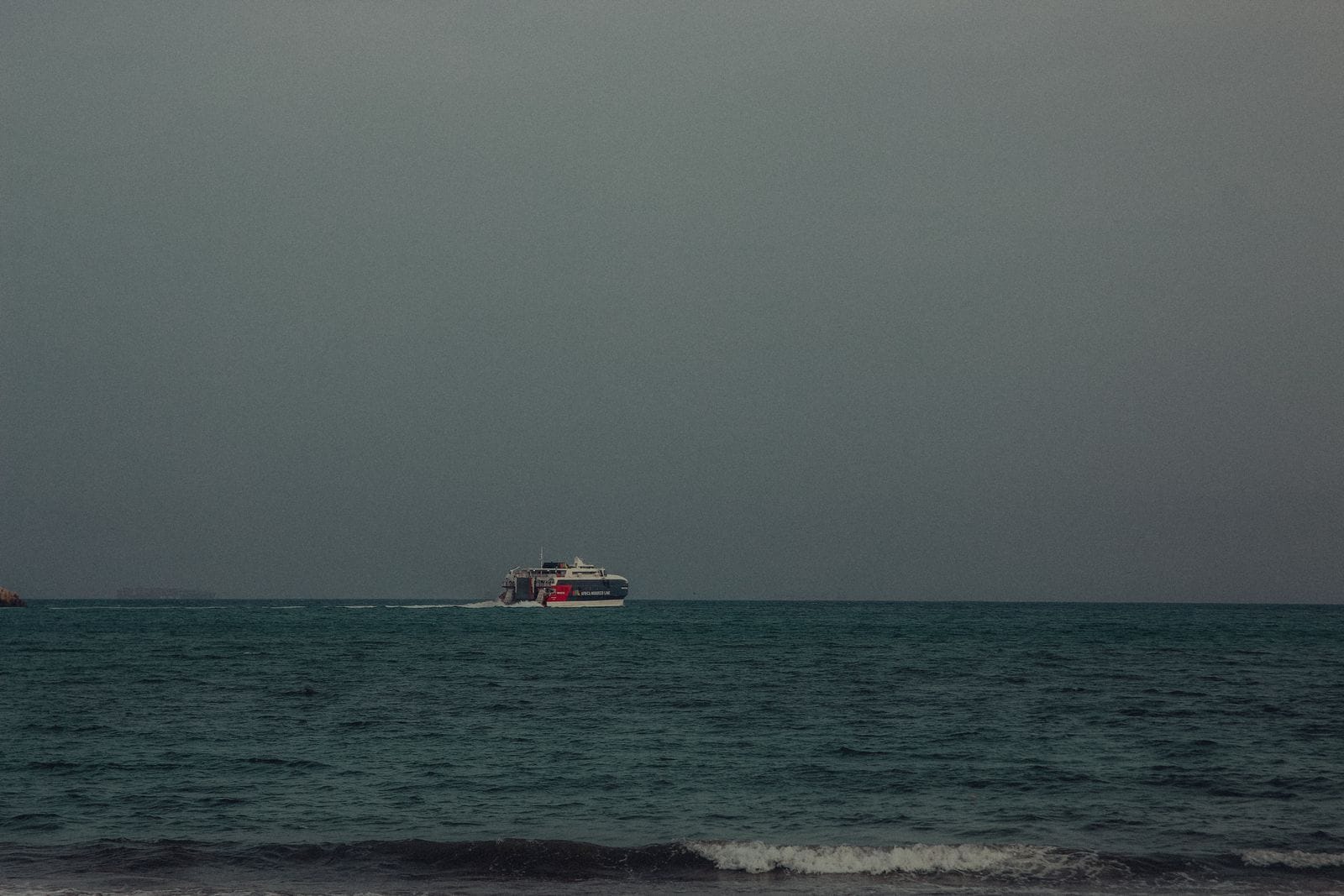
The routes are short. Tangier to Tarifa by fast ferry takes about an hour, with up to eight sailings a day in season. Ceuta and Melilla are Spanish territory reachable on foot from Moroccan soil. A cheap flight to Málaga, Lisbon or the Canaries does the same job with a longer runway.
Dated practitioner reporting beats theory here. Journal of Nomads, whose author has done this, describes returning the same day and still recommends staying out at least one night. Readers reporting under that guide describe same-day round trips passing without questions. One describes police visiting the household after a one-night absence. The officers indicated that a longer trip would not have drawn attention. None of that is policy. It is a pattern, and the pattern says the tighter you cut it, the more interest you attract.
One thing has changed this summer, and any advice written before it is describing a different border. Roughly 72,000 people crossed irregularly into Ceuta at the end of July 2026. The Beni Ansar crossing into Melilla was shut for about 36 hours and reopened in phases. Morocco’s Interior Ministry announced reinforced deployments on both enclave borders on 12 August, and security around Beni Ansar stayed heavy through mid-August as further crossing attempts were organised online.
Both crossings are working for ordinary travellers. They are also the least predictable place to be standing on the day your stay expires. If your plan depends on a land crossing on a specific date, check its state that week, and keep the ferry as a fallback.
What happens if you overstay in Morocco?
Overstaying the Morocco 90-day rule is a criminal provision, not a late fee, and which provision depends on what you did. The penalties sit in Loi 02-03 and are set out in GADEM’s legal guide to foreigner status, the reference work on the subject, in a page dated 24 November 2014.
| What happened | Article | Fine | Prison | Notes |
|---|---|---|---|---|
| You stayed past your authorised time | 42 | 2,000 to 20,000 DH | 1 to 6 months | Force majeure or a recognised excuse is admitted. Doubled on a repeat |
| You are living here without a card | 43 | 5,000 to 30,000 DH | 1 month to 1 year | No force majeure wording. The heaviest of the three |
| Your card expired and you did not renew within 15 days | 44 | 3,000 to 10,000 DH | 1 to 6 months | This one belongs to card holders |
Two things follow. Article 43 is worse than Article 42, which inverts most people’s intuition. Quietly living here for two years on expired tourist stamps is treated more seriously than staying five weeks too long on a visit. And these are ranges written for a court rather than a tariff at a counter, in a guide that is over a decade old, so confirm anything load-bearing at the time it matters.
You will also read a flat “1,000 to 5,000 dirhams” quoted as the overstay fine. It appears on pages that sell visa services, it is attributed to nothing, and it sits below the floor the statute sets. We are not repeating it.
On the exit itself, one official description exists: the US State Department’s country information. It says someone who stayed beyond 90 days without an extension request must appear before a judge before departing. Clearance may involve paying a fine. Expect slow rather than expensive, and start it before you have a flight to catch. The lasting cost is not the money. It is that the next officer who stamps you in can see exactly what you did.
Which route is actually right for you?
Three questions settle it. Do you have a fixed departure date inside the next few weeks? Then do nothing except count correctly and leave. Are you coming back inside six months? Then the visa run is the route where the two official readings collide, and the stricter one, if it binds, binds you. Do you have an address here and an intention to keep it? Then you have stopped being a visitor in every sense except the paperwork.
That last case is the one people postpone hardest, usually by running to the border twice more first. It is worth doing the arithmetic honestly. A residence application is one folder, one queue and about five weeks of waiting. Three visa runs cost more than that in tickets alone, and each one is a decision somebody else gets to make about you.
The traps
Count from the stamp, not from the flight. Entry stamps are handwritten, occasionally hard to read, and they are the only date that counts. Photograph yours on day one.
Check what is closed in your last week. Public holidays and weekends shrink the window for anything filed at a prefecture, and the desk you need may be open fewer hours than the building.
Proof of address is the item nobody arrives with. A lease works, a utility bill works, and hotels and riads will usually issue a stamped attestation if you ask at reception.
Same-day border hops leave a legible pattern. Two look like travel. Five look like a strategy, and the officer is reading the same passport you are.
Carry dirhams. Fines, stamps and administrative fees are paid in cash, in person, in local currency.
Common questions
Can I extend my 90 days in Morocco?
Yes. Morocco’s Ministry of Foreign Affairs requires authorisation from the DGSN, the national police, to stay beyond three months, and the UK government points travellers to a Moroccan police station. No official source publishes the deadline, the documents or the length granted.
Is the Morocco 90-day rule per entry or per 180 days?
The Morocco 90-day rule runs per entry, according to Morocco itself. Its foreign ministry limits a tourist stay to three months and states no six-month window, and its consular service counts one to ninety days per stay even on a one-year visa. The French Embassy in Morocco tells residents three consecutive months in any six.
What is the fine for overstaying in Morocco?
Overstaying the Morocco 90-day rule falls under Article 42 of Loi 02-03: 2,000 to 20,000 dirhams and one to six months, doubled on a repeat, per GADEM’s legal guide in a page dated 2014. Living here without a residence card is Article 43, and it is heavier.
Does a day trip to Ceuta reset my 90 days?
It has worked for many people, and it is border discretion rather than a right. Ceuta and Melilla are open but under exceptional security since the end of July 2026, so check that crossing’s state the same week and keep the Tangier ferry as a fallback.
What happens at the airport if I overstayed?
Per the US State Department’s country information, someone who stayed beyond 90 days without requesting an extension has to appear before a judge before leaving, and clearance may include paying a fine. Start it before you book a flight, and carry cash in dirhams.
The short version
- The Morocco 90-day rule is three months from your entry stamp, per Morocco’s foreign ministry, which states no rolling six-month window. Stacking stays is where French guidance disagrees
- Extensions are requested at a police station. That much is official. Every number attached to the process is not
- Overstaying is Article 42: 2,000 to 20,000 dirhams and up to six months, and the exit runs through a judge
- If you are staying indefinitely, apply for the card. It is cheaper and calmer than a third run to the border
Where the Morocco 90-day rule fits into a long stay is the long-stay guide. How you got the 90 days in the first place is the entry requirements guide. More planning coverage is filed under Trip Planning.