Last verified: August 20, 2026. The failures documented here move with the operators running them, and the kickback arrangements behind them change season to season. I re-check the reported cases and the kickback structures behind them, and update the date above each time.
Most of what goes wrong on a Sahara trip is not theft. It is advertising, and Morocco has a law that says so, with a fine attached and an article number you can quote.
Disclosure: Some links in this guide may earn us a commission, at no extra cost to you. It never changes what we recommend.
Morocco desert tour scams mostly happen after you have paid, and that is the half this page covers. What a tour should cost, and which extras get added, is the desert tour cost investigation, built on ten operators’ own booking pages. This one is the other half: the camp that is not the camp, the shop stop that pays your driver, and what you can actually do about either.
Three of the four things that go wrong are sales, not crime. That distinction matters, because it changes the remedy from a police report to a refund claim.
Key Takeaways
- Morocco desert tour scams are mostly advertising offences, and the camp swap has a legal name. Loi 31-08 Article 21 bans advertising that misleads on the conditions or results of a service, and Article 174 sets fines of 50,000 to 250,000 dirhams, rising to 1,000,000 for a company
- The maximum fine can be raised to half of what the advertising cost, which is unusual and worth knowing
- The shop stop is your driver’s wage. Roadside operations pay up to 50 percent commission, per a Moroccan operator describing its own trade
- The work at the cooperative is real. The commission is the tour’s arrangement, not the women cracking the nuts
- If they cancel your platform booking and ask for cash, that is your refund route closing. Keep the booking live
- Two travellers with the same complaint are enough for a consumer association to sue on their behalf, under Article 158
Table of Contents
What do Morocco desert tour scams actually look like?
They come in four shapes, and only one of them is theft. The camp is not the camp in the photographs. The itinerary contains stops that exist to sell you something. Things described as included turn out to be extras. And an upgrade appears at the dunes, at the exact hour when saying no means sleeping somewhere worse.
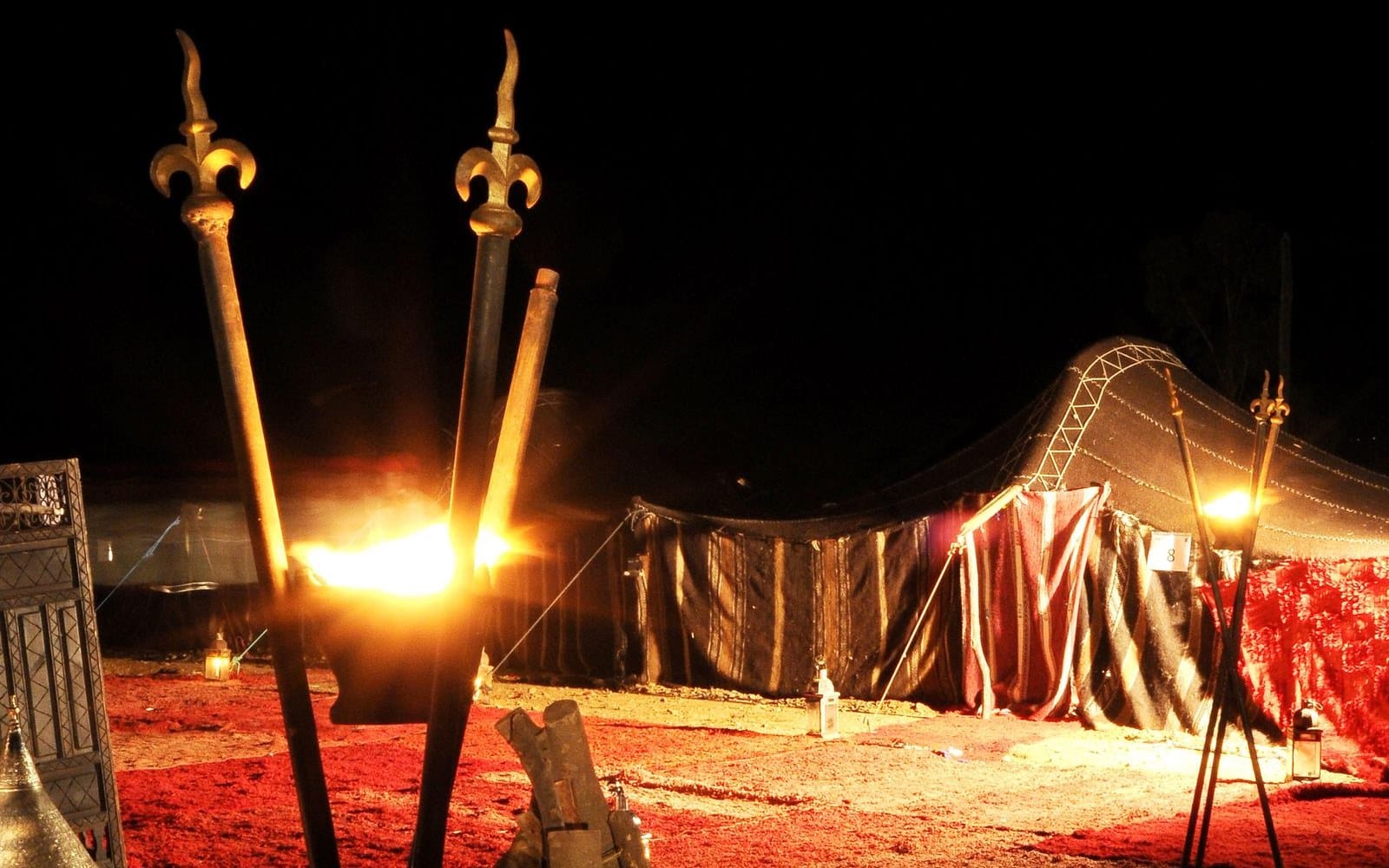
Notice what those four have in common. Each is a commercial move, made by a business, with a paper trail. None needs a thief. That is why the useful response is rarely “report it to the police” and almost always “document it and go after the money”.
They also cluster on day two, and not by accident. Day two is when you are furthest from Marrakech, furthest from an alternative bed, and least able to walk. If you are still deciding whether the country is safe in a broader sense, our honest safety assessment covers the actual risk picture, which is not this.
Why is the camp not the one in the photos?
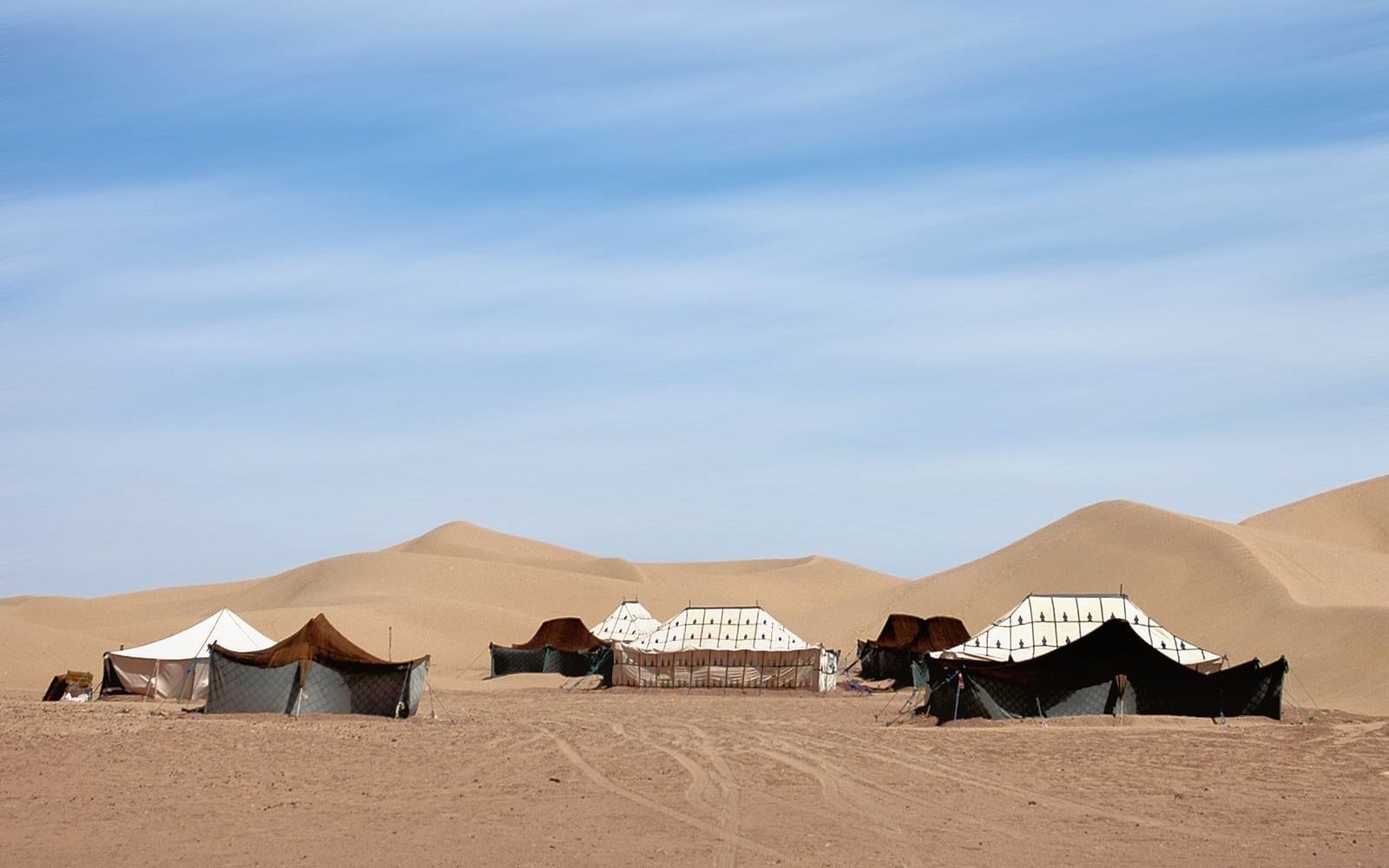
Because “Merzouga” and “Sahara” are marketing words, not addresses. A listing can show a camp deep in a dune sea and deliver one on flat gravel forty minutes away, and nothing in the booking flow forces those two to be the same place.
The swap comes in two grades. The harsher one sends you to a different dune field entirely, which is how a cheap tour advertised against Erg Chebbi ends up at a small field near Zagora. The commoner one keeps the right region but puts the camp on flat ground with the dunes as scenery in the distance.
Here is the part nobody selling you a tour expects you to know. Morocco’s consumer protection law, Loi 31-08, promulgated by dahir in February 2011, bans this directly. The law is catalogued in WIPO Lex and the full French text is published by a Moroccan government agency.
Article 21 prohibits any advertising carrying “des allégations, indications ou présentations fausses ou de nature à induire en erreur”. It then lists what the misleading part can attach to. The substantial qualities of a service are on that list. So are the “conditions ou résultats de leur utilisation” and the “portée des engagements pris par l’annonceur”. A camp sold as one thing and delivered as another sits inside those words.
Article 174 attaches the price. Breaches of Article 21 carry a fine of 50,000 to 250,000 dirhams, and where the offender is a company rather than a person, 50,000 to 1,000,000 dirhams. One clause is worth reading twice: the maximum “peut être porté à la moitié des dépenses de la publicité constituant le délit”. The ceiling scales with what the advertiser spent promoting the thing.
Will a Moroccan court hear your camp complaint? Realistically, no. The value is that the advertisement is the evidence, and the law agrees it is evidence. Screenshot the listing before you travel, with the photographs and the description visible. Once you are at the camp, drop a pin. Those two artefacts are the whole case.
Why does the driver stop at the argan cooperative?
Because it pays him, and often because he is required to. Journey Beyond Travel, a Morocco-based tour operator writing about its own industry, puts numbers on it. Informal medina guides take 20 to 40 percent of what you spend. The large roadside operations on tour-bus routes can afford up to 50 percent. The same account describes guides bound by informal arrangements to deliver clients to one particular shop, and penalised for going elsewhere.
Read that as an admission rather than an accusation, because it is one. It is the trade describing how the trade works. We could find no second published source putting numbers on it, which is telling in itself: the people who know the rates are the ones collecting them.
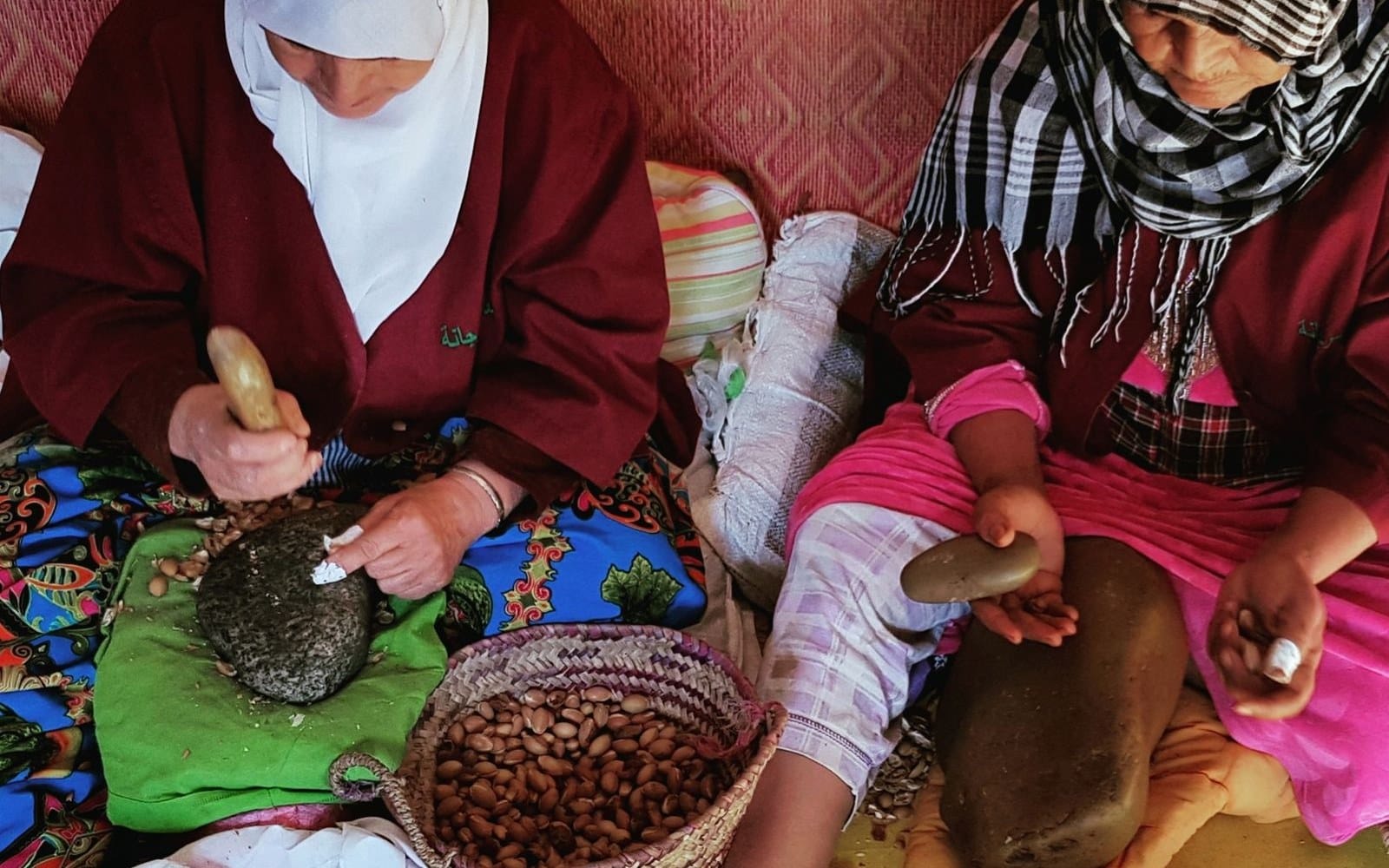
One thing needs saying plainly, because the internet usually gets it wrong. The women cracking nuts at the cooperative are doing real work, and plenty of these places are genuine. The commission is an arrangement between the shop and whoever brought you. Being annoyed at the stop is reasonable. Being rude to the staff is not, and it aims at the wrong target.
The tell is the car park. A workshop that exists to make things has a few cars outside. An operation that exists to receive tour groups has coaches, a greeter, and a route through the showroom that ends at a till.
So how do you decline without an hour of sulking in a hot car? Name it as a schedule question, not an accusation. “We would rather push on and get to camp before dark” works because it gives everyone an exit. What does not work is arguing about commission, which turns a transaction into an insult. The wider pattern, priced across fifteen of them, is in the Morocco scams guide.
What happens when they ask for cash at the camp?
This is the moment that decides whether you get your money back. The classic version: you arrive, and the camp says the booking is not what they have, or that transfer was never included, and asks for cash. Sometimes the platform reservation is then cancelled outright, with the explanation that you are paying directly instead.
That cancellation is not an administrative tidy-up. A cancelled booking is a closed complaint route. It removes the platform’s record of what you bought, it usually removes your ability to leave a review, and it converts a traceable card payment into cash with no counterparty. If you agree to nothing else on the whole trip, do not agree to that.
What to do instead, in order. Keep the booking live and say so. Pay by card if any card is accepted. If cash is genuinely the only option, pay and get the amount written down, then message the seller through the platform describing what happened, while you are still standing there. That message is timestamped, and it is the thing a refund team reads first.
On the extras themselves we have already done the arithmetic elsewhere. One verified booking-platform review of a single tour, read on 9 August 2026, itemised enough add-ons to lift an advertised fare by roughly half, and the full breakdown is in the cost investigation. The categories repeat even when the amounts do not.
Who is actually liable when three businesses are involved?
Whoever is holding your money, and that is usually not the person in front of you. Most Morocco desert tour scams involve at least three businesses. The company that sold the tour, the driver who collected you and the camp you slept in are frequently unrelated, in a chain of subcontracts.
This is why arguing at the camp so often goes nowhere. The camp manager did not write the listing, did not take your payment, and has no authority over either. From where they stand, you arrived with a voucher from someone who owes them money.
So aim at the seller. The seller made the representation, the seller took the payment, and the seller is the one the law and the platform both recognise as your counterparty. The driver is a witness at best, and the camp is a venue. Sorting out who is who takes about a minute on your booking confirmation, and it is the single most useful minute of the whole complaint.
How do you actually get your money back?
Evidence first, then the platform, then the card, and start before you leave the country. The order matters, because each step depends on the one before it.
The evidence set is small. The listing as it appeared when you booked, screenshotted before you travel. A pin dropped at the camp. The payment record. And the messages you sent through the platform at the time, not a week later from home.
Then the platform, which is where most of these actually resolve. Booking platforms have “not as described” processes, and they work best when the reservation still exists, which is the whole reason not to let anyone cancel it. If that fails, the card issuer is next, and the case you make there is the same one: what was advertised, what was delivered, and the timestamped record of you saying so.
There is one Moroccan route worth knowing about, and it is narrower than it sounds. Article 158 of Loi 31-08 lets a recognised consumer protection association go to court in the name of consumers. The conditions are specific. Several identified individuals, harmed by the same supplier, from a common origin, and at least two of them must give the association a written mandate.
Two travellers with the same complaint about the same operator clear that bar. Note the word recognised: the Ministry of Industry and Trade publishes the official list of approved consumer protection federations and associations, and that register is what the article points at.
Morocco also runs a national complaints platform, Chikaya, which accepts complaints about services and routes them to the relevant administration.
Both routes are real. Neither is built for someone who flies home on Sunday, and nobody should book a flight expecting either to resolve first. For small sums and foreign claimants, the realistic remedy is still the platform and the card.
What separates a good operator from a bad one?
The ones that will answer specific questions in writing. Not “is the camp nice”, which everyone answers yes to. Three questions cannot be fudged. Where exactly is the camp? Which stops are on the itinerary, and are any of them shops? What is included in the price that we might otherwise be asked to pay for?
An operator that answers those in a message you can keep has just given you the evidence for any later claim. One that answers in vague warmth has told you something too. Most Morocco desert tour scams die at that first message, because an operator willing to put the camp location in writing is not planning to move it.
Choosing well in the first place is its own subject, and it gets its own guide to booking a desert tour.
Common questions
What if the desert camp is not the one advertised?
Morocco’s Loi 31-08 bans advertising that misleads on the conditions or results of a service, and Article 174 sets fines of 50,000 to 250,000 dirhams, or up to 1,000,000 for a company. Practically, screenshot the listing before you travel, drop a pin at the camp, and claim through the platform.
Why does the driver stop at an argan cooperative?
Because it pays him. A Morocco-based operator writing about its own trade describes commissions of 20 to 40 percent for informal guides and up to 50 percent at large roadside operations, sometimes under arrangements that penalise drivers for going elsewhere. The work at the cooperative is usually genuine; the commission is the tour’s arrangement.
Should I refuse to pay cash at the camp?
Refuse the cancellation, not necessarily the cash. If the camp cancels your platform booking so you pay directly, your refund route and your review both disappear with it. Keep the reservation live, pay by card if you can, and message the seller through the platform while you are still there.
Who is responsible if the tour is not as described?
The seller, not the camp. Morocco desert tour scams usually involve three separate businesses: the company that sold the tour, the driver, and the camp, and only the seller made the representation and took your money. The camp manager cannot fix a listing they never wrote.
Can two travellers complain together in Morocco?
Yes. Article 158 of Loi 31-08 lets a recognised consumer association sue in the name of consumers harmed by the same supplier, if at least two of them mandate it in writing. The Ministry of Industry and Trade publishes the list of approved associations, and Morocco runs a national complaints platform called Chikaya. Both are real routes, though for small sums the platform and the card issuer remain faster.
The short version
- Morocco desert tour scams are mostly advertising offences, and Loi 31-08 Article 21 covers them, with fines under Article 174 running to 1,000,000 dirhams for a company
- The shop stop is the driver’s wage, at up to 50 percent commission. The cooperative work is real; the arrangement is not the workers’ doing
- Never let anyone cancel your platform booking in exchange for cash. That is the refund route closing
- Complain to the seller, because the camp did not write the listing and the driver did not take your money
What the tour should have cost in the first place is the desert tour cost investigation. The wider pattern, priced, is the Morocco scams guide. If the question underneath is whether the country is safe at all, start with our honest safety assessment. More of this is filed under Safety and Scams.