Last verified: August 8, 2026. Entry rules, prices and transport options all move on their own schedules, and this guide is the hub that has to stay current with every one of them. I re-check the visa position, the headline cost figures and the transport options against their sources, and update the date above each time.
Morocco welcomed 9.4 million visitors in the first half of 2026, up 6% on the same period last year (Direction des Études et des Prévisions Financières, cited by Morocco World News, July 2026). That’s the number behind most of the frustration you’ll hear from people who’ve just come back: riads booked out, desert camps full, and prices that don’t match what the guide they read said they’d pay.
Disclosure: Some links in this guide may earn us a commission, at no extra cost to you. It never changes what we recommend.
Here’s the problem with planning a Morocco trip in 2026. The advice is everywhere and almost none of it carries a date. The page ranking above this one has dozens of dirham prices on it and was last updated in September 2024. And the sites answering the expensive questions (what should a Sahara tour cost, is this riad price fair) mostly belong to people selling Sahara tours and riad nights.
So this Morocco travel guide does it differently. Six decisions, in the order you actually make them: how long, when, where, how you’ll move, what it costs, and what you need to get in. Every figure has a date attached. Where a number comes from someone with a commercial interest, we say so.
I’m not a resident and I don’t pretend to be. What I do is make the trip repeatedly, price things out each time, and check the practical details against official sources rather than against the last blog post that said them.
Key Takeaways
- Morocco took 9.4 million visitors in H1 2026, up 6% (DEPF, July 2026), so supply is tighter than pre-2024 guides assume.
- Ten days is the shortest trip that fits Marrakech, the Sahara and a northern city without a rushed day in every block.
- Go late March to May or September to early November. July averages 37.7°C in Marrakech.
- Budget $80–150 per day mid-range, excluding flights, at roughly 10 MAD to the dollar.
- High-speed rail does not reach Marrakech, and won’t before roughly 2030.
Table of Contents
What this Morocco travel guide covers, and in what order
Six decisions, and the order matters more than any single answer. Distance is why: Marrakech to Merzouga is roughly 560 km and eight to nine hours each way, so how long you’re going has to be settled before where you’re going.
The order runs: days, then season, then which places, then how you move between them, then the budget that falls out of those choices, and entry requirements last because for most passports they’re the easy part. This Morocco travel guide follows that order, section by section.
Get the order wrong and you’ll do what most first-timers do: pick four cities off a map, discover the driving times afterwards, and spend the trip in transit.
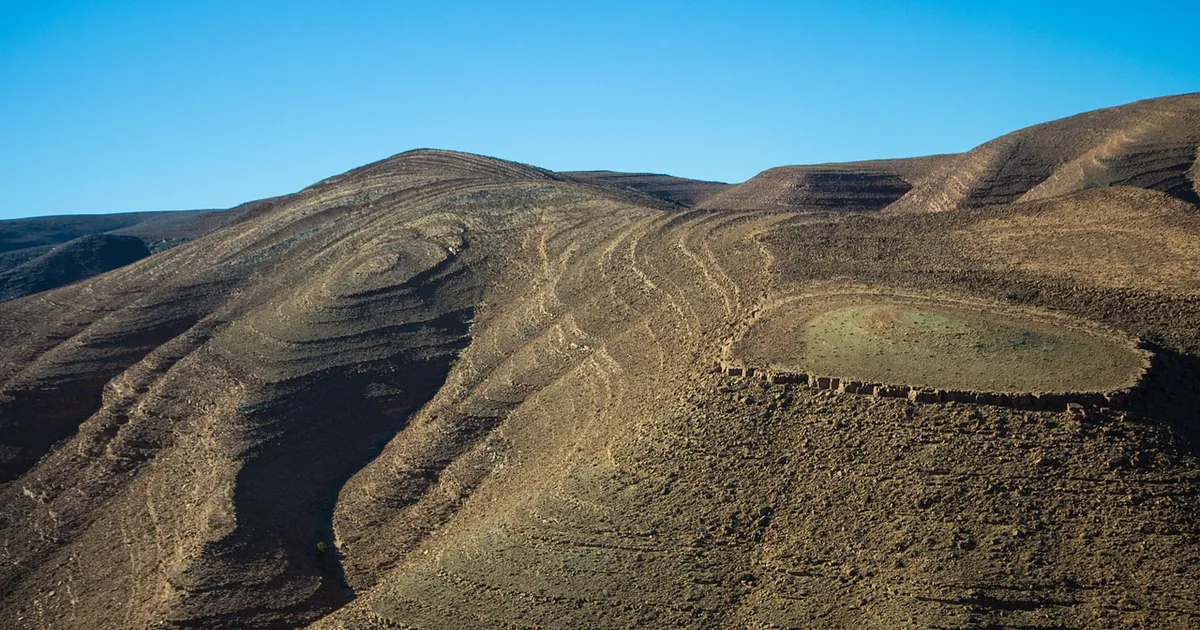
This Morocco travel guide starts with distance, because Morocco is bigger than it looks on a map, and the roads through the Atlas are slower than their distances suggest. That one fact about the Merzouga run reshapes more itineraries than anything else in this Morocco travel guide, and almost nobody factors it in before booking.
What this Morocco travel guide won’t do is tell you Morocco is unmissable, or hand you a list of places nobody else supposedly knows about. You’ve already decided to go. This is the part where you work out the shape of the trip.
Why is Morocco harder to plan in 2026 than it was in 2023?
Arrivals have risen roughly 37% in three years, from about 14.5 million in 2023 to 17.4 million in 2024 and a record 19.8 million in 2025 (Ministry of Tourism via maroc.ma, January 2025, and ATTA, January 2026). Travel receipts hit MAD 53.8 billion by the end of May 2026, up 14.6% year on year. More demand against slower-moving accommodation supply means the prices in older guides now understate the trip, consistently and in one direction.
Two practical consequences. Riads and Sahara camps in the good bracket are being booked three to four months out for the March–May and September–November peaks, so the spring 2027 scramble starts around November 2026. And any price you read that doesn’t say when it was collected should be treated as a guess.
Where does all this demand come from? France is still the largest source market, up 9% in H1 2026, with Germany up 14%, the US up 9% and the UK up 4%.
Our position: an undated price is not information. Every figure in this Morocco travel guide carries the date we checked it, and the ones we couldn’t verify independently are labelled as coming from a party that sells the thing.
How many days do you need in Morocco?
Ten days is the shortest trip that covers Marrakech, the Sahara and one northern city without a rushed day in every block. The 10 day Morocco itinerary is that trip, leg by leg and priced. Seven days covers two of those three properly. The reason is the 560 km road to Merzouga: at eight to nine hours each way, the desert costs you three days whatever the tour brochure implies.
Here’s how the common trip lengths actually shake out.
Seven days. Marrakech plus the Sahara, or Marrakech plus Fes. Not both. Pick one and do it properly.
Ten days. Marrakech, a Sahara run, and Fes, with the desert trip returning through the Dades or Todra gorges rather than retracing the same road.
Fourteen days. The same route with the coast added, or Chefchaouen from Fes, and enough slack that one bad travel day doesn’t wreck the plan.
And the thing no tour operator will tell you: if you only have seven days, cut something. The itinerary sold as “Marrakech, Fes, Chefchaouen and the Sahara in a week” is the single most common reason people come back saying Morocco was exhausting. Four cities and 1,500 km of road in seven days isn’t a trip, it’s a commute with photo stops. An operator can’t tell you to drop a stop, because the stop is the product. We don’t sell stops.
When is the best time to visit Morocco?
Late March to May, and September to early November. In those windows Marrakech averages daily highs between 23°C and 30°C (Climates to Travel, Marrakesh climate, retrieved 8 August 2026). July and August average 37.7°C and 37.4°C respectively, and inland highs above 45°C happen most summers.
Summer isn’t unusable, it’s just coastal. Essaouira and Taghazout stay in the twenties when Marrakech is unbearable, and the Atlantic wind is the reason. Winter flips the calculation: the medinas are quiet and cheap, the High Atlas has snow, and desert nights drop close to freezing, which nobody mentions when they sell you the camp.
One date to put in your calendar now. Ramadan 2027 runs from roughly 8 February to 9 March, subject to moon sighting, which lands it inside the spring booking peak. Travel is entirely possible then, but the rhythm of the day changes and so does what’s open.
The cities and regions that earn your days
The short Morocco travel guide answer: Marrakech for a first trip, Fes for the older and less tourist-shaped medina, and exactly one of Chefchaouen, Essaouira or Tangier as a third stop. Not two of them. With 9.4 million visitors circulating through largely the same circuit in the first half of 2026, the difference between a good trip and a tiring one is usually how many stops you refused to add.
Marrakech. The easiest arrival, the best-connected airport, and the closest base to the Atlas. Also the most aggressively commercial place you’ll go, which is worth knowing before rather than after.
Fes. Older, denser, less oriented toward visitors. The medina is one of the largest car-free urban areas anywhere. Most people who prefer Fes prefer it strongly.
The Sahara. Erg Chebbi, the dune field reached from the town of Merzouga, is the bigger and more dramatic option, rising to 150 m. What a two-day “Zagora” tour actually reaches is Tinfou, a small dune field outside that town. Erg Chigaga, Morocco’s largest erg, lies far south beyond M’Hamid and needs a trip of its own. We use “Erg Chebbi” for the dunes and “Merzouga” only for the town, because conflating them is how people end up booking a camp nowhere near the dunes they saw in the photo. Which desert you are actually buying sets out all four.
The Atlas and the south. Aït Ben Haddou, the Dades and Todra gorges, and the Tizi n’Tichka pass. Best experienced as the route to the desert rather than as separate trips.
The coast. Essaouira for wind, gulls and ramparts; Taghazout for surf. Both are cooler than inland in summer.
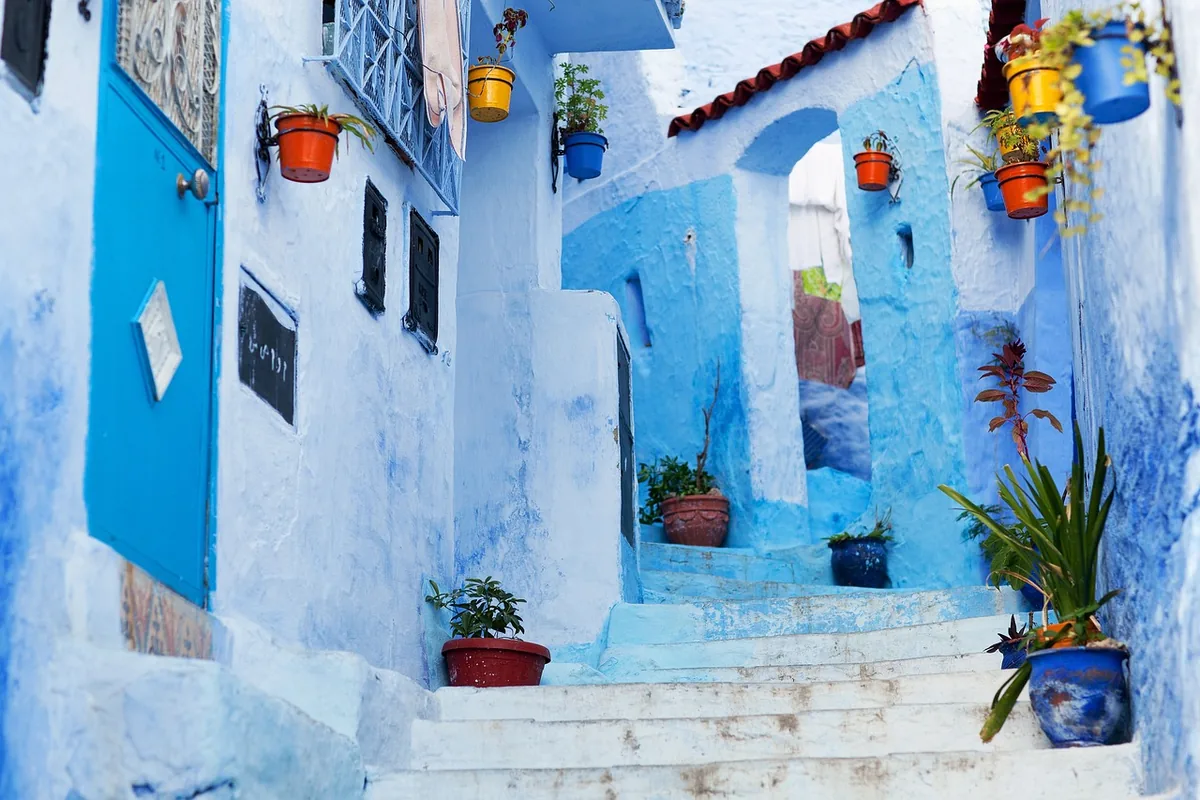
Chefchaouen. Genuinely striking and genuinely far: four hours from Fes, and it’s a detour, not a stop on the way to anywhere.
Rabat and Casablanca. Treat both as transit unless you have a specific reason. That’s an unpopular opinion and I’ll stand behind it on a ten-day trip.
How will you move between cities?
Trains between the coastal cities and Marrakech, CTM or Supratours coaches where the train doesn’t reach, grand taxis for short hops, and a hire car only for the Atlas and the south. Which mode suits which leg, and what the rail network actually reaches, is worked through in full in how to get around Morocco. What each leg costs is priced from the operator in what the same seat costs two days out and three weeks out.
Now the thing that trips people up. Al Boraq, Africa’s first high-speed line, runs at up to 320 km/h, between Tangier and Casablanca only. The extension that brings it to Marrakech is targeted for the end of 2029. If you’re travelling in 2026 or 2027, it isn’t part of your trip, whatever the article you read implied.
| Route | Today (August 2026) | After the LGV extension (~2030) |
|---|---|---|
| Tangier → Casablanca | 2h10 by Al Boraq | Unchanged |
| Casablanca → Marrakech | 2h39–3h00 conventional rail | About 1h15 |
| Tangier → Marrakech | About 5h45 with a change at Casablanca | About 2h40 |
| Marrakech → Merzouga | 8–9h by road, no rail | 8–9h by road, no rail |
ONCF timetables and fares, August 2026; Kenitra–Marrakech LGV project documentation and Railway Gazette, 2026. Post-2030 figures are targets published by the operator, not measured times.
The taxi system is where most small arguments happen. Petit taxis work inside city limits and should run a meter. Grand taxis are shared, run fixed routes between towns, and fill to six passengers before leaving. You can buy the empty seats if you’d rather not wait.
Should you hire a car? For Marrakech, Fes and the coast, no: parking is miserable and the trains are good. For the Atlas, the gorges and the south, a car turns three days of tour-bus timing into three days of your own.
What does a Morocco trip actually cost?
Budget travel runs $30–60 a day, mid-range $80–150, and the top end $200–400 and up, excluding flights, at roughly 10 MAD to the dollar in August 2026. Those bands come from operator-published breakdowns, which is exactly the conflict this site exists to fix, so treat them as a starting frame, not as verified figures. The Morocco Price Index is our independent answer to the same question, with the collection date, sample size and method attached to every figure.
Where does the money in a Morocco travel guide budget actually go? Three line items dominate: the Sahara tour, the riads, and anything involving a guide or driver. Food, trains, taxis and entry tickets are cheap enough that they rarely decide a budget. Our Real Costs coverage prices each of them separately.
The Sahara tour is where the spread gets absurd. Public listings for overlapping three-day Merzouga products run from €69 to well over $1,200, with no methodology and usually no date. A €69 tour and a €250 tour are not the same product, and the difference is mostly camp location and what happens on the drive. Before paying for either, work through the checks that protect a desert tour booking.
The decision-cost table
Five decisions where the trade-off is really hours against dirhams. Verified public figures only; the operator-quote medians land with the Price Index on 31 August 2026.
| Decision | Time cost | Money cost | Verified |
|---|---|---|---|
| Casablanca → Marrakech by train, 2nd class | 2h39–3h00 | ~130–150 MAD (advance from ~49) | Aug 2026 |
| Add Chefchaouen from Fes | ~8h return, plus a night | Transport + 1 night | Aug 2026 |
| Marrakech → Merzouga by road | 8–9h each way | Included in tour, or fuel + car hire | Aug 2026 |
| 3-day shared Merzouga tour | 3 days | Quote round in progress | 31 Aug 2026 |
| Riad night, Marrakech medina, by season | Not yet collected | Quote round in progress | 31 Aug 2026 |
Is Morocco safe, and what should you actually watch for?
As of 8 August 2026 the US State Department places Morocco at Level 2: Exercise Increased Caution, citing terrorism, in an advisory last issued 21 April 2025. Numbeo’s 2026 crime index for Morocco sits at 47.0, in the moderate band. Level 2 is the same tier as France, Spain, Germany and Italy, all of which have been Level 2 since May 2025.
Worth saying plainly: several Morocco travel sites currently claim the country is at Level 1, Exercise Normal Precautions. It isn’t, and hasn’t been for over a year. Take thirty seconds and read the advisory yourself before you trust anyone’s summary of it, including ours. That’s what the link is for.
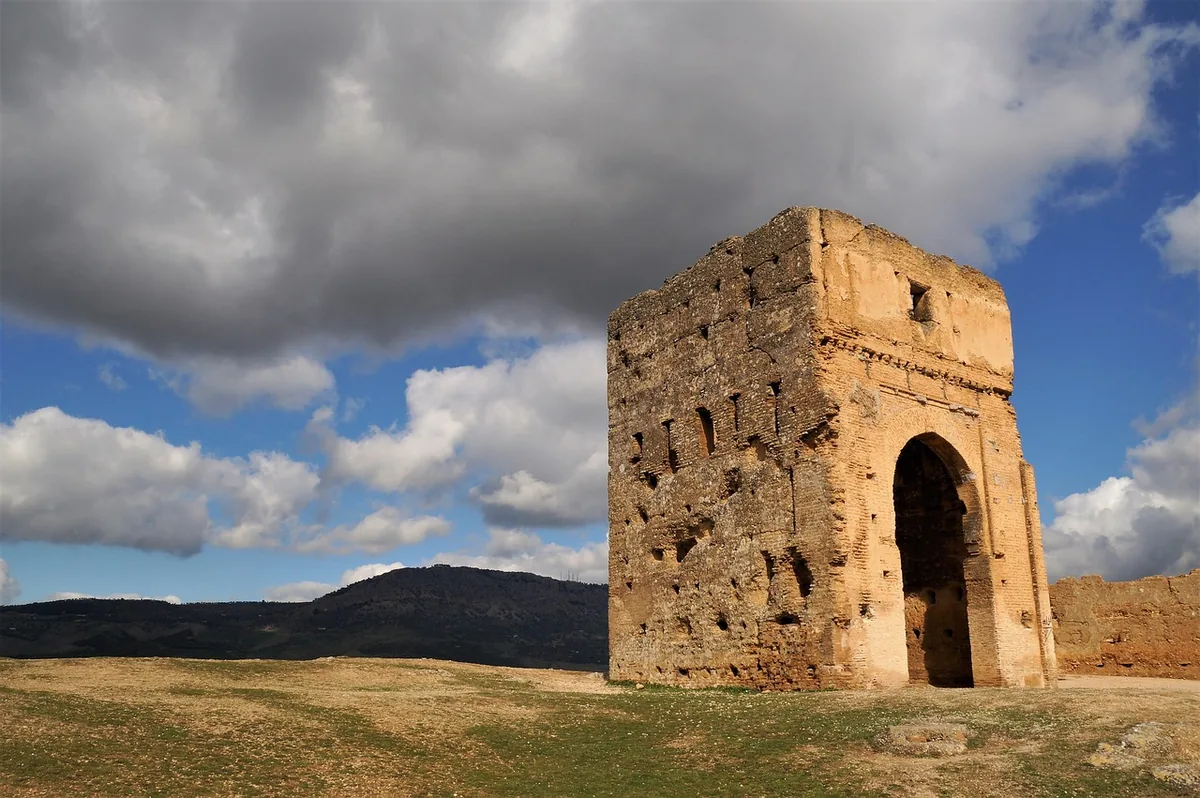
What does the risk actually look like on the ground? Petty theft, not violence. Pickpocketing and bag-snatching in the crowded parts of the Marrakech and Fes medinas is the realistic concern. Violent crime against visitors is rare.
The recurring hassles are more irritating than dangerous:
- Fake guides. Someone attaches themselves to you in the medina, walks you somewhere you didn’t ask to go, and expects paying. The counter is a flat, repeated no, and knowing your own route.
- The closed-road redirect. You’re told your riad’s street is shut. It isn’t.
- Kickback shopping stops. Standard on cheap desert tours, where the driver earns on what you buy.
Harassment is real, more so for women travelling alone, and it’s mostly persistent verbal attention rather than threat. Operator guides tend to skip this and finish by suggesting you book with a professional. We haven’t got a tour to sell you, so: it happens, it’s wearing, and it isn’t a reason not to go. The full version is in our honest 2026 assessment of whether Morocco is safe, and everything else sits under Safety and Scams.
What do you need to enter Morocco?
This Morocco travel guide can be brief about visas: most Western passports need no visa at all. Citizens of the EU, UK, US, Canada, Australia, New Zealand, Japan, South Korea and the GCC states enter visa-free for tourism and may stay up to 90 days. Around 70 nationalities hold some form of exemption, though the permitted stay varies: 90, 60 or 30 days depending on the passport. The complete rules are in the Morocco visa requirements guide.
Everyone else applies through the official Moroccan electronic authorisation portal, acces-maroc.ma. Check your own nationality there rather than on a visa-agency site: resellers quote durations and validity periods that don’t always match the official terms, and they’re the sites that rank.
The rest is short. A passport valid for your stay, though airlines commonly prefer six months. An arrival card, handed out on the plane or at the border. Nothing else routine.
One correction worth making, because it gets repeated everywhere: Morocco has no digital nomad visa. No such instrument exists. What long-stay remote workers actually use is the 90-day visa-free entry, which makes the real questions about the 90-day boundary, extensions and residency, not about an application form.
Entry rules verified 8 August 2026. This section is on a 30-day re-verification cycle.
What to know before you go
Cover shoulders and knees in cities, expect to negotiate in the souks but not in shops with marked prices, and carry cash, because card acceptance falls away fast outside hotels and modern retail. At roughly 10 MAD to the dollar in August 2026, a week of incidental spending is a thin wad of notes rather than a fortune.
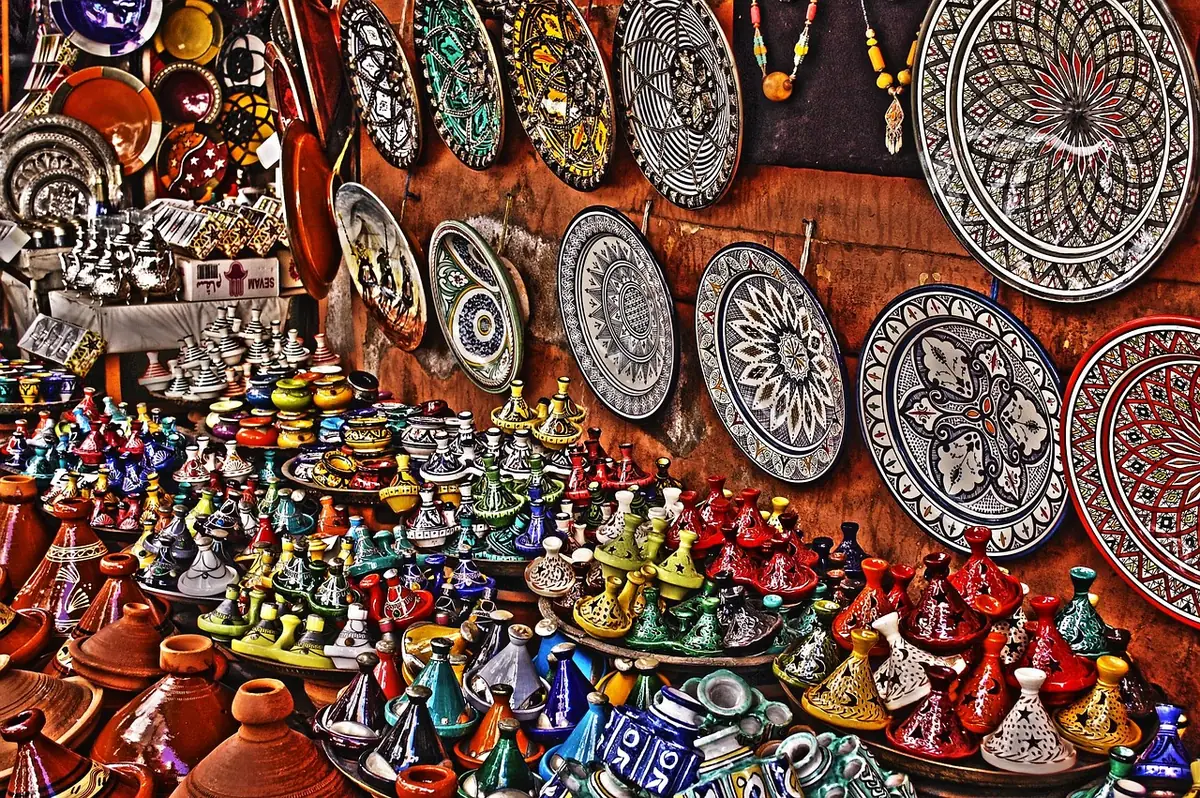
Dress. Morocco is relatively conservative and also used to visitors. Shoulders and knees covered in medinas and smaller towns; swimwear for pools and beaches only. Coastal towns and Marrakech’s Gueliz district are noticeably more relaxed than Fes or the rural south.
Haggling. It applies in the souks, for crafts, rugs, leather and lamps. It does not apply in supermarkets, pharmacies, café bills, train tickets or anywhere with a printed price. Trying to negotiate a café bill marks you out instantly.
Tipping. Small and routine: a few dirhams for a café, rounding up for taxis, more for a guide or driver who did a real day’s work.
Language. Darija is the everyday language, Amazigh is widely spoken, French works in most cities and English is common in tourism. Learning ten phrases changes how you’re treated more than any other thing on this list. Salam, shukran, la shukran, bshhal. And mean the last one.
Rhythm. Friday is the main prayer day and the afternoon slows down. Shops close, then reopen. Plan the day around it rather than against it.
Practical bits. Tap water is generally treated but most visitors stick to bottled. Plugs are European two-pin, 220V. A local SIM or eSIM is cheap and the coverage is better than you’d expect, right up until the desert.
What changes between now and the 2030 World Cup?
If you’re weighing going now against waiting, this is the section for you. Morocco is mid-way through a roughly MAD 96 billion rail programme and a $3.8 billion airport expansion, and almost none of it lands in time for a 2026 or 2027 trip.
The headline project is the Kenitra–Marrakech high-speed line: 430 km, up to 320 km/h, around MAD 53 billion for the segment, with completion targeted for the end of 2029. It cuts Tangier to Marrakech to about 2h40. Marrakech Menara airport is being expanded to a 142,000 m² terminal, taking capacity from 9 million to 16 million passengers, with works due before 2028. Nationally, the Airports 2030 programme aims to lift capacity from 34 million toward roughly 80 million passengers.
Nobody in this niche translates that trade press into planning terms, so here it is. Go now for lower prices and thinner crowds; go after 2030 for shorter transfers and more capacity. Between those two dates you get the worst of both: rising demand, construction in progress, and none of the new infrastructure usable yet. The one thing I’d add from making this trip repeatedly is that the road to Merzouga isn’t in anybody’s plan. The desert stays eight hours away. We track the build-out month by month in Morocco Now. The dated master timeline, with every project, its claimed status and its own last-verified date, lives in our guide to how Morocco is changing before the 2030 World Cup.
Common questions
How many days do you need in Morocco?
Ten days is the minimum for Marrakech, the Sahara and a northern city like Fes without rushing. Seven days covers two of those three. The constraint is the road to Merzouga: 560 km and eight to nine hours each way, which costs three days of any itinerary that includes the dunes.
What is the best month to visit Morocco?
April and October are the two best months. Marrakech averages daily highs of 25.8°C in April and 28.4°C in October, against 37.7°C in July (Climates to Travel, retrieved August 2026). March, May, September and November all work well. June to August is coastal-only unless you tolerate extreme heat.
Do I need a visa for Morocco?
Probably not. EU, UK, US, Canadian, Australian, New Zealand, Japanese, South Korean and GCC passport holders enter visa-free for up to 90 days, as do roughly 70 nationalities in total, though permitted stays vary. Everyone else applies through the official portal at acces-maroc.ma. Verified 8 August 2026.
Is Morocco expensive?
No, by European standards. Mid-range travel runs $80–150 per person per day excluding flights, at roughly 10 MAD to the dollar in August 2026. Budget travel works at $30–60. The Sahara tour, the riads and any guide or driver are what actually move a Morocco budget.
Is Morocco safe for tourists?
Morocco sits at Level 2, Exercise Increased Caution, on the US State Department scale, the same tier as France, Spain and Germany. Numbeo’s 2026 crime index is 47.0, in the moderate band. Petty theft in crowded medinas is the realistic risk; violent crime against visitors is rare.
Can I take a high-speed train to Marrakech?
Not yet. Al Boraq runs at up to 320 km/h between Tangier and Casablanca only. The Kenitra–Marrakech extension is targeted for the end of 2029, which would cut Tangier–Marrakech to about 2h40. Until then, Casablanca to Marrakech is 2h39–3h00 on conventional rail.
Where to start
If you take one thing from this Morocco travel guide, make it ten days and a shoulder-season month. Almost every disappointing Morocco trip traces back to one of those two decisions rather than to anything that happened on the ground.
The rest follows from there. Pick your three anchors and refuse a fourth, work out whether the desert is worth three of your days, move by train where the train goes, and budget from dated figures rather than from a page that hasn’t been touched since 2024.
Both of the numbers that matter most here, prices and rail timings, will move. That’s why this Morocco travel guide carries a verification date and gets re-checked rather than quietly left up.
What next: the ten-day route is the practical next read, and if you’re pricing a Sahara tour, wait for the Price Index on 31 August rather than taking an operator’s word for what’s fair.
More in Trip Planning, or read how we verify prices and what we don’t sell. Spotted a figure that’s wrong, or paid something different? Tell us what it should have been. Corrections go into the next verification pass.