Last verified: August 12, 2026. This page tracks an unfinished build-out, so almost every line on it carries a target date that can move. I re-check the rail, airport, stadium and hotel milestones against ONCF, ministry and trade-press statements every month, and update the date above each time.
The Morocco World Cup 2030 build-out is the largest coordinated infrastructure project in the country’s modern history. The bill passes MAD 190 billion, about $20 billion, across railways, airports, stadiums and hotels (Morocco World News, July 2026). And the deadline will not move: the country co-hosts the FIFA World Cup in June 2030.
Disclosure: Some links in this guide may earn us a commission, at no extra cost to you. It never changes what we recommend.
If you’re going to Morocco between now and then, that deadline is quietly rewriting your trip. Journey times, prices, flight routes, whole city districts. The country you researched last year is a moving target. And if you’re already thinking about 2030 itself, you’re early: some of the biggest questions, including where the final will be played, genuinely have no answer yet, whatever certain websites tell you.
This page is the translation layer. Construction and rail trade press track the build-out in engineering terms; tour-operator sites repeat each other’s guesses. Nobody converts the milestones into trip decisions. We do that here, with a date on every claim. The whole page is re-verified monthly.
Key Takeaways
- The Morocco World Cup 2030 is a co-hosted tournament: Morocco takes it with Spain and Portugal across six Moroccan cities, backed by more than MAD 190 billion (~$20bn) in rail, airport, stadium and hotel investment (Morocco World News, July 2026).
- The new high-speed line to Marrakech targets November 2029, putting Casablanca to Marrakech at 1h15 (Maroc.ma, April 2025).
- Morocco World Cup 2030 tickets are not on sale anywhere yet; FIFA’s free interest registration is open, and anyone selling “2030 World Cup tickets” today is unauthorized.
- The best window to see Morocco at current prices is probably before the tournament build-up peaks. We make that case below.
Table of Contents
What Is Actually Changing in Morocco Before 2030?
The Morocco World Cup 2030 numbers: more than MAD 190 billion (~$20bn) across railways, roads, airports, stadiums and urban projects, six host cities, and a national target of 26 million annual visitors by 2030 (Morocco World News, July 2026). Almost every piece of it has a completion date between late 2027 and early 2030.
Here is the master timeline. Status is what project owners and officials say, attributed as such. “Per ONCF” is not the same as independently audited, and we keep that distinction visible. Every row carries the date we last checked it.
| Milestone | Target date | Status | Last verified |
|---|---|---|---|
| Tournament dates | 8 Jun – 21 Jul 2030; Morocco/Spain/Portugal openers 13–14 Jun; centenary matches in Uruguay, Argentina, Paraguay 8–9 Jun | FIFA-confirmed (Al Jazeera) | 11 Aug 2026 |
| Kenitra–Marrakech high-speed line (430 km) | Commissioning Nov 2029 | ~30% complete as of May 2026, per the transport minister (Barlaman Today) | 11 Aug 2026 |
| Casablanca Mohammed V new terminal | End 2029 | $1.6bn build under way, per ONDA (ENR) | 11 Aug 2026 |
| Grand Stade Hassan II, Benslimane (115,000 seats) | Late 2027 | ~30% built, “ahead of schedule,” per project reporting (Yanko Design) | 11 Aug 2026 |
| Fez stadium expansion (35,500 → 55,800) | 2028 | Under way, per organizers (Construction Briefing) | 9 Aug 2026 |
| +60,000 hotel beds (~$4bn, ~700 projects) | By 2030 | Announced Jul 2026, per tourism ministry (Reuters via Morocco World News) | 11 Aug 2026 |
| Ticket sales | No date announced | FIFA silent; recent-edition pattern points to late 2028–2029 | 11 Aug 2026 |
| Final venue | Undecided | Bernabéu and Hassan II reported candidates; an offer to Morocco was reported 5 Aug 2026 and FIFA denied it the same day (Goal) | 11 Aug 2026 |
Changelog
- 12 August 2026: page published. All rows verified 9–12 August 2026.
Bookmark this page rather than screenshotting it. The table above is re-verified monthly, and the changelog will tell you exactly what moved. If you’re planning a trip for the nearer term, our complete Morocco trip planning guide covers the country as it is right now.
Which Moroccan Cities Will Host World Cup Matches?
Six cities: Casablanca, Rabat, Marrakech, Fes, Agadir and Tangier. The centerpiece is the Grand Stade Hassan II in Benslimane, outside Casablanca. At 115,000 seats it would be the largest football stadium in the world, and as of July 2026 it was about 30% built and tracking to late 2027, per project reporting (Yanko Design).
Fes gets an expansion from 35,500 to 55,800 seats by 2028 (Construction Briefing). The other venues are upgrades of stadiums that host league football today, which means you can watch a match in a future World Cup venue now, for a few dollars, in Rabat, Tangier, Marrakech or Agadir. It’s the best football-flavored thing a 2026–2029 visitor can actually do.
Now the part that is most often stated wrongly. Which stadium hosts the final is not decided. Madrid’s Bernabéu and the Hassan II are the reported candidates; Spain’s federation president has publicly claimed the final (Al Jazeera, January 2026). In August 2026 it was reported that FIFA’s president had offered Morocco the final in exchange for political support. FIFA denied it the same day, calling the claim “untrue and misleading” (Goal, 5 August 2026). Any page telling you the final’s venue as fact is guessing. The same goes for city-by-city match allocations: the bid book proposes; FIFA confirms; FIFA hasn’t.
How Will the New High-Speed Rail Change Morocco Travel?
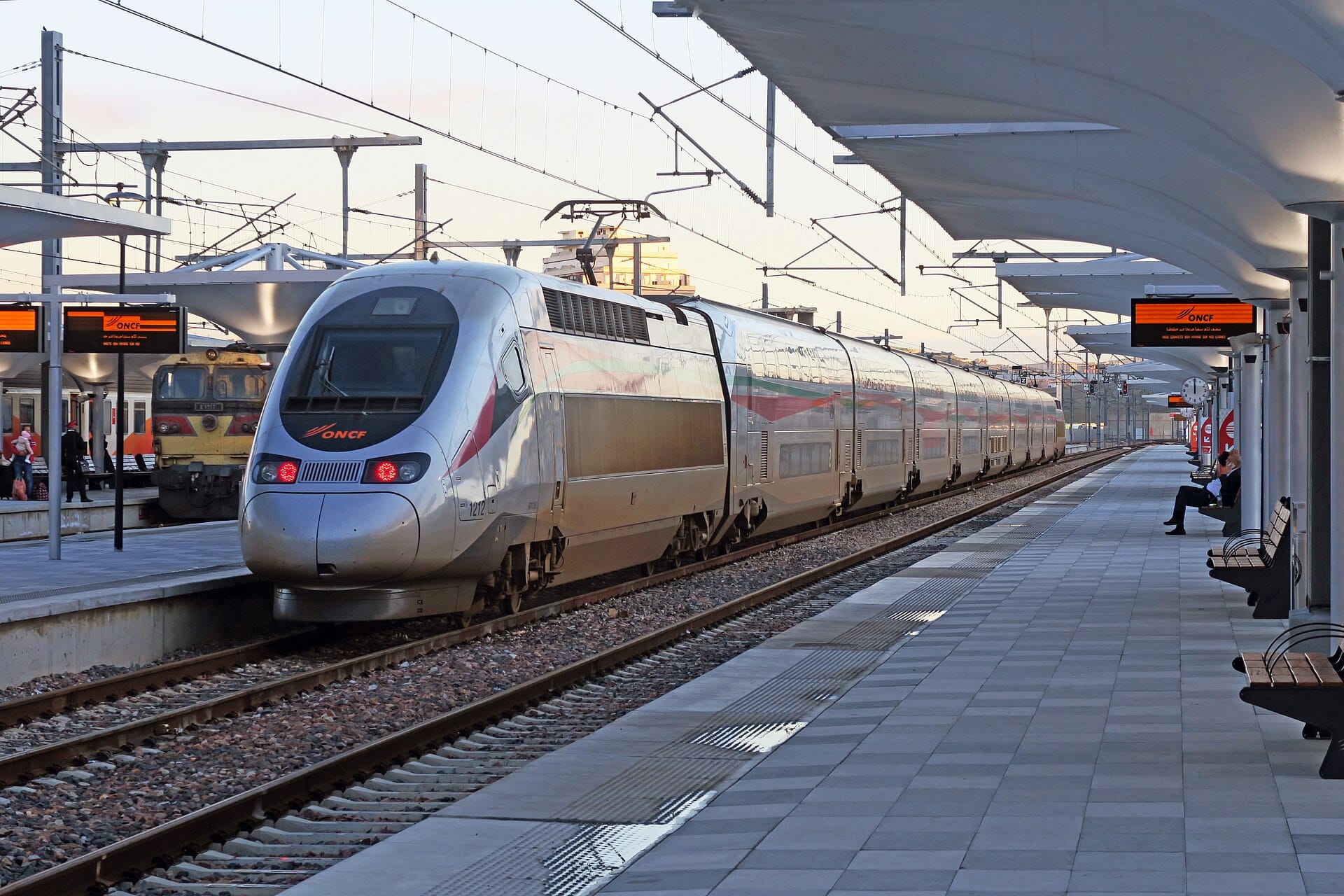
More than any stadium, the 430 km Kenitra–Marrakech high-speed line is the project that will change your trip. It’s a roughly $10.3bn build, about 30% complete as of May 2026 per the transport minister (Barlaman Today), with commissioning targeted for November 2029. That’s months before kickoff.
The officially announced journey times, per the government’s own launch communiqué (Maroc.ma, April 2025): Casablanca–Marrakech in 1h15, Tangier–Marrakech in 2h40, Tangier–Rabat in 1h, and Rabat to Casablanca’s airport in 35 minutes. Trains are designed for 350 km/h running; quoted operating speeds vary by source, so treat the times, not the top speed, as the planning figure.
What does 1h15 to Marrakech actually mean for an itinerary? It collapses the classic north–south route. Today, Casablanca-to-Marrakech is a half-day commitment. Once the line opens, Marrakech becomes a day trip from Casablanca or Rabat, and basing in one city while touring three becomes realistic. If you’re planning around today’s timetable instead, our Morocco trip planning guide has the current logistics.
One honest caveat: November 2029 leaves no slack before a June 2030 tournament. The 30%-complete figure comes from the minister, not an independent audit, and big rail projects slip. If it slips, 2030 visitors ride today’s trains, which are decent, just slower. We’ll track it monthly in the table above. For fares, booking and where the Marrakech line stands today, see the high-speed train in detail.
What’s Happening to Morocco’s Airports?
The biggest single project is Casablanca Mohammed V: a $1.6bn (MAD 15bn) new terminal lifting capacity from 15 million to 35 million passengers a year, plus a new 3,700 m runway, with completion targeted for the end of 2029 (ENR, July 2026). It anchors ONDA’s “Airports 2030” program, which also expands Marrakech, Agadir, Fes and Tangier and targets lifting national capacity from about 30 million to 80 million passengers a year by 2030 (Maroc.ma, April 2025). Where that capacity actually sits today, airport by airport, is in the busiest airport in Morocco, updated monthly from ONDA’s own traffic releases.
The traveler translation runs in two phases. Now through roughly 2029 means construction-period friction: rerouted terminals, longer connections, and works at exactly the airports tourists use. Casablanca is the one to watch. If your routing allows it, Marrakech and Tangier are calmer gateways while the Mohammed V works run.
After 2029, the equation flips: far more seats into Morocco, more direct long-haul routes, and a 35-minute rail link from Rabat to Casablanca’s airport on the new line (Maroc.ma, April 2025). New route announcements land continuously; we log them in our Morocco Now stream with each monthly refresh.
Will Morocco Get More Expensive Before 2030?
The demand curve says yes, gradually. Morocco received a record 19.8 million visitors in 2025, up 14%, making it Africa’s most-visited country (ATTA, January 2026). The first half of 2026 added 9.4 million more, up another 6% (Morocco World News). Tourism revenue rose 15.9% in H1 2026, to MAD 64.89bn (Morocco World News, August 2026). Demand is compounding four years before the tournament.
The supply response is real but lagging: about 60,000 new hotel beds, roughly a fifth on top of today’s ~300,000, across some 700 projects worth ~$4bn (Reuters via Morocco World News; Bloomberg, March 2026).
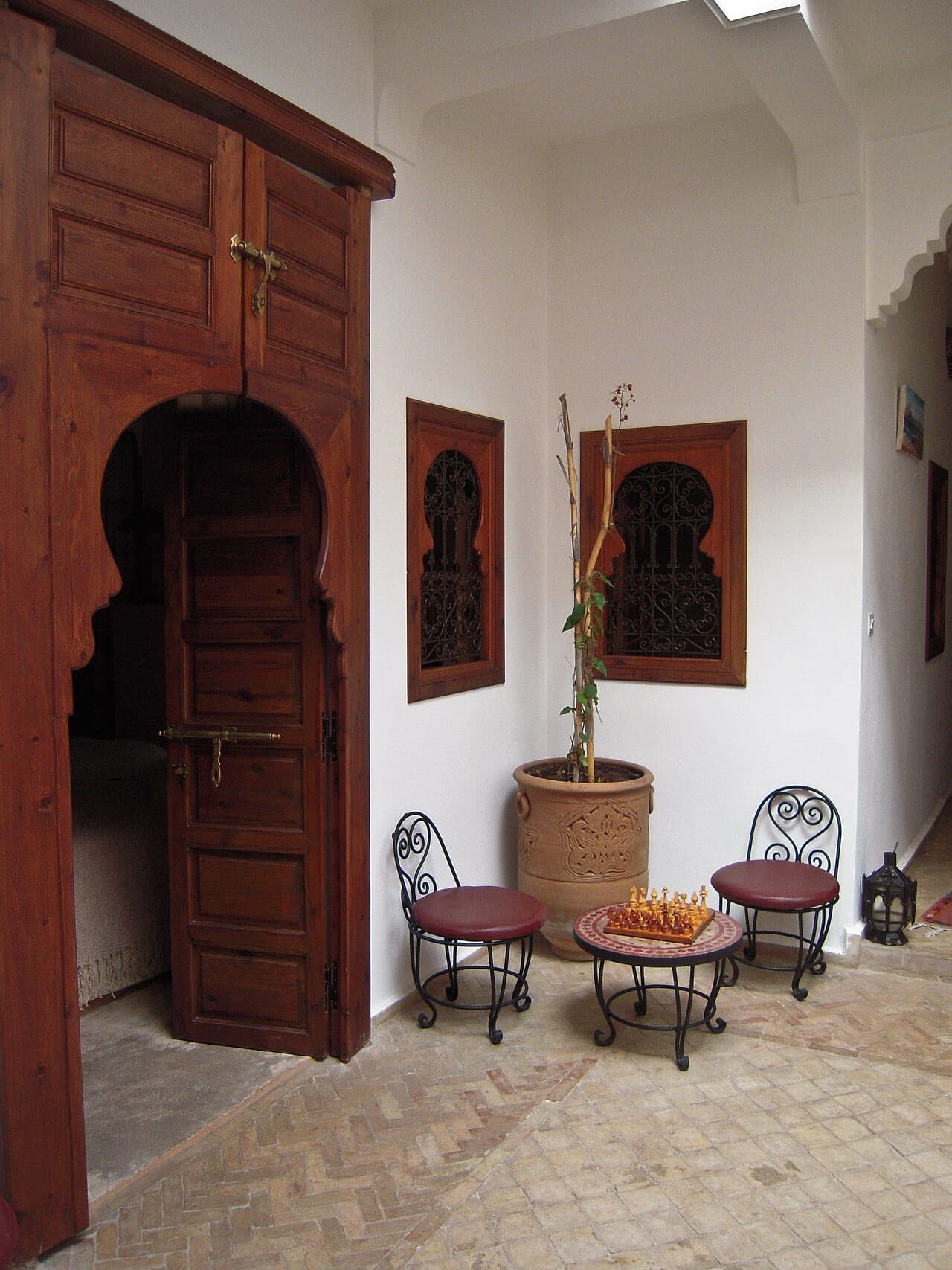
New to Morocco? After the 2026 tournament, a lot of American readers are discovering it as “the next World Cup country.” The accommodation worth watching isn’t the chain hotels but the riad: a traditional courtyard house converted to a guesthouse, typically 5–10 rooms, inside the old walled city. Riad supply can’t expand the way hotel supply can. That’s where pre-tournament rate pressure will show first.
We’ll say it plainly rather than dramatically: nothing in the current data shows World Cup pricing yet. It shows a strong destination getting stronger. The tournament premium comes later, which is exactly the argument of the next section.
Should You Visit Morocco Before the World Cup?
Yes, and the window is now through 2028. Everyone asks whether Morocco will be ready for 2030. For a traveler, that’s the wrong question. The right one: what does a hard 2030 deadline do to a trip taken before it? Answer: current prices, cities not yet reshaped for tournament crowds, and a country in the most interesting construction-era state it will ever be in, all before the pre-tournament rate pressure of 2029.
Concretely, in the window you get Marrakech, Fes and Chefchaouen at today’s rates while 60,000 hotel beds are still on drawing boards. You get five future World Cup stadiums hosting ordinary league matches. From late 2029, if the rail timeline holds, you get the new line without the tournament crowds. A few months where Morocco has World Cup infrastructure and no World Cup.
The honest counterweight: this is a country mid-build, and the disruption is uneven. City by city, as of August 2026, it looks like this. Casablanca carries the heaviest works: the $1.6bn airport terminal (ENR), the high-speed corridor, and the 115,000-seat stadium rising at Benslimane outside the city. Marrakech and Fes are, so far, the calm ones: tournament construction hasn’t touched the historic medinas, and Fes’s stadium expansion sits outside the old city. Rabat and Tangier sit in between. Officials described both cities’ venues as already complete in July 2026 (Football Ground Guide), though corridor and station works continue around them. Along the rail line from Kenitra south, civil works have been visible since construction launched in April 2025 (Maroc.ma).
None of it, on current reporting, rises to trip-changing. We log the picture monthly in the timeline table, and where safety questions come into it, our honest assessment of whether Morocco is safe covers that ground separately.
If that trade reads as acceptable, plan the trip normally and treat this page as your what’s-changed layer.
When Can You Book Morocco World Cup 2030 Tickets and Accommodation?
Tickets: nowhere, yet. FIFA has announced no sale date for 2030. Based on how 2026 ran, with phased sales starting roughly 12–18 months out, the first phase is unlikely before late 2028. When sales open, the only authorized channels will be FIFA’s own ticketing portal and national football associations. One thing you can do today: FIFA is already taking free ticket-interest registration for 2030 on its official tournament page (verified 11 August 2026). It costs nothing, runs through your FIFA account, and it’s the only list worth joining.
That vacuum has been filled by something worth naming. Search “World Cup 2030 tickets” today and the top results are unofficial reseller sites publishing “estimated price ranges” for tickets that do not exist. The prices are invented. There is nothing to estimate. We don’t link them, and we’d suggest not giving them your email either. This is the same family of advance-booking fraud we document in our guide to Morocco scams, where the expensive frauds happen before you ever land.
Accommodation is more forgiving. Host cities will publish match allocations well before the tournament; until city-by-city schedules exist, booking 2030 rooms is guesswork with cancellation risk on both sides. A sane sequence: wait for the match schedule, then book refundable rates immediately. At comparable tournaments, host-city rates moved sharply the week fixtures were announced. We’ll date and source that guidance properly as 2030 information lands; for now, distrust anyone selling certainty.
What Did AFCON 2025 Prove, and What Didn’t It?
Morocco’s dress rehearsal went well, by the numbers. The country hosted Africa’s most-attended AFCON: more than 1.25 million total spectators, a record 729,240 across the group stage (Elbotola, January 2026), and 66,526 at the Rabat final (Hespress). Stadium operations, city transport and match-day logistics ran at genuine tournament scale, and passed.
What AFCON didn’t test is exactly what 2030 requires: simultaneous international arrivals at World Cup volume through an unfinished terminal, and long-distance movement on a rail line that doesn’t exist yet. AFCON’s crowds were overwhelmingly domestic and regional; 2030’s won’t be. The proven half and the unproven half are both real, and this page tracks the unproven half month by month.
There’s also a cost debate at home worth acknowledging, once and factually. Direct football spending is put at 50–60 billion dirhams within the wider program, and the IMF warned in April 2026 that a 30% cost overrun could add roughly 3% of GDP to public debt by 2034 (Hespress). Spending priorities are debated inside Morocco, as they were in every recent host country. That debate belongs to Moroccans; a travel page’s job is to report it exists and keep its own numbers honest.
Frequently Asked Questions
When is the 2030 World Cup?
The main tournament runs 8 June to 21 July 2030 across Morocco, Spain and Portugal, with the three host countries opening 13–14 June. Three centenary matches are played first in Uruguay, Argentina and Paraguay on 8–9 June (Al Jazeera, July 2026).
Which Moroccan cities will host matches?
Six: Casablanca, Rabat, Marrakech, Fes, Agadir and Tangier. City-by-city match allocations are not yet FIFA-confirmed. The bid book proposes venues, but final allocations come later. Five of the six venues host league football today, so you can visit them now.
Will the World Cup final be in Morocco?
Undecided. Madrid’s Bernabéu and the 115,000-seat Grand Stade Hassan II are the reported candidates. A report that FIFA’s president offered Morocco the final surfaced on 5 August 2026 and FIFA denied it the same day, calling it “untrue and misleading” (Goal, 5 August 2026). No decision has been announced.
When do 2030 World Cup tickets go on sale?
No date has been announced. FIFA’s recent pattern points to phased sales starting late 2028 or 2029, and its free ticket-interest registration for 2030 is already open on FIFA’s official tournament page. Only FIFA and national football associations will be authorized sellers. Sites selling “2030 tickets” today are unauthorized and their prices are invented.
Is Morocco ready for the World Cup?
The build-out is large and, per official statements, on schedule: the 430 km high-speed line ~30% complete targeting November 2029, the new Casablanca terminal targeting end-2029, the main stadium ~30% built targeting late 2027. Those are attributed claims, not audits. See the verified timeline above, which we update monthly.
Will Morocco still be a co-host?
Yes, as things stand. FIFA’s hosting agreement with Morocco, Spain and Portugal is in place and unchanged. Political parties in Spain (VOX) and Portugal (Livre) called for Morocco’s removal in August 2026; neither demand has institutional traction (The European Conservative, August 2026).
The Short Version
- The Morocco World Cup 2030 build-out is real, dated and mostly on claimed schedule: MAD 190bn+, six host cities, high-speed rail by late 2029.
- The final venue and ticket dates are genuinely undecided. Distrust any page that says otherwise.
- The traveler’s window is now through 2028: current prices, pre-crowd cities, and future World Cup stadiums you can already sit in.
- Nothing about the Morocco World Cup 2030 is bookable yet. When that changes, this page will say so, with dates.
Planning a trip in the meantime? Start with the complete Morocco trip planning guide. Thinking about 2030? Bookmark this page. It’s re-verified monthly, and the changelog at the top will show you exactly what changed while you were away.