Last verified: September 23, 2026. I read 905 car rental listings across five Moroccan cities myself on the date above, all for the same three-day window, and I read the fine table, the radar figures and the casualty statistics from Morocco’s road safety agency on the same afternoon. Rental prices are live platform data and move week to week. Fines and road rules move more slowly but they do move, so I re-read all of it every 60 days and move the date above each time.
Every guide to renting a car in Morocco tells you to turn up with a credit card carrying a one to three thousand euro limit, because the deposit will be enormous. So I counted. Of 905 listings I read across five Moroccan cities, 698 asked for no deposit at all, and 15 wanted a credit card.
Disclosure: Some links in this guide may earn us a commission, at no extra cost to you. It never changes what we recommend.
That advice isn’t malicious. It’s just old. And while everyone was warning you about the deposit, the money moved somewhere else. It went into the coverage ladder under the daily rate, where the top tier adds about 41% to a typical Marrakech booking. On some listings it costs more than the car does.
So this post prices the whole thing. Not the headline rate, which is a floor and nothing more, but the nine separate places your money actually goes. Then the two things that decide whether the trip goes badly: what a checkpoint wants from you, and what happens to a speeding ticket after you’ve flown home.
Key Takeaways
- Three-quarters of the market has dropped the deposit. Of 905 listings I read across five cities on 23 September 2026, 698 required none at all and only 15 asked for a credit card
- The money moved to the insurance. Top-tier coverage adds a median 41% to a Marrakech rental. On 15 Marrakech and 48 Casablanca listings it costs at least as much as the car itself
- Where a deposit is charged it’s large, with a median of 900 euros in Marrakech and a top of 5,000. You’re choosing between two products, not two suppliers
- A speeding fine doubles if you’re slow to pay, and a visitor always is. Morocco’s road safety agency lists the same offence at 150 dirhams inside 24 hours and 300 at thirty days
- Morocco recorded 4,577 road deaths in 2025, but 887 of them were people inside cars. Four in five were on two wheels or on foot, which makes this a risk your car mostly poses rather than carries
Table of Contents
Should you rent a car in Morocco at all?
For a trip built on cities, no. For the Atlas passes, the gorges and the handful of places nothing scheduled reaches, a car or a hired driver is the only thing that works. That decision belongs to the guide to getting around Morocco, which counted what actually reaches the 25 places people go, and I’m not going to re-run it here.
What I will add is a supply finding the round turned up, because it inverts the obvious plan. Ouarzazate is the gateway to the desert road and one of the few places a car genuinely earns its cost. It listed 53 vehicles for my window. Marrakech listed 275 and Casablanca 282.
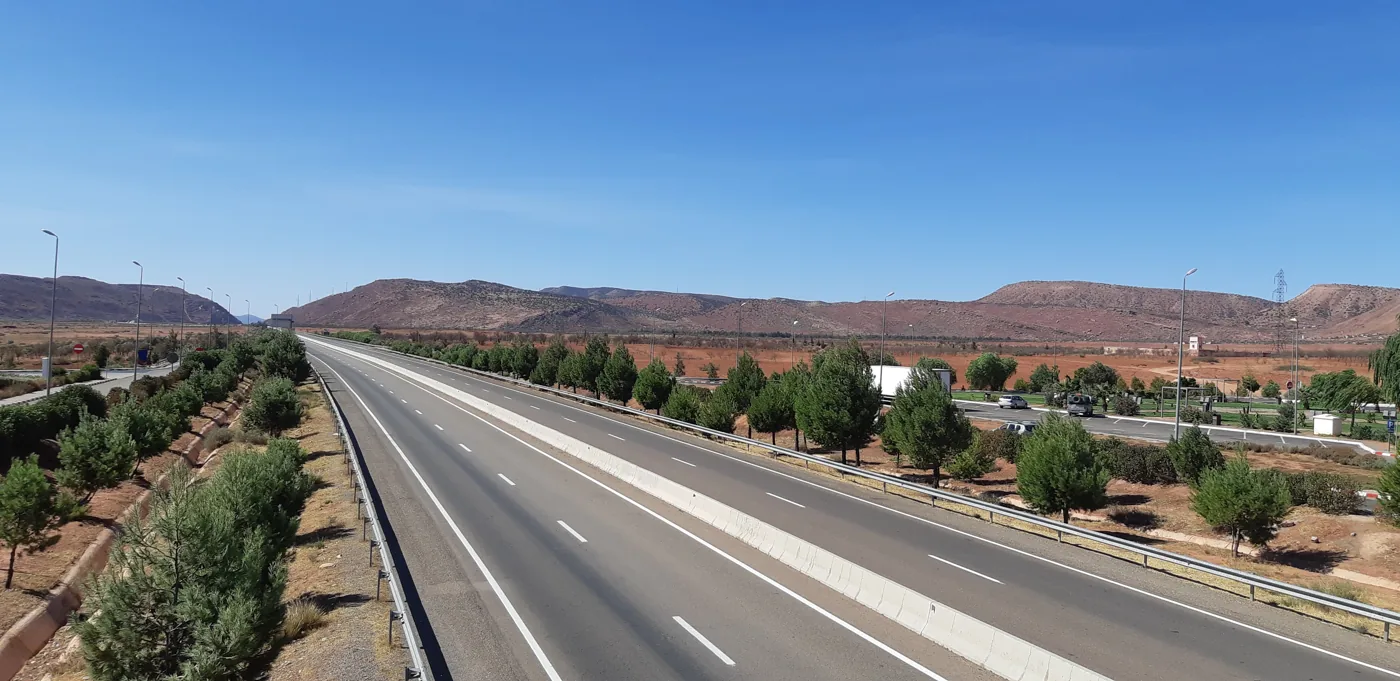
The A7. Trunk roads like this one are the easy part of driving here, and they’re not the roads you’d be renting the car for. Photo: Abdeaitali, CC BY-SA 4.0, via Wikimedia Commons.
So rent where the fleet is, then drive south. Collecting the car in the small town you’re heading for sounds tidy, and leaves you picking from a tenth of the stock.
If the answer turns out to be no, the alternatives are a shared or hired driver, priced inside what a Morocco trip actually costs, and the shared intercity cars explained in the petit and grand taxi rulebook. For the desert specifically, a tour usually includes the transport, and the desert guide covers how the two, three and four-day shapes differ.
What does renting a car in Morocco actually cost?
On 23 September 2026, for a three-day pickup in November, the median listed price in Marrakech was 85.34 euros a day, or 256 euros for the three days, across 275 listings. Across five cities the daily median ran from 71.34 euros in Casablanca to 118.34 in Fes. Those are advertised prices, not counter prices, and they’re a floor.
Here’s the method, because it decides how much you should trust the rest. I read every listing the platform returned for one identical window, 10 to 13 November 2026, in five cities on the same afternoon, with the currency pinned so nothing drifted. Not a page-one sample: 905 listings, which is the platform’s own count for those five cities. The per-city files and the collector are in the repository.
| City | Listings | Median per day | Median for 3 days |
|---|---|---|---|
| Casablanca | 282 | 71.34 euros | 214 |
| Marrakech | 275 | 85.34 euros | 256 |
| Ouarzazate | 53 | 93.34 euros | 280 |
| Agadir | 176 | 109.50 euros | 328.50 |
| Fes | 119 | 118.34 euros | 355 |
A 66% spread on the same window, the same day, the same platform. Fes is the expensive end and Casablanca the cheap one, which is roughly the opposite of what the tourist geography would suggest. If you want the fuller Marrakech-against-Fes comparison on everything else, it lives in its own post.
Now the nine places the money actually goes. This is the table I wanted when I first rented here and couldn’t find.
| # | The cost | What the round shows |
|---|---|---|
| 1 | The car | 71 to 118 euros a day, median, depending on the city |
| 2 | The deposit | Nothing on 698 of 905 listings. 300 to 5,000 euros on the rest |
| 3 | Top-tier coverage | Median 75 euros for three days in Marrakech, about 41% on top |
| 4 | What you carry if you decline it | The damage bill, up to the listing’s own limit. This is the real trade |
| 5 | Mileage over the cap | Only 52 of 905 listings cap it, always at 750 km. Check, then forget it |
| 6 | Fuel | Liberalised and revised on a short cycle. Any figure printed in a guide is stale, including one I’d print here |
| 7 | Motorway tolls | Small. Casablanca to Rabat is 23 dirhams, Nouaceur to Marrakech Palmeraie 80, on the road operator’s own grid |
| 8 | Delivery or airport pickup | 250 of the 275 Marrakech listings offer city delivery. The fee is not reliably published, so check it on the listing |
| 9 | A traffic fine | 150 to 700 dirhams for ordinary speeding, and far more above 50 km/h over. See below, because the timing matters |
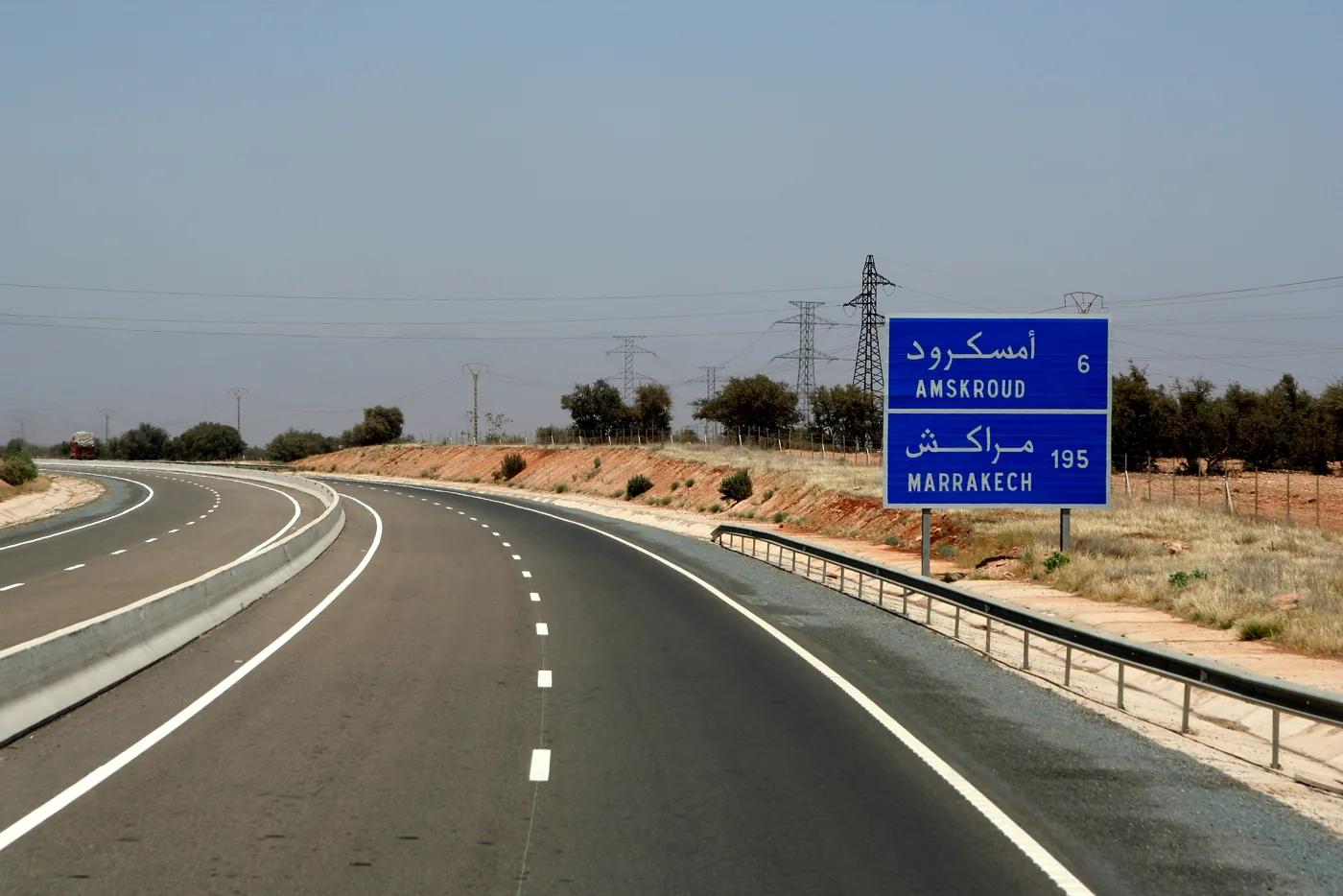
Amskroud is a toll section on the road operator’s own tariff grid. The motorway network is the cheapest line in the table and the one guides worry about most. Photo: Makary, CC BY 3.0, via Wikimedia Commons.
Two honest notes on that table. The toll figures come from ADM’s own published grid, and that grid carries no effective date (ADM, Grille tarifaire sur le réseau autoroutier). Its Marrakech numbers match a sheet from several years ago. Other sources report a rise since. I could not reconcile the two from the operator’s own material, so treat the toll as a scale fact. It’s roughly seven or eight euros to cross the country, not seventy.
And I’ve left the fuel cell empty on purpose. Moroccan pump prices are liberalised and revised on a short cycle. I’d rather tell you the price moves than print a number that’s wrong by the time you read it.
How big is the deposit, and can you avoid it?
698 of the 905 listings I read required no deposit at all, from 70.2% in Casablanca to 94.3% in Ouarzazate. Only 15 of the 905, under 2%, stated that a credit card was required. The standard advice to arrive with a large credit limit now describes a small corner of this market.
But the deposit hasn’t vanished. It’s split the market in two, and that’s the part nobody tells you. Where a deposit is charged it’s serious money: a median of 900 euros in Marrakech and 1,000 in Casablanca, with the largest in the whole round at 5,000 on a Range Rover. There’s almost nothing in between. You’re not choosing between suppliers who ask for a bit more or a bit less. You’re choosing between two different products.
Which one you want depends on something boring: whether a four-figure hold on your card for a week would actually hurt. If it wouldn’t, the deposit route is usually cheaper, because the supplier has security and prices the coverage accordingly. If it would, take the no-deposit listing and read the next section very carefully, because that’s where the money reappears.
Whether your card will behave at a Moroccan counter is a separate question with a separate answer, and what cards actually do in Morocco has it.
What does the insurance actually cost, and what does it not cover?
Every listing I read carried a four-tier coverage ladder, and the top tier had a Marrakech median of 75 euros for three days against a median rental of 256. That’s about 41% on top. On 90 of 229 priced Marrakech listings it cost half the rental or more, and on 15 of them it cost at least as much as the car. Casablanca was worse: 48 listings where the coverage matched or beat the rental price.
The cheapest car in the entire round makes the point better than the medians do. A small hatchback, 60 euros for three days, listed its full coverage at 100 euros. The insurance was 167% of the rental.
The two bottom tiers are almost always free, which is exactly why they’re there. They leave you carrying the damage. So the real question isn’t whether to buy the upgrade, it’s what you’re exposed to if you don’t, and that number sits on the listing rather than in any general guide.
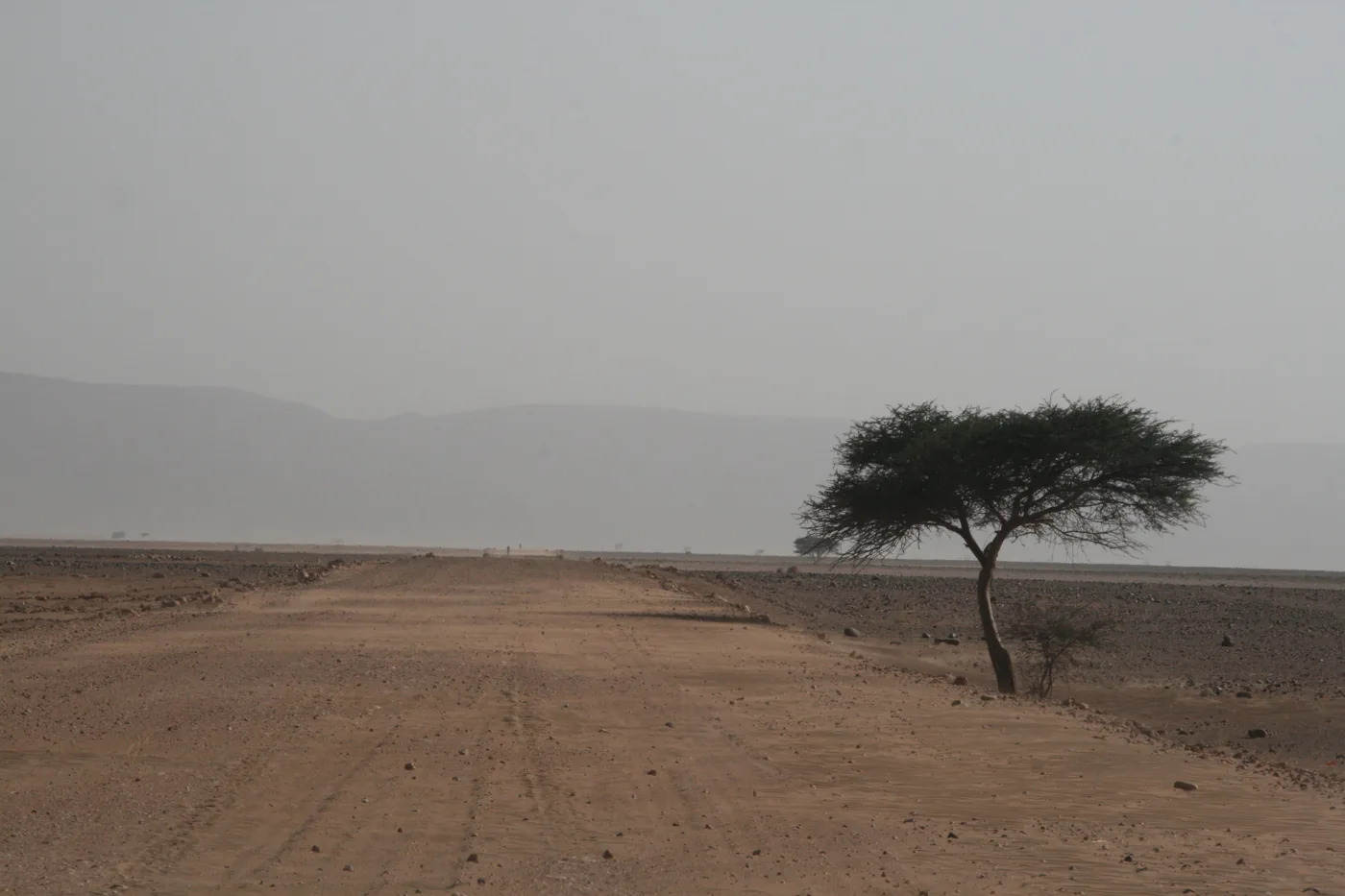
Between Zagora and Tata, where the tarmac stops. Roads like this one are the reason people rent a car here, and the reason the exclusions matter. Photo: tuarek, CC BY-SA 3.0, via Wikimedia Commons.
Read the exclusions before the price. The ones that bite in Morocco specifically are tyres, glass, the underbody, sand ingress and unsurfaced roads, and that last one is the trap. A great deal of what people rent a car here for is off the tarmac. If the policy excludes unsurfaced roads and your plan involves a piste to a kasbah, you’re uninsured for the interesting half of the trip.
Two smaller flags worth thirty seconds each. Only 52 of the 905 listings capped mileage, always at 750 km, which matters only on the long southern runs. And 534 of 905 were automatic, with automatics outnumbering manuals in Marrakech, Casablanca and Fes. The advice that Morocco is manual-transmission country is out of date.
Do you need an International Driving Permit in Morocco?
Yes, and the version matters. The UK government states that drivers need “both the 1968 version of the international driving permit (IDP) and your UK driving licence” in the car, and that “Morocco no longer accepts the 1949 version” (UK Foreign, Commonwealth and Development Office, Morocco travel advice, read 23 September 2026).
That sentence catches people twice. Plenty of travellers own an IDP already and own the wrong one. And you can’t buy an IDP after you land, because it’s issued by your own country against your own licence, so this is a before-you-fly item rather than an at-the-counter one.
There’s a second layer that guides tend to collapse into the first. What the law requires and what the rental company requires are different questions. A company can insist on an IDP, a minimum age, or a licence held for a stated number of years as a matter of contract, whatever the legal position. Read the listing’s own conditions, not a general article about Moroccan law, including this one.
One more from the same government page, because it’s the rule with the sharpest teeth: drink-driving is treated as zero tolerance. If you’re tested “and found to have any alcohol in your system, you will get a fine and possible imprisonment.”
A caution about something you’ll read elsewhere. Several guides repeat a rule about your vehicle’s registration being recorded when you enter Morocco and being detained on exit if you’re not in the same car. That applies to a car you drove into the country on foreign plates. It has nothing to do with a Moroccan-registered hire car, and confusing the two has sent people looking for paperwork that doesn’t exist.
What happens at a police checkpoint in Morocco?
You’ll meet two forces. The Sûreté Nationale works inside towns and the Gendarmerie Royale covers the roads between them, which means almost every checkpoint on an intercity drive is Gendarmerie. Most wave you through. The ones that stop you want documents, and in a rental you don’t carry the originals.
What you hand over is your licence, your IDP, and the rental paperwork the company gives you in place of the owner’s registration document, which is normally a copy plus the contract. Keep them together and reachable without getting out. That’s the whole procedure. It’s dull, and it should be.
The bigger change isn’t at the roadside anyway, it’s overhead. Morocco’s road safety agency describes 552 new-generation automated units going in on top of an existing fleet of 140 radars. They split into 276 rural speed cameras on national and regional roads, 204 urban units covering speed and red lights, and 72 average-speed units on the motorways (NARSA, Constatation des infractions, read 23 September 2026).
Those 72 are the ones to know about. An average-speed unit measures you across a whole motorway section rather than at a point, so the national habit of braking for the camera and accelerating after it doesn’t work on them. The same equipment also registers red lights, solid-line crossings and banned lanes, and can read several vehicles at once.
If something goes wrong and you need a number rather than a document, the emergency lines and which one covers a rural road are in the health and emergencies guide. I’d keep them in your phone before you drive, not after.
What does a speeding fine cost, and what happens after you fly home?
It depends on two things, and almost everything written about Moroccan fines only tells you one of them. The amount depends on how far over the limit you were and on how fast you pay. Under 20 km/h over costs 150 dirhams if you settle within 24 hours and 300 if you take the full thirty days.
The full table runs 150, 200 or 300 dirhams for under 20 km/h over. It’s 300, 350 or 500 for 20 to 30, and 400, 500 or 700 for 30 to 50. A Moroccan licence loses two points in the middle band and four in the top one.
Above 50 km/h over, it stops being a contravention altogether. That’s an offence carrying 4,000 to 8,000 dirhams, six points and a suspension of one to three months (NARSA, Paiement des amendes, read 23 September 2026). The notice allows thirty days from notification.
Now the part that matters to you specifically, and I haven’t seen it written anywhere. A camera ticket is raised against the registered owner of the vehicle. In a hire car, that’s the rental company, not you.
The agency notifies the owner electronically. The company then identifies the driver, and only after that does it reach you. By then the 24-hour tier is long gone, and the 15-day tier usually is too. A visitor in a rental car structurally pays the top of every band. The 150-dirham version of your offence was never available.
There’s a way to get ahead of it. Morocco’s road safety agency runs an online infraction service that explicitly covers “les touristes étrangers conduisant un véhicule immatriculé au Maroc”, foreign tourists driving a Moroccan-registered vehicle. It shows the infractions logged against the plate, the radar photograph, whether the fine is paid, and it takes payment (NARSA infraction service). Check it before you hand the car back and you may still be inside a cheaper window.
Note the plate rule in that sentence, because it’s the distinction guides blur. That service is for Moroccan-registered vehicles, which a rental is. A car you drove in on foreign plates uses a different service entirely. Wrong portal, no results, and a reasonable person concludes they’re in the clear.
What do Morocco’s road-death numbers mean if you’re in a car?
Morocco recorded 4,577 road deaths and 160,347 injury accidents in 2025, up 25.5% and 12.7% on the year before. But 887 of those deaths were occupants of passenger cars: 19.4% of the total. Riders of two and three-wheelers accounted for 2,060, or 45%, and pedestrians for another 1,185 (NARSA, provisional 2025 casualty statistics, published February 2026).
So the number the anti-driving articles quote at you overstates the risk to somebody sitting in a rental car. Four in five of the people killed on Moroccan roads last year were not inside one.
I’d rather you took the other half of that reading too, because it’s the half that should change how you drive. In a hire car you’re the heavy object in a system whose casualties are overwhelmingly outside cars. That 45% and that 25.9% aren’t a risk you carry. They’re a risk you pose. The mopeds three abreast at a junction and the man crossing an unlit road at dusk are the people your decisions land on.
Whether Morocco is safe overall is a different question with a broader answer, and the honest assessment makes the case that the road is the country’s real risk rather than anything in the headlines. I’m not going to relitigate it here.
Two patterns in the same data are worth driving by. Deaths rose fastest outside built-up areas, where accidents were up 17.3%. And the year has a shape.
August killed 508 people, against February’s 257. That’s a statement about traffic volume and heat rather than about your holiday, and when to come is decided in the month-by-month guide, not here. But if you are driving in August, drive like it.
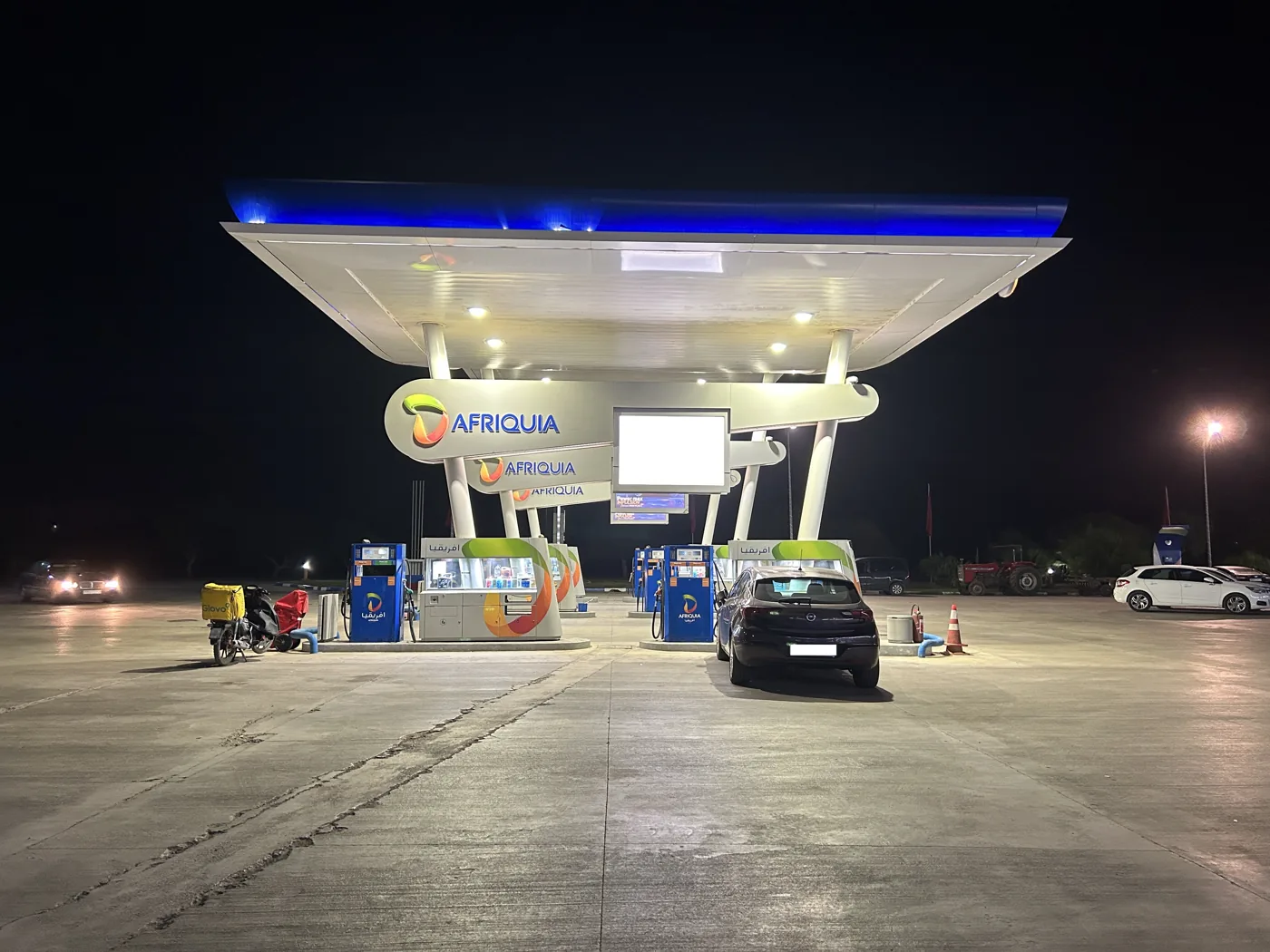
The practical version of the statistics: fill up in daylight. Unlit roads, livestock and vehicles without working lights are the reason the advice against night driving keeps getting repeated. Photo: Anass Sedrati, CC BY-SA 4.0, via Wikimedia Commons.
How do you pick the car up and hand it back without an argument?
The handback decides whether you get your money back, and it’s settled by evidence you create at pickup rather than by anything you say at return. Ten minutes at the start beats any argument at the end. It’s also the one part of this that’s entirely in your hands.
Walk the car before you sign. Photograph every panel, both bumpers, all four wheels and the windscreen, plus the dashboard showing the fuel gauge and the odometer. Your phone timestamps them. Get the existing damage marked on the company’s own sheet, not just noted verbally, and photograph the sheet too.
Then check the fuel policy, because it’s the quiet one. Like for like is fine. Anything that has you buying a tank at the company’s price and returning it empty is a margin business, and you’ll pay for fuel you don’t burn.
At the return, do the same walk with someone from the company present, and don’t leave until the sheet is signed off. If a deposit was taken, ask when the release is processed and get it in writing. And if you drove past a camera at any point, that’s the moment to check the infraction service, while you’re still in the country and still inside a cheaper payment window.
Frequently Asked Questions
Do you need an International Driving Permit to rent a car in Morocco?
Yes, and it must be the 1968 version. The UK government states that Morocco no longer accepts the 1949 IDP and that drivers must carry both the permit and their national licence in the car. You cannot buy one after you arrive, so arrange it before you fly.
How much deposit do Moroccan rental companies hold?
Usually none. Of 905 listings I read across five Moroccan cities on 23 September 2026, 698 required no deposit at all and only 15 required a credit card. Where a deposit is charged it’s large, with a median of 900 euros in Marrakech and a maximum in the round of 5,000.
Is it safe to drive in Morocco?
The risk is real but it isn’t mostly yours. Morocco’s road safety agency recorded 4,577 road deaths in 2025, and 887 of them were people inside cars. Riders of two and three-wheelers and pedestrians made up 71% between them, so the greater danger is the one your car poses to others.
What happens if I get a speeding ticket in a Moroccan hire car?
The notice goes to the registered owner, which is the rental company, and reaches you later. Because Moroccan fines rise with delay, from 150 dirhams inside 24 hours to 300 at thirty days for the same minor offence, visitors usually end up paying the top tier. Check the infraction service before you fly home.
Can you rent a car in Morocco without a credit card?
Almost always. Only 15 of the 905 listings I read stated that a credit card was required, and 698 of them asked for no deposit at all. Check the individual listing rather than assuming, because the small minority that do require one tend to be the larger vehicles.
The rule, in one line
Renting a car in Morocco is cheaper and less fraught than its reputation, and the reputation is wrong in a specific way. The deposit everyone warns you about has mostly gone. The money moved into the coverage ladder, where the top tier costs about 41% of the rental and sometimes more than the car itself, so that’s the line to read before you compare daily rates.
After that, two habits cover most of the rest. Photograph the car before you sign anything, because the handback is decided at pickup. And check the infraction service before you fly home, because a Moroccan fine gets more expensive the longer it takes to find you, and a hire car guarantees it takes a while.
The rest of the cluster sits in the Getting Around archive, including the train, the coach and the shared taxi you might take instead.
All the prices above were read on 23 September 2026 and all of them move. The rules move more slowly, but they move too, so I re-check the whole thing every 60 days.