Last verified: September 18, 2026. I read every source cited here on the date above: CDC, the UK government, WHO, and Morocco’s own medicines agency, health ministry and police. The medicine prices come from the agency’s national list, read the same day. I’m a travel writer, not a doctor, so the medical guidance here is theirs, linked and dated wherever the page carries a date. I re-read all of it every 30 days and move the date each time.
Health in Morocco is mostly about lunch. A traveller is far more likely to lose a day to a stomach bug than to anything exotic. A rare but lethal risk, rabies, is the one that needs a plan before you fly. And most of the fix for the common stuff sits behind a pharmacy’s green cross, at a price the state prints on the box.
Disclosure: Some links in this guide may earn us a commission, at no extra cost to you. It never changes what we recommend.
The Morocco health advice I read before writing this says the same four things: drink bottled water, get your jabs, avoid street dogs, buy travel insurance. Almost none of it says who gave the advice, or when. So what should you actually worry about, and what do you do when it happens?
I answered it from sources instead. Seven questions, each answered from a named, linked source, plus one thing none of the health authorities publishes: the state-set price printed on the medicine box.
Key Takeaways
- Your most likely problem is your stomach. CDC puts travellers’ diarrhoea at 30% to 70% of travellers over two weeks, and a 2024 review found most cases mild
- City tap water is treated, but neither CDC’s Morocco page nor the UK government tells visitors to drink it. 91.3% of urban Moroccans have safely managed water (WHO/UNICEF, 2024 data)
- Treat any dog or cat bite or scratch as urgent. Morocco averages about 20 human rabies cases a year, and once symptoms appear rabies is fatal. Wash the wound for 15 minutes and get to an anti-rabies centre the same day
- The price is printed on the box. Three sachets of rehydration salts cost 11.50 dirhams on the national list, less than a 25-dirham terrace mint tea
- No vaccine is required to enter Morocco. CDC recommends hepatitis A and typhoid for most travellers
Table of Contents
How risky is health in Morocco for a traveller?
Lower than the tone of most advice suggests, and predictable. In its 2026 Yellow Book, CDC puts travellers’ diarrhoea at 30% to 70% of travellers over two weeks (CDC Yellow Book 2026, travelers’ diarrhea, March 2026). Heat comes second, in summer. Rabies is rare for visitors, but once symptoms appear it is fatal in every case. That’s the order to plan in.
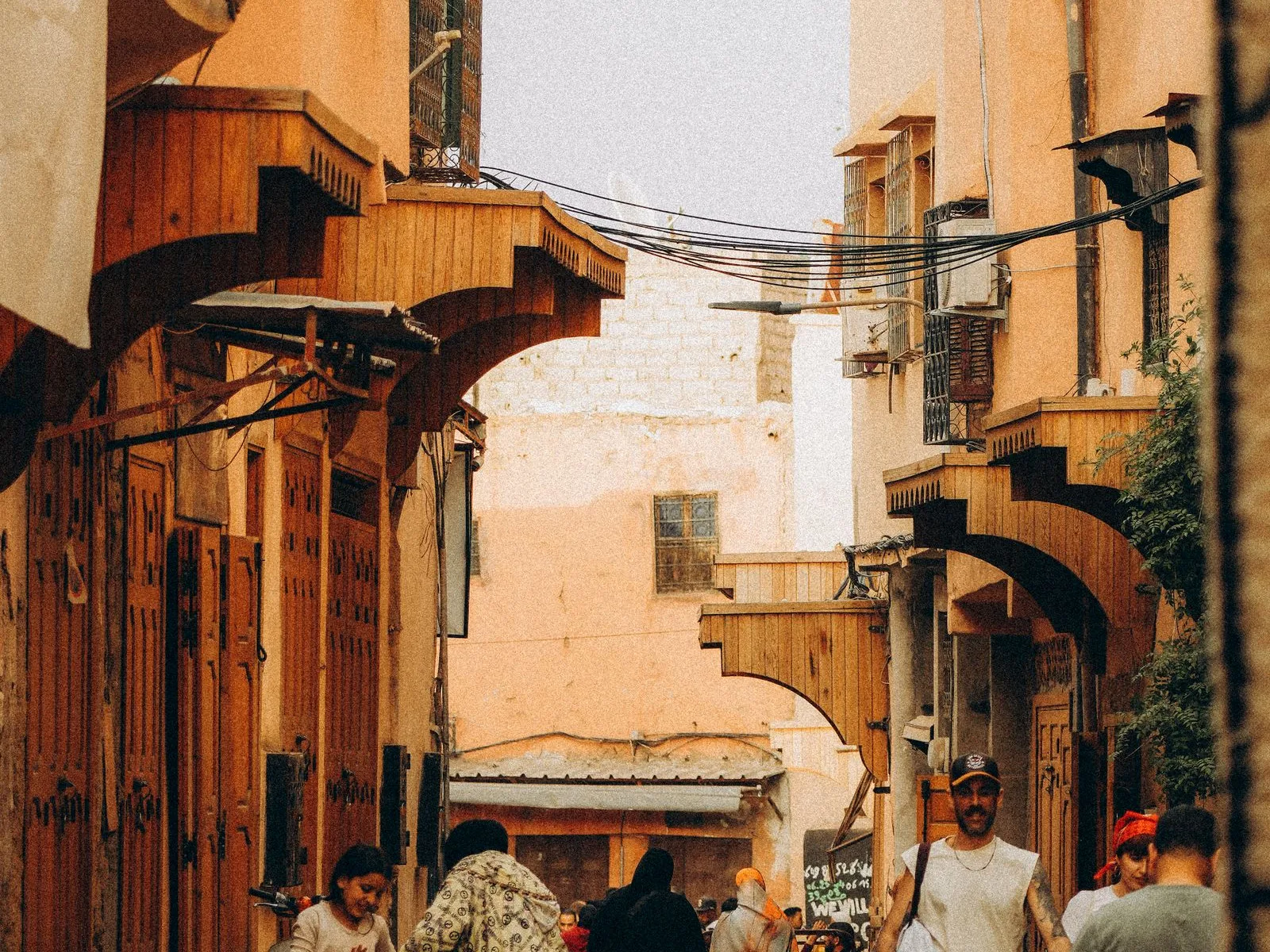
Stomach first. It’s the one that’s likely to happen to you. Most cases are mild, and the next section covers what actually shortens them.
Heat second. Marrakech averages a daily high of 37.7°C in July and 37.4°C in August, from NOAA’s 1991 to 2020 climate normals. CDC’s own Morocco page is blunt about it: “Heat-related illness, such as heat stroke, can be deadly” (CDC, Morocco traveler page, reviewed August 2026). If your dates are flexible, the month-by-month guide to Morocco’s weather shows which months avoid it.
Rabies third, and last on likelihood only. It gets its own section below because it’s the one risk where what you do in the first hours decides everything.
You can skip two worries. You don’t need a yellow fever certificate: CDC says the vaccine is “not required” for entry. And there’s no malaria to plan around, because WHO certified Morocco malaria-free in 2010 (WHO, countries certified malaria-free). Crime, scams and the overall verdict on safety are a separate question. The honest assessment of Morocco’s safety carries it.
Is the tap water safe to drink in Morocco?
City water is treated to a national standard, but neither CDC’s Morocco page nor the UK government tells visitors to drink it. Neither calls it unsafe, either. In 2024, 91.3% of urban Moroccans had safely managed drinking water, against 58.4% in the countryside (WHO/UNICEF monitoring programme, data dated January 2026). That gap between city and countryside is the real answer.
The national water utility, ONEE, tests drinking water to the Moroccan standard NM 03.7.001. Its laboratories check for “ni substances gênantes ou toxiques, ni germes pathogènes”, no harmful substances or pathogens (ONEE, laboratory mission, undated). That’s the plant. The UK government’s advice stops short of a verdict: “follow good food and water hygiene to reduce the risk of stomach bugs” (FCDO, Morocco health advice, updated August 2026).
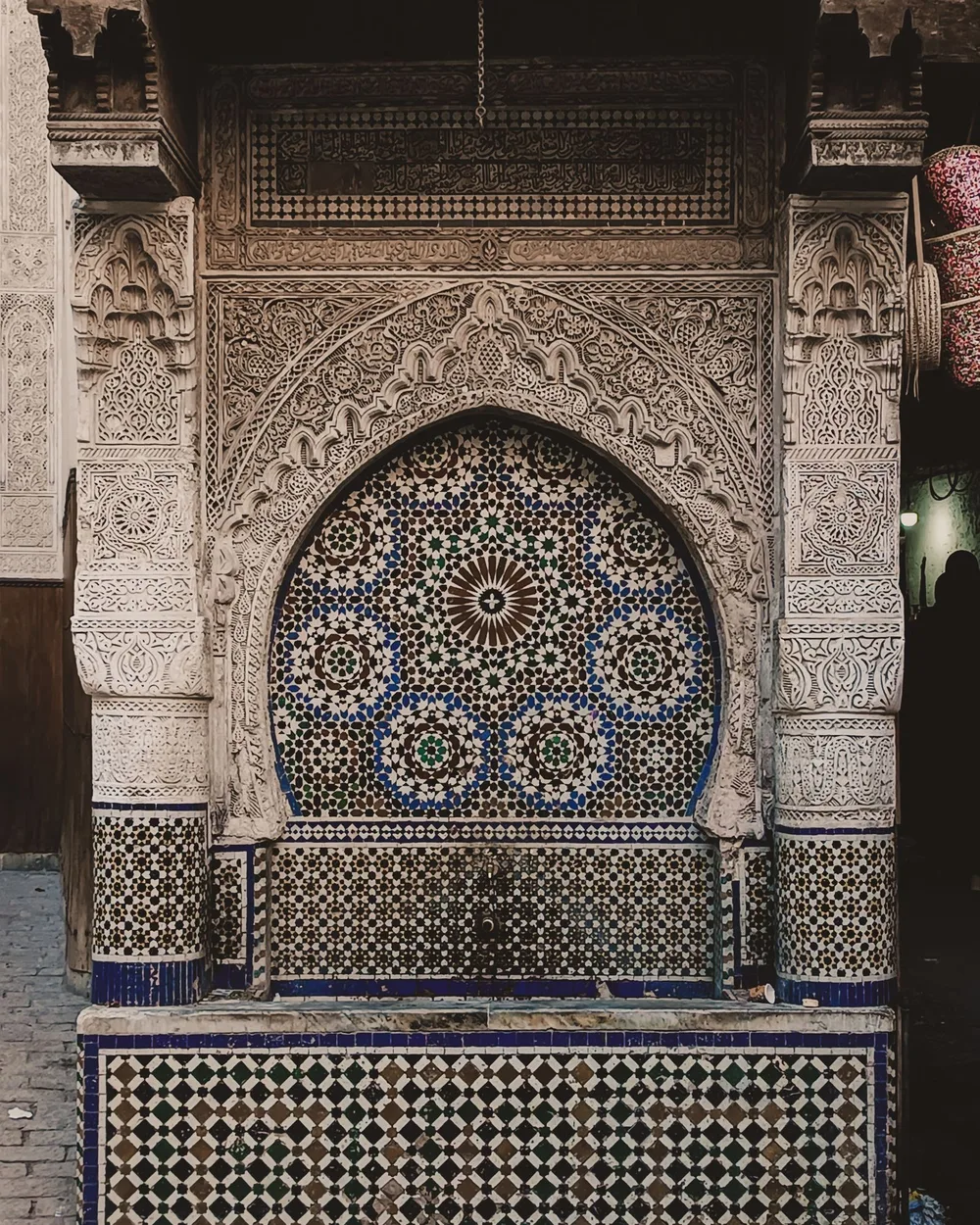
So why do most visitors still drink bottled? My reading, not a sourced finding: the water leaves the plant treated, but the last metre is the building. An old riad’s pipes and a rooftop tank are outside anyone’s test. Outside the cities the numbers drop sharply, and a desert camp or mountain village may not be on the network at all.
In practice, bottled water for drinking is the cautious default. It’s cheap on a shop shelf, though a terrace charges many times more for the same bottle (what a litre of water costs from shop to terrace). My reading again: brushing your teeth with city tap water is a far smaller exposure than drinking a glass of it. Ice is the same question as the tap: it’s only as good as the water it was frozen from.
How do you avoid food poisoning in Morocco?
You mostly can’t guarantee it, so plan to shorten it. A 2024 meta-analysis found 36.1% of short-term travellers got travellers’ diarrhoea. A region grouping that includes North Africa carried almost twice South America’s risk, a ratio of 1.93 (Carroll et al., Journal of Travel Medicine, 2024). The same review found most cases were mild.
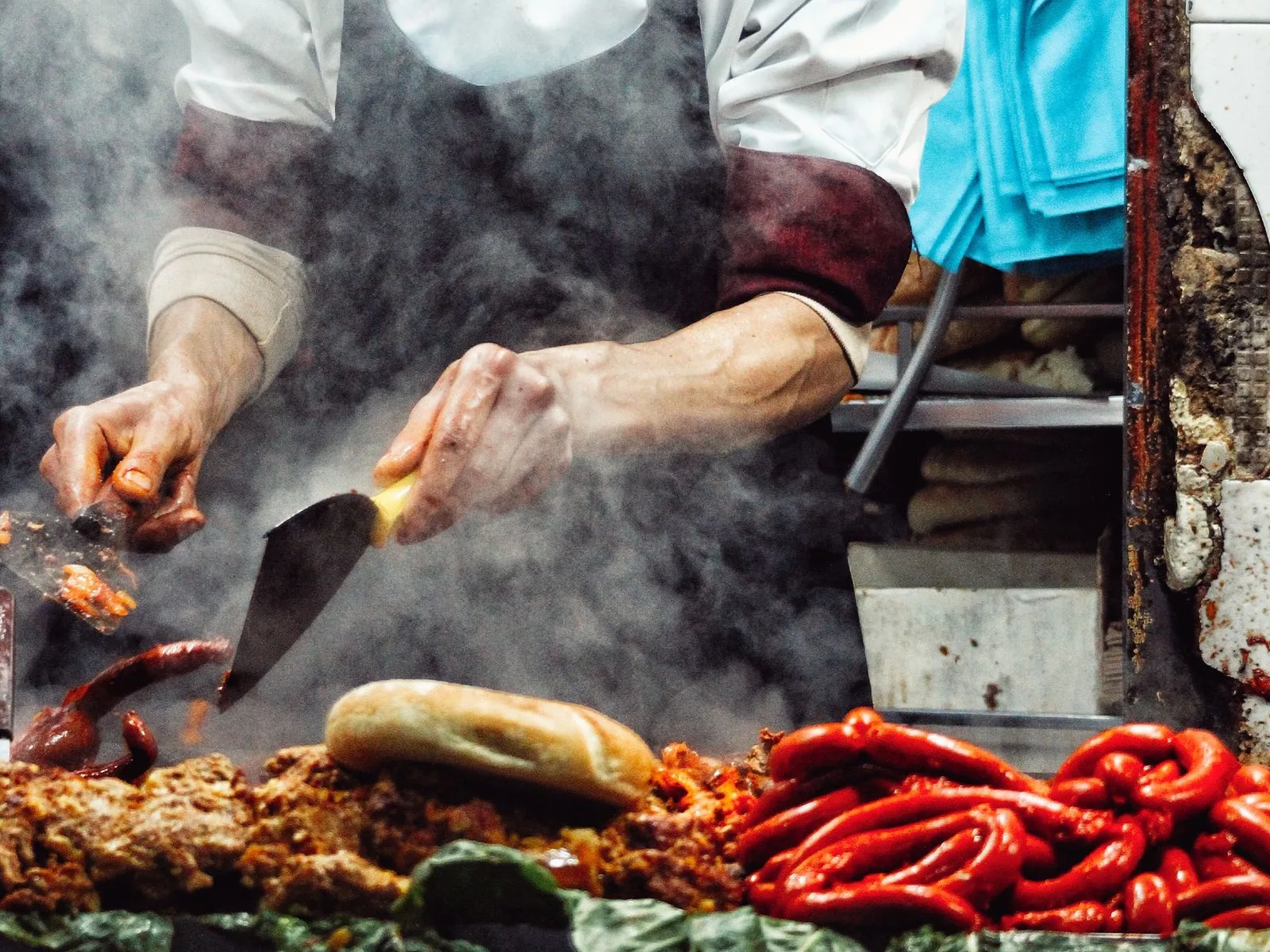
The usual precautions are dull: food cooked and served hot, like the griddle above, fruit you peel yourself, and clean hands before eating. CDC’s 2026 Yellow Book recommends them but is candid about their limits. Travellers can’t always follow them, restaurant hygiene is out of their hands, and studies suggest hygiene counselling “may not decrease risk of diarrhea”. So follow them, and still plan for the day they fail.
CDC’s 2026 Yellow Book says bismuth subsalicylate cut the incidence of travellers’ diarrhoea by about 50% in studies from Mexico. It isn’t on the market in Morocco: the one bismuth salicylate product on the national medicines list has been withdrawn (AMMPS, national medicines list, read 18 September 2026). If you rely on it, bring it.
If it happens anyway, rehydrate first. A box of three Diarit rehydration sachets has a public price of 11.50 dirhams on the national list. For mild cases CDC says antibiotics are “not recommended” and names bismuth or loperamide instead. It also says antimotility drugs such as loperamide, used alone, are “not recommended for patients with bloody diarrhea or those who have diarrhea and fever”. Loperamide sits in a regulated table in Morocco (more in the pharmacy section), so if you want it, bring your own.
CDC’s Yellow Book classes diarrhoea as severe when it’s “incapacitating”, and counts any diarrhoea with blood as severe. Moderate and severe cases are where antibiotics come in, and that’s a doctor’s decision, not a shelf purchase. Blood and fever, the two cases CDC rules loperamide out for, are the two I’d take straight to a clinic.
Do you need a rabies vaccine for Morocco?
Most short-stay visitors don’t, but every visitor needs to know what to do after a bite or scratch. Morocco recorded 451 human rabies cases between 2000 and 2022, about 20 a year. The peak was 31, in 2007 (Mahdi et al., Eastern Mediterranean Health Journal, August 2025). Once symptoms appear, WHO says rabies “is fatal in 100% of cases” (WHO, rabies fact sheet).
The more recent figure is higher, from a different source. In July 2025 Morocco’s Interior Minister told parliament that rabies caused 33 deaths in 2024. The minister added that more than 100,000 bites and scratches were recorded that year (Morocco World News, July 2025). I couldn’t find a health ministry release behind it, so read it as a ministerial statement.
Travellers aren’t exempt. In June 2025 the UK Health Security Agency reported that a UK traveller had died “following contact with a stray dog during a visit to Morocco” (UKHSA, June 2025).
Who should get the vaccine before travelling? UK advice recommends it for four groups: runners and cyclists, anyone staying more than a month, anyone far from medical care, and anyone who works near animals (TravelHealthPro, Morocco, page last updated January 2021). A pre-travel course matters because it removes the need for rabies immunoglobulin, which the same page says is “in short supply world-wide”. CDC’s 2026 Yellow Book says the same about global supply. I found no official figure on supply inside Morocco itself.
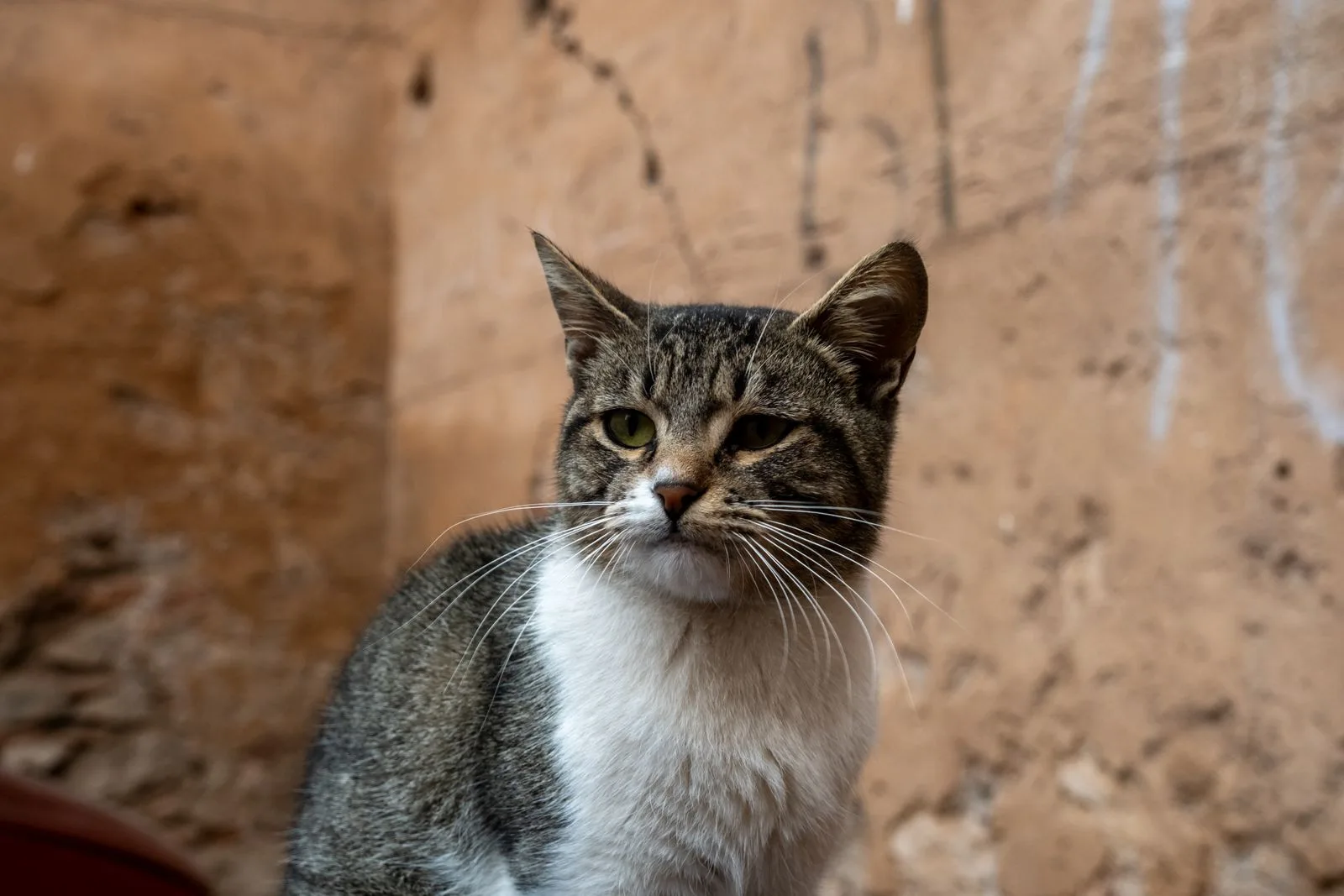
What to do after a bite, a scratch or a lick on broken skin from a dog, a cat or any mammal. WHO counts all three as exposures. That includes the medina’s street cats: a scratch from one counts.
- Wash the wound with soap and water for at least 15 minutes. WHO and Institut Pasteur du Maroc both give that instruction first (Institut Pasteur du Maroc, anti-rabies vaccination).
- Go the same day to the nearest anti-rabies centre (centre antirabique); ask at a pharmacy or hospital where it is. CDC says rabies vaccines are “typically available throughout most of the country”. In Casablanca, Institut Pasteur du Maroc runs a centre, open 8:30 to 15:30 on weekdays and 8:30 to 11:30 on Saturdays.
- Call your insurer.
Don’t wait to see whether the animal looks ill. That decision isn’t yours to make on the street.
What do Moroccan pharmacies sell, and what does it cost?
The basics are cheap, priced by the state and printed on the box. On 18 September 2026 I read them on Morocco’s national medicines list. All ten below cost under 60 dirhams, and four sit in regulated tables where the rule for a traveller is simple: ask the pharmacist. A night and Sunday rota is required by law.
| Product | Pack | Public price, dirhams | Regulated table |
|---|---|---|---|
| Diarit oral rehydration salts | 3 sachets | 11.50 | none |
| Doliprane 1 g (paracetamol) | 10 tablets | 13.10 | none |
| Spasfon 80 mg (cramps) | 30 tablets | 25.70 | none |
| Imodium 2 mg (loperamide) | 20 capsules | 28.50 | C: ask the pharmacist |
| Brufen 400 mg (ibuprofen) | 30 tablets | 33.00 | A: ask the pharmacist |
| Biafine (burns and sunburn) | 93 g tube | 41.10 | none |
| Gaviscon Advance (heartburn) | 150 ml | 45.20 | none |
| Aerius 5 mg (desloratadine) | 15 tablets | 48.40 | C: ask the pharmacist |
| Smecta 3 g (diarrhoea) | 30 sachets | 49.00 | none |
| Zyrtec 10 mg (cetirizine) | 15 tablets | 59.10 | C: ask the pharmacist |
Method: public prices come from the national list kept by Morocco’s medicines agency, AMMPS. It shows every one at 0% VAT, the tax Morocco removed from medicines in 2024 (AMMPS, national medicines list; Médias24, on the tax authority’s note). Only packs the agency lists as on sale are included. The regulated-table column comes from medicament.ma, a Moroccan medicine directory, because the agency’s list doesn’t carry it; Aerius’s table is read from its 7-tablet pack. All read 18 September 2026.
Why there’s nothing to haggle. The Minister of Health fixes or approves the public price of every medicine. Decree 2-13-852 then requires that price to be printed on the outer pack (decree 2-13-852, article 11). It’s one of the few places in a medina where the tourist price and the local price are the same by law. That’s why the haggling guide lists pharmacies among the fixed-price shops. A new pricing decree was adopted by the government on 22 July 2026 (Telquel); I’ll re-read these prices when it takes effect.
What the tables mean. Under a 1922 dahir on dangerous substances (ONSSA copy), Morocco lists some medicines in Tableau A (“toxic”) or Tableau C (“dangerous”). A Moroccan pharmacists’ publication says both need a prescription (DigiPharma Maghreb, 2015). Practice at the counter may differ, and I haven’t tested it. My advice: paracetamol is on no table, so it’s the simple buy. For loperamide, ibuprofen 400, cetirizine or desloratadine, bring your own or ask the pharmacist.
At night and on Sundays. Moroccan law requires pharmacists to take part in a duty service, with the rota set by the provincial governor (Law 17-04, article 111). The duty pharmacy is the pharmacie de garde, and its name is posted on the doors of the closed ones (Sahha.ma, pharmacie de garde guide, June 2026). So when the UK government says “Pharmacies are open 24 hours in every city and district”, that’s true of the rota, not of every door.
Bringing your own medicine. Bring enough; the FCDO notes that travellers have sometimes “struggled to source medication”. Narcotic and psychotropic medicines need more. The International Narcotics Control Board asks for, among other things, a valid prescription and a doctor’s certificate endorsed by your home country’s health authorities. You also need a certificate from Morocco’s health authorities (INCB, Morocco, August 2026). If you’re not sure whether yours counts, ask your prescriber, then contact Morocco’s medicines agency, AMMPS, before you travel. The small kit I pack alongside is in what to pack for Morocco.
Which vaccines do you need for Morocco?
None is required to enter. CDC recommends typhoid for most travellers and an up-to-date measles vaccine for everyone. For the unvaccinated, it adds hepatitis A from age one and hepatitis B under 60 (CDC, Morocco traveler page, reviewed August 2026). Rabies is for some travellers, as the section above explains.
Measles is on the list for a reason. Between October 2023 and April 2025, Morocco reported more than 25,000 suspected measles cases across all 12 regions. WHO counts 13,706 of them as laboratory-confirmed, and 184 deaths (WHO, Disease Outbreak News, May 2025). WHO reported ten straight weeks of decline after the peak in early 2025, and I found no newer update. Eased, then, but check that your MMR is current.
One entry rule is worth knowing: a polio vaccination certificate is required only if you arrive from a polio-affected country (FCDO, Morocco entry requirements).
Which of the recommended jabs you personally need depends on your history, your trip and your age. A travel clinic or your own doctor should have the last word. See them well before departure, since some courses take more than one dose.
What happens if you need a doctor or an ambulance in Morocco?
Private clinics in the big cities are the usual route, and the UK government is plain about why: “Public health facilities in Morocco provide limited medical care. Private clinics are available and operate to a higher standard” (FCDO, Morocco health advice, updated August 2026). It also tells travellers to carry insurance and accessible funds for treatment.
The emergency numbers. Four official sources, read on 18 September 2026, don’t agree on every number. The UK government gives 150 for an ambulance, where the French embassy and a Moroccan council give 15, and 190 for police, where Morocco’s own police give 19. SAMU, on 141, is a separate medical service:
| Service | Number | Who says so |
|---|---|---|
| Ambulance and fire | 150 | UK government (getting help) |
| Ambulance and fire (civil protection) | 15 | French embassy in Morocco (emergencies, updated April 2026); Morocco’s Economic, Social and Environmental Council |
| Medical emergency service (SAMU) | 141 | French embassy; the Council, which says the line has run since 2011 (CESE opinion on medical emergencies, 2023) |
| Police, in cities | 19 | Morocco’s national police, on its own site (DGSN). The UK page says 190 |
| Police, alternative | 112 | French embassy |
| Gendarmerie, outside cities | 177 | UK government and French embassy |
I haven’t tested any of these numbers from a foreign phone, so I won’t pretend to know which connects fastest. What I’d do: save 141, 15 and 150 before you land, and if one fails, try the next. For police, Morocco’s own force says 19, and that’s the number I’d trust over a foreign ministry’s page. For anything short of an emergency, ask your hotel or riad for the nearest private clinic.
Insurance. The UK government’s entry page sets no insurance requirement for British visitors (FCDO, Morocco entry requirements, read 18 September 2026). They can stay up to 90 days without a visa (who needs a visa for Morocco). E-visa holders may be asked on arrival for “Hospital and sanitary Repatriation” cover for the whole stay (Accès Maroc, eVisa conditions). If you need a consular visa, check its own conditions. Carry cover anyway: a private clinic bill is the kind of cost a Morocco trip budget rarely plans for.
Frequently Asked Questions
Can I brush my teeth with tap water in Morocco?
My reading: in the cities it’s a small exposure. City water is treated, and 91.3% of urban Moroccans had safely managed drinking water in 2024 (WHO/UNICEF). Brushing is far less than drinking a glass. If your stomach is sensitive, or you’re outside a city, where the figure falls to 58.4%, use bottled water for both.
Is there malaria in Morocco?
No. WHO certified Morocco malaria-free in 2010, and CDC’s Morocco page makes no malaria recommendation, so antimalarial tablets aren’t part of planning a trip here. Check with a travel clinic only if Morocco is one stop on a longer route through a country where malaria is present.
Are pharmacies open on Sundays in Morocco?
A duty pharmacy is. Law 17-04 requires pharmacists to join a night and weekend rota, the pharmacie de garde, set by each province’s governor. Closed pharmacies post the name of the duty pharmacy on their door, so the nearest shut one tells you where the open one is.
Can I buy antibiotics without a prescription in Morocco?
Antibiotics are a doctor’s decision, not a pharmacist’s. Under article 29 of Law 17-04, the advice a pharmacist gives on their own covers medicines whose sale isn’t legally tied to a prescription. CDC’s 2026 Yellow Book reserves antibiotics for moderate or severe travellers’ diarrhoea. The UK government points travellers to private clinics, which it says operate to a higher standard.
Do I need travel insurance to enter Morocco?
Not as a rule for visa-exempt visitors: the UK government’s entry rules, for one, set no insurance requirement for British visitors. E-visa holders may be asked for hospital and repatriation cover, and consular visas carry their own conditions. The UK government still advises carrying insurance and accessible funds, and says private clinics operate to a higher standard than public ones.
Where to start
Three things before you fly. Book a travel clinic appointment and ask about hepatitis A, typhoid and, if you’ll run, cycle or stay over a month, rabies. Pack rehydration salts, any loperamide you use within CDC’s limits, and a copy of every prescription. Save 141, 15, 150, 19 and 177 in your phone.
Then, once you’re there, most of health in Morocco comes down to three habits: eat food that’s hot, wash any bite for 15 minutes, and look for the green cross. For everything else about staying safe, from scams to the overall verdict, start with is Morocco safe.