
Last verified: September 15, 2026. The riad prices on this page were read on the date above, on one platform, on one evening, for one window in each of the next twelve months, and the sample sizes are printed beside them. The climate figures are NOAA normals. The arrivals and occupancy figures are the latest official releases at that date. I re-read all of it every 60 days and move the date each time.
In the same July week, the coast at Essaouira averages a daily high of 22°C, Marrakech 38°C and the edge of the Sahara 40°C. That is the first thing to say about the best time to visit Morocco: there is no such thing as Morocco’s weather. There are three Moroccos, and they disagree by almost 18 degrees.
Disclosure: Some links in this guide may earn us a commission, at no extra cost to you. It never changes what we recommend.
Most guides settle the question with “spring or autumn” and leave it there. That is true, and it does not help you choose between October and April, or tell you what either will cost, or whether the summer crowds you are told to avoid are even there. So I ranked all twelve months on three things I can measure: temperature and rain from NOAA normals at eight stations, who is actually in the country from the ministry’s own arrivals figures, and what a Marrakech riad costs, which I read for every month on one evening.
The short answer: October first, April second, for the country as a whole. November and March for the desert. June to September for the coast only. January and February if the price matters more than the temperature. August is the worst month inland, a fine one on the coast, and not the crowded one at the sights.
Key Takeaways
- October is the best month for Morocco as a whole and April is second, on temperature, rain days and what the medina is like. They are also the fullest of the months with published figures: Marrakech hotels ran 82% occupied in October 2025 and 79% in April 2026
- There is no single Moroccan climate. In July the coast at Essaouira averages a 22°C high, Marrakech 38°C and the pre-Sahara 40°C, from the same NOAA series. Pick the month for the region you will spend most time in
- August is the busiest month at the border and the emptiest at the sights. 3.0 million of the 4.6 million summer arrivals in 2025 were Moroccans living abroad, visiting family. Summer is hot, not crowded, in the medinas
- The month sets the direction, the booking horizon sets the price. I priced a medina riad for one window in every month: April runs 18% above August far out, but October, five weeks away, cost 63% more than the cheapest far-out window, and rose 6% in five days
- Ramadan 2027 runs from about 8 February to 9 March and Eid al-Adha lands about 17 May, both subject to moon sighting. Neither is a reason not to come. Both are dates to plan around
Table of Contents
When is the best time to visit Morocco?
October, then April, then November and March. In October Marrakech averages a daily high of 28.5°C with 2.4 days of rain, and its classified hotels ran 82% full in October 2025. April reads 25.7°C, 2.9 rain days and 79% occupancy in April 2026. Those four months are the ones where the interior is comfortable and the desert is open; in two of them the north is not yet at its wettest. The table is the ranking; the sections after it are the working.
| Rank | Month | Marrakech high / low | Rain days: Marrakech · Fes · Tangier | Riad median, read 15 Sep | Who is there, and why it ranks here |
|---|---|---|---|---|---|
| 1 | October | 28.5 / 15.7°C | 2.4 · 5.1 · 8.0 | MAD 1,088, five weeks out | Fullest published month. Warm cities, open desert, dry south. The near-in price shows it |
| 2 | April | 25.7 / 12.4°C | 2.9 · 6.3 · 9.3 | 786, seven months out | Full, 79% occupancy. Spring in the Atlas, the desert still cool, some sand risk |
| 3 | November | 23.1 / 10.7°C | 3.8 · 6.5 · 11.1 | 828, nine weeks out | Easing. The desert’s best month; the north is wet by now |
| 4 | March | 23.6 / 10.3°C | 4.7 · 6.9 · 10.1 | 683, six months out | Building, and Ramadan to the 9th in 2027. Cool and green; Marrakech’s wettest month by volume |
| 5 | May | 29.4 / 15.2°C | 1.5 · 4.7 · 6.1 | 727, eight months out | Full into mid-month. Best month for the mountains; Marrakech is warming fast |
| 6 | September | 32.5 / 18.6°C | 1.3 · 2.4 · 3.1 | 682, twelve months out | Recovering after the diaspora leaves. Warm sea, hot interior until the last week |
| 7 | February | 20.7 / 7.6°C | 3.7 · 6.5 · 11.4 | 674, five months out | 1.4 million arrivals in Feb 2025. Almond blossom, cheap beds, Ramadan from about the 8th in 2027 |
| 8 | December | 20.1 / 7.3°C | 4.1 · 6.5 · 12.0 | 737, thirteen weeks out | 73% occupancy, then the New Year spike. Fine city weather; the New Year week is the bed problem |
| 9 | January | 19.1 / 5.9°C | 3.0 · 6.7 · 11.2 | 714, four months out | Quiet; no released figure. Beds near the floor; Atlas snow; the desert drops to freezing at night |
| 10 | June | 33.6 / 17.9°C | 0.6 · 1.7 · 3.7 | 716, nine months out | Filling from the coast. Coast is perfect; interior already past 33 |
| 11 | July | 37.7 / 20.6°C | 0.3 · 0.4 · 0.8 | 668, ten months out | Diaspora month. Only the coast; the Sahara is 40°C |
| 12 | August | 37.4 / 21.1°C | 0.8 · 1.0 · 0.8 | 668, eleven months out | First month ever above 2 million arrivals. The national record was set in this month. Coast only |
A word on method. NOAA supplies the climate figures (its climate normals, 1991 to 2020 except where I say otherwise, station by station), and I name the station each time. For crowds I use the Ministry of Tourism’s arrivals and the Observatoire du Tourisme’s hotel occupancy, not a feeling. My own round supplies the riad column, advertised prices only, 20 properties a window, all read on one evening, and it turns out to measure something other than the month, which is the subject of its own section below.
This is the national ranking. The desert has its own calendar, which the desert guide covers in full and I only summarise, and the by-region table near the end says which month suits the coast, the mountains and the north. The trip-planning hub starts from this ranking.
Which Morocco are you visiting? Three climates, one country
In July the mean daily maximum is 21.9°C in Essaouira, 27.2°C in Rabat, 35.1°C in Fes, 37.7°C in Marrakech, 38.8°C in Ouarzazate and 39.5°C in Errachidia, all from NOAA’s 1991 to 2020 normals. The coast never reaches 30. The interior never stays under 35. Whether July is a good month depends entirely on which of those stations you will be standing near.
Winter inverts the map. The January mean daily minimum is 8.4°C in Agadir and 5.9°C in Marrakech, but 3.7°C in Fes, 2.0°C in Errachidia and 1.8°C in Ouarzazate. The desert camp brochures show the dunes at sunset and not the thermometer at 4 am, and a January night in a tent near Merzouga sits close to freezing. The desert guide says the same, with the camp detail I will not repeat here.
Rain is a northern thing and a winter thing. Tangier records 736 mm a year on 88 rain days, Fes 488 mm on 55, Marrakech 221 mm on 29 and Ouarzazate 115 mm on 18. From November to February Tangier has rain on 11 or 12 days a month; Marrakech has it on three or four. “Rainy season” in Morocco means the north, and it means winter. Tangier’s normals are the older 1961 to 1990 NOAA series, the only one published for that station, so treat them as a shape rather than a decimal.
| Station, NOAA normals | January min | July max | Rain a year | Rain days a year |
|---|---|---|---|---|
| Essaouira, coast | 11.1°C | 21.9°C | 300 mm | 31 |
| Agadir, coast | 8.4°C | 26.7°C | 232 mm | 21 |
| Rabat, coast | 7.2°C | 27.2°C | 522 mm | 52 |
| Tangier, north (1961 to 1990) | 8.8°C | 28.3°C | 736 mm | 88 |
| Fes, interior | 3.7°C | 35.1°C | 488 mm | 55 |
| Marrakech, interior | 5.9°C | 37.7°C | 221 mm | 29 |
| Ouarzazate, pre-Sahara | 1.8°C | 38.8°C | 115 mm | 18 |
| Errachidia, pre-Sahara | 2.0°C | 39.5°C | 133 mm | 21 |
What this does to your bag is a separate question. A March trip that touches Fes, Marrakech and the dunes needs three different evenings’ worth of layers, and what to wear in each of the three climates is already written, so I will not pack for you here: the full packing list does that.
When is Morocco actually crowded?
August 2026 was the first month in which Morocco recorded more than 2 million tourist arrivals, and it is not the month you will queue at the Bahia Palace. The Ministry of Tourism’s own release on the previous summer explains why: 4.6 million arrivals in July and August 2025, of which 3.0 million were Moroccans resident abroad, up 13% on the year (Ministry of Tourism, 10 September 2025). Two-thirds of the summer peak is the diaspora going home. The 2 million August figure and the 14.1 million for January to August 2026 are from the ministry via Morocco World News, 5 September 2026.
Where foreign visitors cluster shows up in the hotel figures, not the border figures. Marrakech’s classified hotels ran 79% full in April 2026 (Observatoire du Tourisme via Lesiteinfo), 82% in October 2025 (via Le Desk) and 73% in December 2025 (via L’ODJ), on the way to 13.66 million nights in 2025. October is the fullest month the published data shows. “Empty” is relative everywhere: February 2025 still brought 1.4 million arrivals, up 22% on the year (ATTA, citing the ministry), and the country closed 2025 on a record 19.8 million (Ministry of Tourism).
I have walked the Marrakech medina at 3 pm in August and at 3 pm in October. One is near-empty because it is 38°C and the other is full because it is 28°C. That is the whole crowds argument in a sentence. What is crowded in August is the ferry from Spain, the airports and the beaches from Tangier to Agadir, because that is where three million people going home are going.
There is one gap, and I state it rather than fill it. The Observatoire publishes a monthly arrivals bulletin, but the full twelve-month series sits behind a login, so I print only the months the ministry has released: February 2025 at 1.4 million, July and August 2025 at 4.6 million together, October 2024 at about 1.5 million (AllAfrica, citing the ministry), March 2026 at about 1.6 million (ATTA) and August 2026 above 2 million. I do not interpolate the rest.
What does each month cost? The month sets the direction, the horizon sets the price
On the evening of 15 September 2026 a medina riad in Marrakech for two read a median of MAD 1,088 a night for a window in October, 828 for November, 737 for December, and between 668 and 786 for every window from January to September 2027. That is the first page of Booking.com for the medina, riads only, two adults, three nights, 20 properties per window, the same instrument as the three-window riad round of 26 August, except that page one now renders 20 cards rather than 25. The price falls with distance from today until about four months out, then flattens.
The reason is mechanical. A year ahead, the riads on page one are the ones that have loaded a standing rate for the whole calendar. The seasonal rate, where a riad sets one, appears as the date approaches. So the chart below is not a tariff by month. It is what each month cost from one evening in September, and the horizon is printed under every bar because the horizon is most of the story.
The seasonal signal that survives the horizon is still worth reading. Inside the flat band, April at 786 sits 18% above July and August at 668, with May, June and March between them. Spring prices above summer even where riads are quoting a standing rate, which is the same direction the occupancy figures point. The near windows are where the real premium lives: October, five weeks out, read 63% above the far-out floor, and its median had risen 6% in the five days since I read the same window for the Marrakech against Fes comparison, while its bookable count fell 7%.
The earlier round measured the same shape for the New Year week: a median of 1,141 four months out, with 41% fewer riads bookable than for a January week at the same distance (the riad round, with the tax line it found). The rule is the one I found on trains: the month sets the direction, the day you book sets the price. For a peak month, the price you pay is the price on the day you book, and the reason to book early is the choice of rooms, not a tariff. On this instrument the low-to-peak premium from the August round was 70%; the price index carries the trip-level figure.
I do not name a cheapest month to fly. The public answers disagree, October on one fare site, August on another, January on most operator pages, because a fare depends on where you are flying from and on the day you look. A bed is priced the same for everyone, so that is the number I measure. Inventory a year out is a count of riads that have opened their calendar, not a demand signal, so I print only the near-in figure: 483 bookable for the October window against 912 for mid-December.
Which dates change the trip? Ramadan, the Eids and the festivals
Ramadan 2027 begins about 8 February and ends about 9 March, Eid al-Fitr falls on 10 and 11 March and Eid al-Adha on 17 and 18 May, every date subject to the official moon sighting (timeanddate.com, Morocco holidays 2027). Ramadan sits inside the spring booking peak. Travel is entirely possible then; the rhythm of the day changes, and so does what is open when.
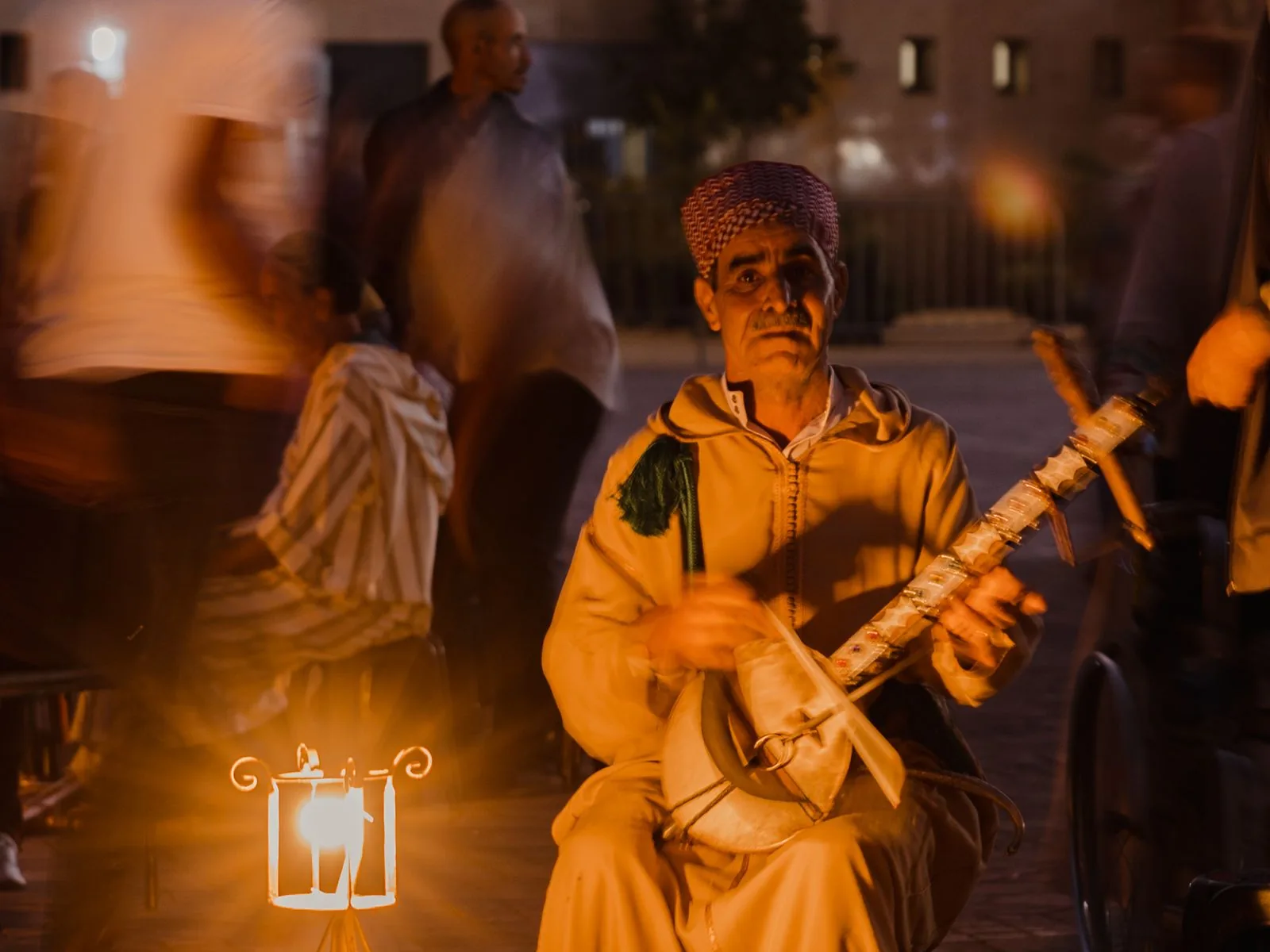
Eid al-Adha is the transport week. Trains and coaches fill with Moroccans going home for the three days, and an intercity leg left to the day is the one I would not risk that week. Either book it early or plan those days in one place. The ten-day route is built around fixed legs, and that is the week to check them against.
Dated events move beds in one town for one week, and three matter. Marathon des Sables runners take the dune-side hotels south of Errachidia from 2 to 12 April 2027 (marathondessables.com), inside the spring window the desert guide rates second, sand risk and all, so book that week early. Essaouira fills for the Gnaoua and World Music Festival from 24 to 26 June 2027 (festival-gnaoua.net). Kelaat M’Gouna holds its Rose Festival in the first half of May; the 2027 dates were not confirmed when I checked.
The other calendar to check is the European school one. The French autumn break and the spring breaks land in late October and April, the same weeks this ranking puts at the top. Check your own country’s dates before you fix a week.
Every month, honestly
Twelve short entries, in calendar order. The numbers are the same NOAA normals, the same ministry figures and the same riad round as above.
January
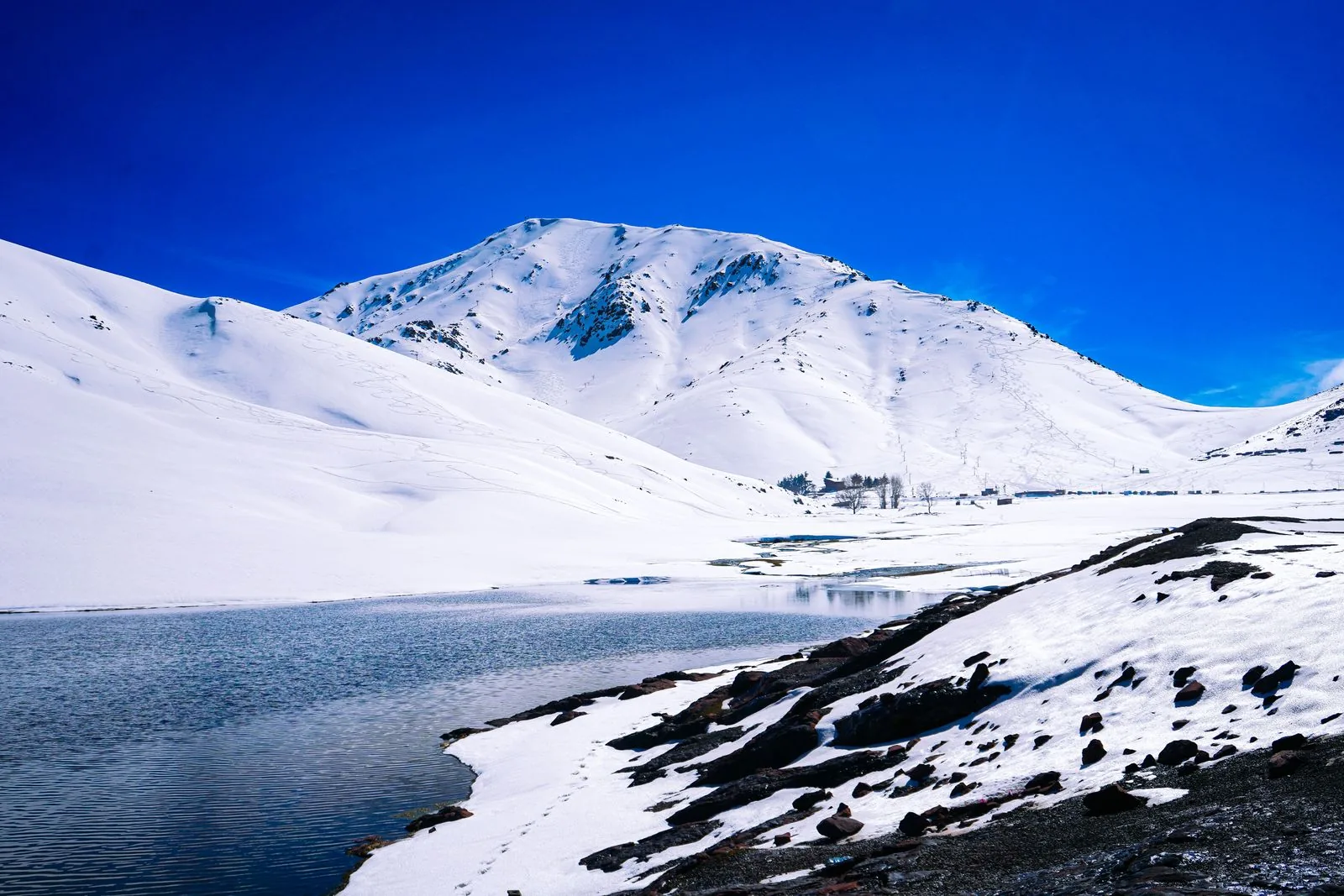
The coldest month inland: Fes bottoms at a 3.7°C mean minimum and Ouarzazate at 1.8°C, while Marrakech manages 19.1°C by day. Snow on the High Atlas, and Oukaimeden, the ski station above Marrakech, is in season from December to March. The riad round read 714 for a January window, and the medinas are the emptiest I have walked in any month. The desert at night is the one place I would not send a first-timer.
February
February brings almond blossom to the Anti-Atlas around Tafraoute, a 20.7°C daily high in Marrakech, and beds near the floor at 674. In 2027 Ramadan begins on or about the 8th, so the second half of the month runs to a fasting-day rhythm. February 2025 still brought 1.4 million arrivals, so quiet is relative.
March
Marrakech’s wettest month by volume, 35.2 mm on 4.7 days, and Tangier still has rain on ten. The chergui sand season opens in the desert; the desert guide covers when that matters. Ramadan ends on or about the 9th in 2027 and Eid falls on the 10th and 11th. Easter is 28 March 2027.
April
April is the second-best month: Marrakech 25.7°C by day, 2.9 rain days, 79% hotel occupancy in April 2026, and the Atlas foothills green. Marathon des Sables runners take the dune hotels from the 2nd to the 12th. Its far-out riad read, 786, was the highest of any month past January, which is the seasonal signal showing through a standing rate.
May
The mountain month: Fes 26.4°C, Marrakech 29.4°C and only 1.5 rain days, the High Atlas at its best for walking, roses at Kelaat M’Gouna in the first half. Eid al-Adha lands on or about the 17th in 2027 and fills every train and coach for three days.
June
The coast’s first perfect month, Essaouira at 21.4°C and Agadir 25.6°C, while Marrakech crosses 33 and the pre-Sahara passes 35. Gnaoua fills Essaouira from the 24th to the 26th in 2027. A June trip that stays within an hour of the Atlantic is a good trip; one built around Fes and the dunes is not.
July
July averages 37.7°C in Marrakech, 39.5°C in Errachidia and 21.9°C in Essaouira. The diaspora begins arriving, the ferries and airports fill, and the riad round read its floor, 668, for a July window. Coast only, and even there book the coast early, because that is where the country goes.
August
The hottest month by the record book: Morocco’s national maximum, 50.4°C at Agadir on 11 August 2023, was set in this month (General Directorate of Meteorology via Morocco World News). Marrakech’s normal high is 37.4°C. The medina is near-empty at 3 pm and the beaches are not. Coast only, and Essaouira’s 22.4°C is the exception to everything above.
September
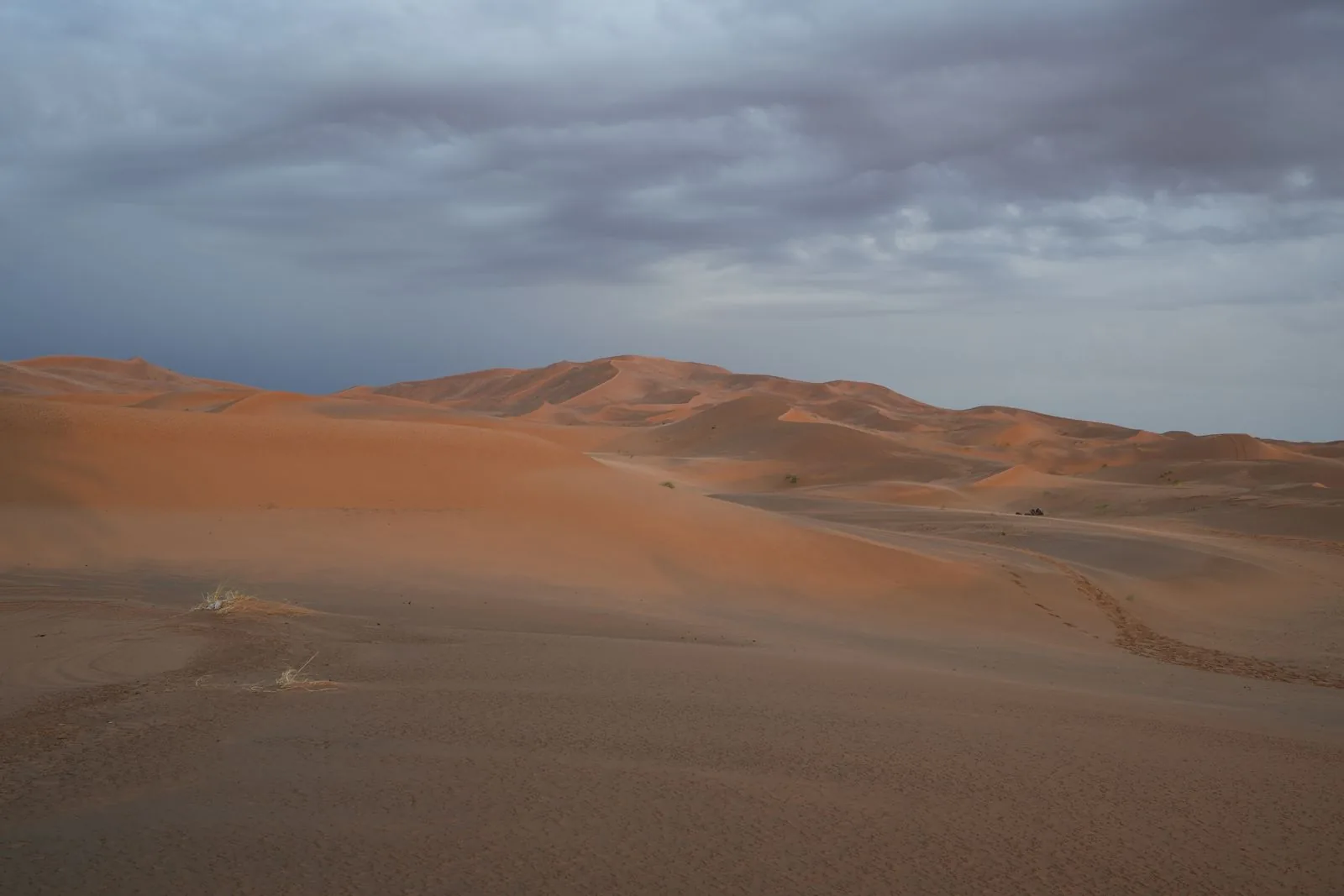
September still averages 32.5°C in Marrakech, with the sea at its warmest, and the interior turns in the last week. The diaspora has gone home and the shoulder begins. The 26 August round read 973 for a late-September 2026 window four weeks out; this round read 682 for a mid-September 2027 window twelve months out, which is the horizon effect in one pair of numbers.
October
The best month. Marrakech 28.5°C by day, 15.7°C at night, 2.4 rain days; Fes 26.1°C; the desert open and at its best; 82% hotel occupancy in Marrakech in October 2025, the highest month in the data. Rain returns to the north, with Tangier on eight days and 65 mm. The riad median read 1,088 five weeks out and was rising. Book October the day you decide on it.
November
The desert’s best month and the country’s third: Marrakech 23.1°C, Errachidia 20.6°C by day and cool nights that are still above freezing. Tangier’s wettest month, 135 mm on 11 days, so the north is done. Riads read 828 nine weeks out. The Sahara road from Marrakech is the reason to come in November, and the desert guide has the timing.
December
December gives fine city weather, Marrakech at 20.1°C by day, and Oukaimeden opens with the first snow. Hotel occupancy was 73% for the month in 2025, then the New Year week breaks the bed market, as the August round showed. A mid-December window read 737 with 912 riads open, the most of any window I read. Come early in the month or book the last week first.
What is the worst time to visit Morocco?
August, inland, and it is not close: a 37.4°C normal high in Marrakech, 38.2°C in Errachidia, and the national record of 50.4°C set at Agadir on 11 August 2023. The medinas hold their heat until after 7 pm, so an August day in Fes or Marrakech is planned around the hours before 11 and after 5, or not planned at all. The same month averages 22.4°C in Essaouira and 27.0°C in Agadir, and the coast is where the country goes, so August on the Atlantic is a different trip from August in the interior.
The second-worst time is the New Year week for anyone who has not booked. That is a bed problem rather than a weather one: the December air is fine and two riads in five are already gone.
Which month for the desert, the coast, the Atlas and the cities?
The desert in October, November or the turn of February into March; the coast from June to September; the High Atlas in May and October; the cities from October to April; the north from May to October. The table is the decision, and each row says where the detail is.
| Region | Best months | Avoid | The number that decides it | Where the detail lives |
|---|---|---|---|---|
| Marrakech and Fes | October, November, March, April | July, August | Marrakech 37.7°C in July against 28.5°C in October | Marrakech against Fes, month by month for the two-city choice |
| The Sahara, Merzouga and Zagora | October, November, late February to early March | June to September; sand risk in March and April | Errachidia 39.5°C in July, 2.0°C minimum in January | The desert guide; Zagora runs a degree or two hotter |
| The Atlantic coast, Essaouira and Agadir | June to September, and any month for temperature | None for temperature; wind in Essaouira is the variable | Essaouira’s high never leaves 18.4 to 22.6°C | Wind, not heat, is the question; check the week’s forecast |
| The High Atlas | May, June, September, October | December to March for anything above the snowline | Oukaimeden in season December to March; Toubkal snow roughly November to April, as general guidance | Snowline and trail conditions change year to year; ask the refuge before you commit |
| The north, Tangier and Chefchaouen | May to October | November to February | Tangier: 11 to 12 rain days a month in winter | Pack for rain from November to February |
Two things hold across every row. If the trip is a loop through cities and desert, October and November, and the turn of February into March, are the only weeks where every leg is in season at once. And if the trip is the coast, ignore this ranking, because Essaouira’s year is flat and the only month that matters is the one you can get off work.
How many days that loop needs is a separate question; the ten-day version of it is already built.
Frequently Asked Questions
What is the best month to visit Morocco?
October. Marrakech averages a 28.5°C daily high and 2.4 days of rain, the desert is open and the north is not yet wet. It is also the fullest of the published months: Marrakech’s classified hotels ran 82% occupied in October 2025. April is second, at 25.7°C and 79% occupancy in April 2026.
What is the worst time to visit Morocco?
August, inland. Marrakech’s normal daily high is 37.4°C, the pre-Sahara’s 38.2°C, and the national record of 50.4°C was set at Agadir on 11 August 2023. The coast is the exception: Essaouira averages 22.4°C in August, which is why that is where the country goes.
Is December a good time to visit Morocco?
For the weather, yes. Marrakech averages 20.1°C by day, the medinas are pleasant at midday and the Atlas has snow. The problem is the New Year week: a Marrakech medina riad read a median of MAD 1,141 a night four months out, with 41% fewer riads bookable than for a January week.
When is the rainy season in Morocco?
November to March, and mainly in the north. Tangier records rain on 11 or 12 days a month from November to February; Fes on six or seven; Marrakech on three or four. Ouarzazate sees 18 rain days in a whole year and Errachidia 21, on the NOAA 1991 to 2020 normals.
Can you visit Morocco during Ramadan?
Yes. Ramadan 2027 runs from about 8 February to 9 March, subject to moon sighting, and it falls inside the spring booking peak. The rhythm of the day moves around the fast and the evenings fill after sunset. The dates are the thing to plan around.
The short version
The best time to visit Morocco is October, then April, for a trip that touches cities and desert. November and March are the desert’s months, June to September belong to the coast, and January and February are for anyone who wants the medinas as I have found them in winter, near-empty, and beds near the floor of the round.
Three numbers to carry away. Almost eighteen degrees separate the coast from the desert in the same July week. Two-thirds of the summer peak is Moroccans going home, so summer is hot rather than crowded at the sights. And a riad in a peak month costs what it costs on the day you book, so the month you choose sets the direction and the day you book sets the price.
What I did not measure: advertised prices only, Marrakech only, 20 properties a window, one evening, and a national arrivals series that is only public month by month for the months the ministry has announced. The rest of the plan starts from the same evidence, and the trip planning archive holds every post in this series.