Last verified: September 3, 2026. The benchmark prices on this page were read from Moroccan retailers with labelled prices on the date above, and the reported souk figures are dated to the guide that published them. I re-read the shelf and move the date each time.
A pair of leather babouches, the guides say, should cost you 70 to 100 dirhams once you have haggled well. On 3 September 2026 the cheapest pair of real-leather men’s babouches I could find at a Moroccan retailer with a price on the label was 145 dirhams, and the middle of the range was about 219. The bargain the guides describe sits below the floor for the genuine article.
Disclosure: Some links in this guide may earn us a commission, at no extra cost to you. It never changes what we recommend.
That gap is the whole problem with what you’ll read about haggling in Morocco. Every page teaches a percentage: offer a third, settle at half. Not one of them says a third of what. A percentage of an invented number is still an invented number, and the seller knows it.
So I did the other half of the work. I priced eight things people actually buy at shops that print a price, read the consumer law that says every shop should, and mapped where negotiating applies and where it marks you out. The map comes first, the prices second, the technique third. Every competing page runs that order backwards and never reaches the number.
Key Takeaways
- Haggling in Morocco applies to unlabelled goods and chartered transport, and nowhere else. Souk crafts, a chartered grand taxi, a walk-in room, a guide’s day rate: yes. Anything with a printed price: no
- The fixed-price shelf is the floor for the genuine article, not the ceiling. Real-leather babouches cost 145 to 379 dirhams at Moroccan retailers on 3 September 2026. A 70-dirham souk pair is a different product
- Three souvenirs cannot be haggled into honesty. Pure culinary argan runs about 900 dirhams a litre at the supermarket, Taliouine saffron from 45 a gram at the cooperative. Below those numbers, walk
- By law the price should already be on a label. Loi 31-08 requires it, and the national consumer federation estimates about 90% of shops ignore it
- The technique is one line. Let the seller name the first number, counter at a third to 40%, expect to close between half and 70%, and never buy on the first visit
Table of Contents
Where does haggling in Morocco actually apply?
To goods without a label and to transport you charter, and to nothing else. Article 3 of Loi 31-08, the consumer-protection law, requires every supplier to show the price by marking, labelling or display, taxes included (WIPO Lex, in force since 2011). A shop that doesn’t display one faces a fine of 2,000 to 5,000 dirhams (SNRT News, 2021). So a printed price isn’t an opening position. It’s the shop obeying the law.
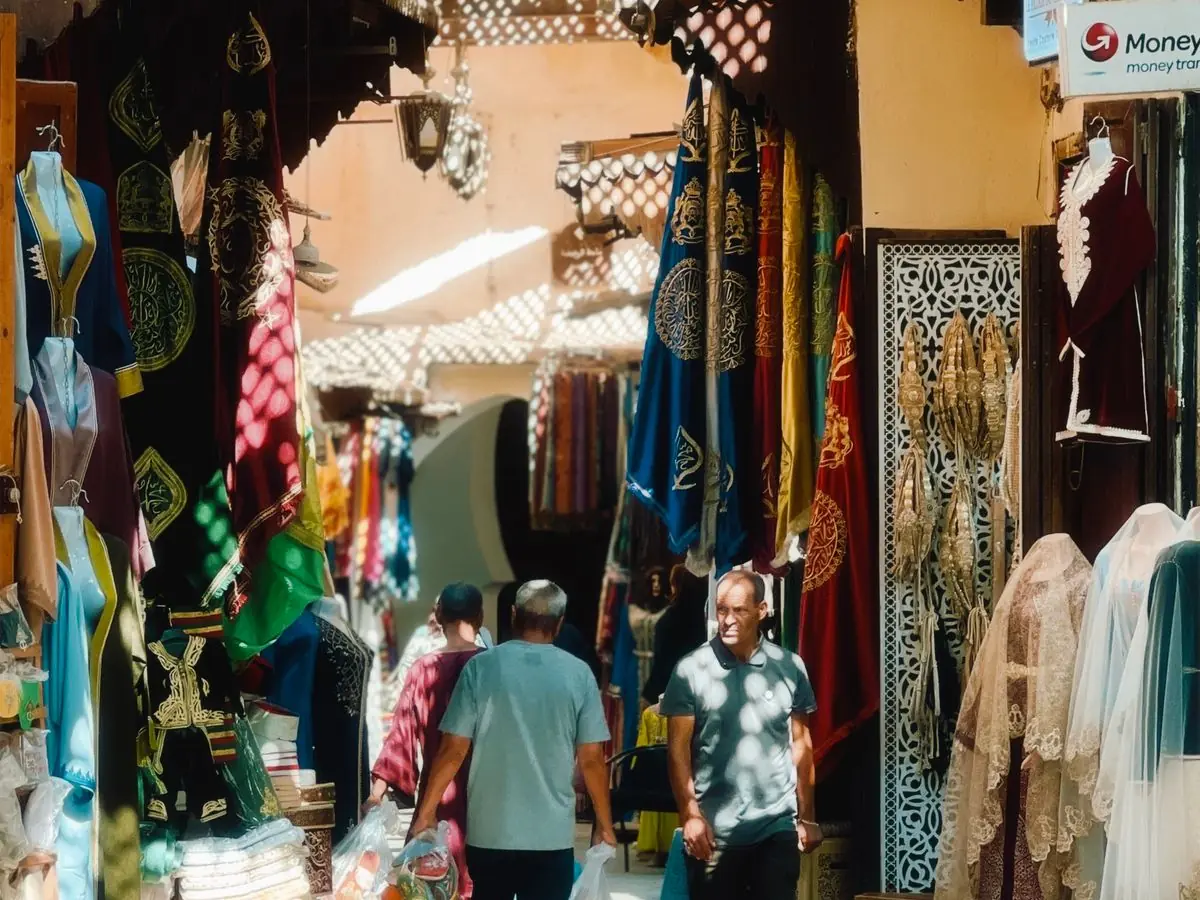
That gives you a rule you can apply in two seconds, anywhere in the country. If you have to ask the price, you can negotiate it. If you can read it, you can’t, and trying marks you out faster than any clothing choice. The trip-planning hub says this in a paragraph. Here is the full map.
| Situation | Negotiable? | The detail lives in |
|---|---|---|
| Souk crafts: rugs, leather, lamps, ceramics, spices | Yes, always | This page |
| Ensemble d’artisanat, any shop with printed prices | No | Section 6 below |
| Restaurants, cafés, street food | No | Food prices, coming 8 September |
| Supermarkets, pharmacies, parapharmacies | No | This page, section 5 |
| Petit taxi inside a city | No, it’s the meter | Taxi rules in Morocco |
| Grand taxi, one seat on a fixed route | No, a set local rate | Taxi rules |
| Grand taxi chartered for the day, or a private driver | Yes | Taxi rules |
| Riad or hotel booked on a platform | No | Marrakech riad prices |
| Riad or hotel, walking in with a bag | Yes | Riad prices |
| Licensed guide’s day rate | Yes, and rarely in writing | The Price Index |
| Exchange counter rate | Yes, by regulation | Money in Morocco |
| Henna, hammam, a “free” terrace | It’s a demand, not a price: agree before, or walk | 15 Morocco scams |
| Tips | Not a negotiation | Tipping, coming 16 September |
Notice how short the “yes” column is. Almost everything a visitor pays for in a week is fixed. The souk is the exception, and it’s an exception with a reason, which is the next section.
Why does Morocco haggle at all, and is it rude not to?
Because most shops never print a price, and no, it isn’t rude to pay the first number. It’s only expensive. When the Ministry of Economy’s local control commissions reported their inspections on 6 May 2021, 733 of the 1,410 infractions they recorded were for failing to display a price. The president of the national federation of consumer associations told SNRT that “almost 90%” of merchants nationwide don’t display one, and that the usual motive is to “set the prices they want” (SNRT News, 7 May 2021).
Those figures are five years old, and I couldn’t find a newer national round. But nothing about the medina has changed in the direction of labels since. Haggling in Morocco lives in the gap between a law that requires a price tag and a retail culture that has not printed one.
The cultural half is real too, and I’ve come to enjoy it. The tea is poured before the first number is spoken. The seller’s story about his cousin’s workshop in the Atlas may even be true. Feigned heartbreak at your counter-offer is part of the performance, and so is your walking away. Nobody I’ve bought from has ever been offended by a low number delivered with a smile. Plenty have been offended by a rude one.
Is the person across the counter a hustler? Usually not. Crafts are Morocco’s second-largest employer, with about 2.4 million artisans, 17% of them in the high-cultural-content trades the souk sells (Ministry of Tourism, Handicrafts and Social Economy). In 2025 handicraft exports reached 1.23 billion dirhams, up 11%, with pottery and stone at 36% of the total and rugs at 18% (Hespress, January 2026). Tourist spending on craft brings in about 10% of the country’s foreign currency (The North Africa Post, March 2026). You’re the retail end of a sector the size of a ministry, and the margin the seller defends is real.
What is the real starting price for the things people actually buy?
The fixed-price shelf, and it’s the floor for the genuine article, not the ceiling. On 3 September 2026 I logged every priced listing on the first results page of Jumia Maroc, the country’s largest online retailer, for four souk staples: 52 listings in all. Then I combined them with the argan, saffron and henna shelf prices I collected on 12 August. Then I set each against what the current guides call a fair souk price. The two columns are different kinds of number, and the table says which is which.
| Item | Labelled price in Morocco, MAD | n | What guides call “fair” in the souk, MAD | Shelf source, read date |
|---|---|---|---|---|
| Babouches, men’s, real leather | 145 to 379, middle about 219 | 14 | 70 to 100 after haggling; 80 to 200 everyday | Jumia, 3 Sep |
| Tagine, terre cuite, cooking size | 119 to 289; decorative from 80 | 11 | 20 to 50; 80 to 250 decorative | Jumia, 3 Sep |
| Lantern, metal | 59 to 85 pressed metal; 254 to 479 brass or copper | 14 | from 30 small; 100 to 600 mid-size | Jumia, 3 Sep |
| Pouf, real leather, unstuffed | 329 to 499 single; 1,300 designer | 13 | 400 to 800 | Jumia, 3 Sep |
| Beni Ourain rug, 1.75 x 0.92 m | about 2,560 ($275), 64% to the makers | 1 | 2,000 to 5,000 and up for large pieces | Anou, 3 Sep |
| Argan, culinary, organic, 25 cl | 277.50, about 900 to 1,110 a litre | 3 | “around 150 for a medium bottle” | Carrefour, 12 Aug |
| Saffron, Taliouine, per gram | from 45 retail; about 27 wholesale | 2 | 10 | Yacout, EspaceAgro, 12 Aug |
| Henna, certified studio | from 50; small designs 50 to 200 | 1 | 200 to 500 demanded in the square | Henna Art Cafe, 12 Aug |
The souk column comes from guides published in 2025 and 2026, chiefly the Marrakech souk guide at continenthop, updated June 2026. Those are reported figures. Nobody, including me, has measured what travellers actually pay after negotiating, and the table doesn’t pretend to.
Read the rows and a pattern appears that no guide mentions. For babouches, argan and saffron, the “fair” souk price is below what the genuine article costs with a label on it. A 70-dirham pair of babouches isn’t a win on real leather. It’s a different product, and the price told you so. A 150-dirham bottle of argan can’t be pure at 900 a litre. Ten-dirham saffron is safflower.
For lanterns and tagines the shelf and the souk overlap, so haggling is a real contest over a real margin, and the technique in the next section earns its keep. For poufs and rugs the souk sits at or above the shelf. There the cooperative price is your honest anchor, and anything above it is paying the shop’s rent, not the weaver.
How do you actually haggle in a Moroccan souk?
Let the shopkeeper name the first number, counter at a third to 40% of it, and expect to close somewhere between half and 70%. That’s the consensus of every guide I read, from Matador Network in 2019 to the tour-platform explainers of 2026, and it matches my own buying. It’s a fine rule once you know the floor from the table above. It’s a coin toss without it.
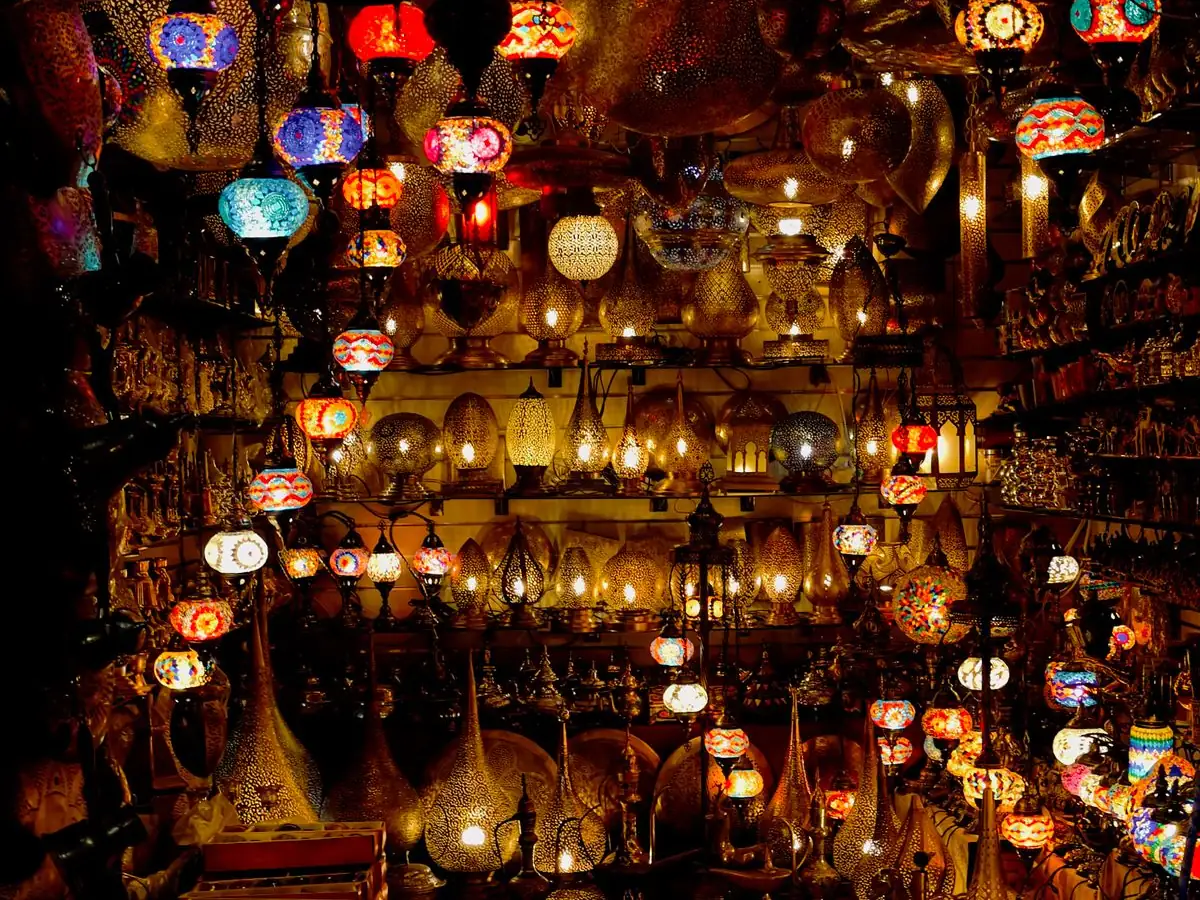
Here’s the sequence I actually use.
- Walk the whole souk once without buying. Prices fall the deeper you go, and the first shop on the main drag is the most expensive version of everything.
- Greet first, in any language. Salam costs nothing and changes the whole exchange.
- Ask. Never offer. A shopkeeper who gets you to name a number first has already won.
- Counter low, calmly. A third to 40% of the ask, said with a smile and no apology. Laughter is normal. Theatre is normal.
- Say yes to the tea and no to the pressure. Sitting down is fine. Sitting down doesn’t mean buying.
- Bundle. Two pairs of babouches, or a lamp and a tray, moves the price further than any argument about one item.
- Walk, and mean it. If the number matters, he’ll call you back. If he doesn’t, it was a fair number and you can return tomorrow.
- Pay in cash, close to exact. A 200-dirham note for a 60-dirham sale invites a change problem.
- Say thank you either way. You’ll be back past that shop, and so will the next traveller.
Four Darija phrases do more work than any tactic. The transliterations follow Daily Darija, which uses numerals for the sounds English lacks.
| Darija | Meaning |
|---|---|
| Sh7al hada? | How much is this? |
| Bezaf! | Too much. |
| N9as shwiya, 3afak. | Lower it a little, please. |
| Safi, khodha. | Fine, I’ll take it. |
When is a price a scam rather than an opening position?
When it sits below the labelled floor for the genuine article, or when the “final” price after the staged collapse still sits above the cooperative anchor. Pure culinary argan costs about 900 dirhams a litre at a Casablanca hypermarket (Carrefour via Bringo, read 12 August 2026), so a 100-dirham “pure” bottle has told you what it is. Both tests are decisions you make before the first number, which is the useful part. The scripts themselves, and how each one ends, are in the 15 scams with their real prices. Here I only need the decision rule.
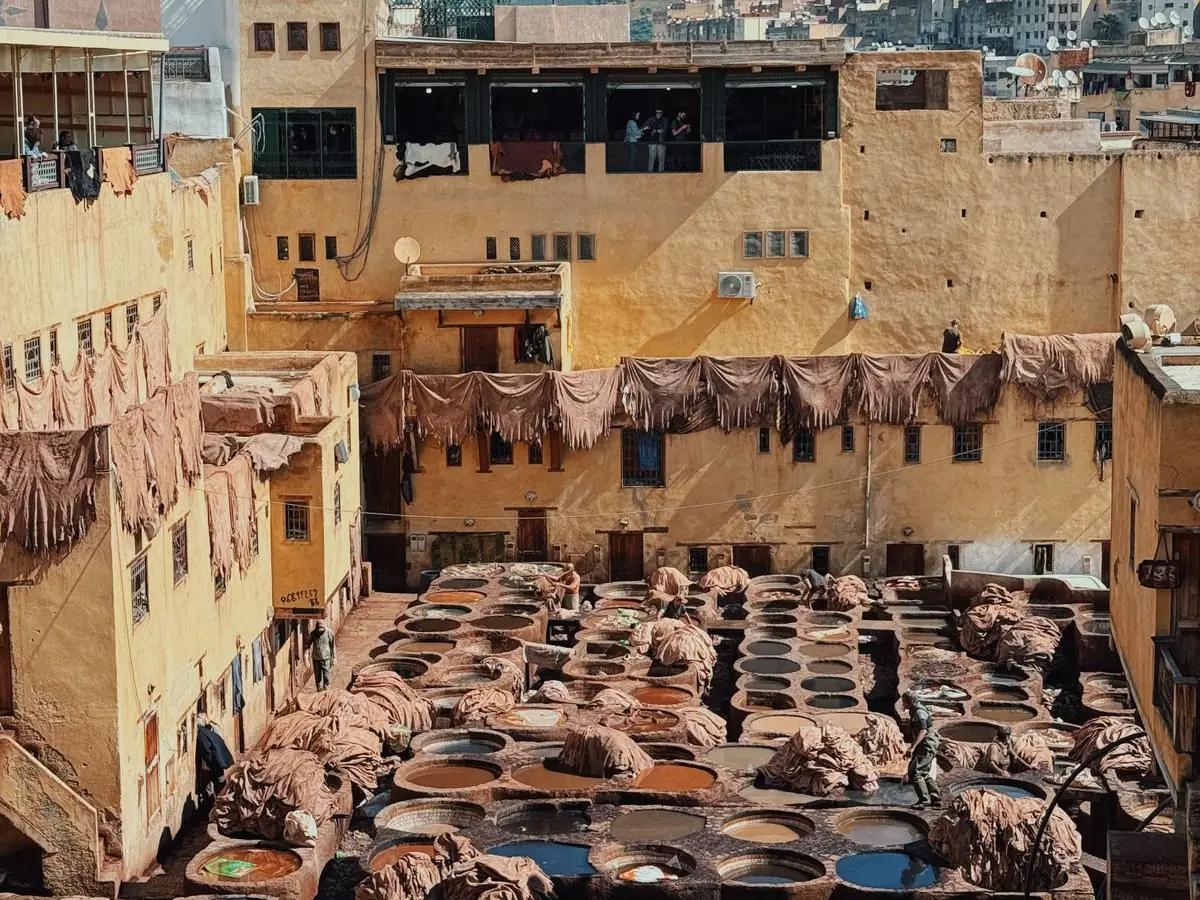
Argan is the cleanest case. The organic culinary bottle on that hypermarket shelf is 277.50 dirhams for 25 cl, and the three listings I logged run 900 to 1,110 a litre. A “100% pure” souk bottle at 100 dirhams isn’t a bargain; it’s arithmetically impossible. The most recent published screen I know of found 4 of 28 products labelled 100% argan were adulterated (Quadram Institute, 2020), and that was retail, not a roadside stall. Don’t haggle on it. Buy where the price is printed.
Saffron is the same rule. Taliouine cooperatives sell from 45 dirhams a gram (Cooperative Yacout, read 12 August 2026). Ten-dirham “saffron” is safflower, and no counter-offer changes what’s in the bag.
The rug is the other direction. The shop has been closing today for years. The ladder runs from an enormous first number through a staged collapse to a “final” figure that is still multiples of what a cooperative sets for the same size. The anchor is section 6. If the final number lands above it, you’re paying for the shop, not the rug. Never buy on the first visit.
And the “free” tannery terrace in Fes. The view really is free. The exit is through a leather showroom where the pressure starts, and the man who led you there expects paying for his time. Agree the terms at the door. If you want leather, come back without the escort.
Where can you shop in Morocco without haggling?
At the state-run Ensemble d’artisanat in each big city, at supermarkets and parapharmacies for argan, at cooperatives for saffron and rugs, and in any shop that has printed a price. Maison de l’Artisan, the public body that promotes Moroccan crafts, lists the Ensemble d’artisanat de Marrakech on Avenue Mohammed V and the Ensemble d’Artisanat d’Essaouira at Bab Marrakech, with phone numbers (Maison de l’Artisan). Fes has its own Artisanal Centre. Rabat, where I live, has one too.
Every guide mentions these places as a refuge for people who hate haggling. That’s the wrong use of them. They’re the research step. Walk the Ensemble first, read three labels for the things you want, photograph them, then go into the souk knowing the floor. Opening hours circulate online but the directory doesn’t publish them, so phone ahead or check on the day.
For rugs the anchor is a cooperative that sets its own price. On 3 September 2026 the fair-trade platform Anou listed a 1.75 by 0.92 metre Beni Ourain from Cooperative Ikhf N’Ighir in the Ait Bouguemez valley at $275, about 2,560 dirhams, stating that 64% goes to the makers (Anou). That’s roughly the size of a bedside rug. Scale it up before comparing it with a souk piece.
The history behind that number is worth one paragraph, dated. In 2014 Anou worked through the economics of a 10 by 8 foot Beni Ourain: the weavers set $380, recorded 280 hours of work, and were earning $0.93 an hour (Anou, May 2014). The cooperative raised its wage after publishing that. Twelve years on, the figures are history rather than a price list, but they tell you what the margin in a bazaar is made of.
What about taxis, rooms, guides and the exchange counter?
Each is negotiable in exactly one form and fixed in the others, and each has its own page. I’ll quote no fare, rate or room price here, because the numbers move and the posts that own them carry the dates.
A petit taxi inside a city runs on the meter, and the airport run has its own rule. A seat in a grand taxi on a fixed route is a set local rate. Chartering the whole grand taxi for a day trip is the one taxi you negotiate. All three are in taxi rules in Morocco.
A riad booked on a platform is a fixed price, and the platform’s own discount theatre is not a negotiation. Walking in with a bag on a quiet night is a different matter. The numbers are in Marrakech riad prices.
A licensed guide’s day rate is quoted per group, per season and per negotiation, almost never in writing. That opacity is itself a finding, and it’s in the Price Index.
And the exchange counter. The rate on the board is negotiable by regulation, and the office must display its licence and its daily rates where you can see them. That’s the one place where haggling in Morocco has a rulebook, and it’s in money in Morocco.
Common questions
Is haggling expected in Morocco?
In the souk, yes, and anywhere with a printed price, no. Loi 31-08 requires shops to display prices, but the national consumer federation estimated in 2021 that almost 90% don’t, which is why the souk negotiates. A displayed price is fixed, and trying to move it marks you out instantly.
How much should you offer when haggling in Morocco?
Counter at a third to 40% of the first ask and expect to close between half and 70%. Check the labelled price first: real-leather babouches cost 145 to 379 dirhams at Moroccan retailers on 3 September 2026, so a 70-dirham “fair” pair is a different product.
Is it rude not to haggle in Morocco?
No. It’s only expensive. Paying the first number is accepted with a smile, and sellers rarely mind a low counter delivered politely. What causes offence is rudeness, not a number. If you’d rather not play at all, the Ensemble d’artisanat in each city sells at fixed prices.
Do you haggle in restaurants and taxis in Morocco?
Restaurants never: menus with prices are fixed, and the law requires them. Petit taxis run the meter and a grand-taxi seat is a set rate. Only a grand taxi chartered for a day or a private driver is negotiated. The taxi post has every fare and the airport rule.
Where can you shop in Morocco without haggling?
At the state-run Ensemble d’artisanat in Marrakech (Avenue Mohammed V), Essaouira (Bab Marrakech) and Fes, listed by Maison de l’Artisan; at supermarkets and parapharmacies for argan, which runs about 900 dirhams a litre; and at cooperatives for saffron and rugs, where the price is set by the makers.
The short version
Haggling in Morocco is a small country inside a large one. Almost everything you pay for is fixed, and the souk is the exception with a reason.
- Read the label first. Where there is one, that’s the price, and the law agrees
- Price the shelf before the souk. The Ensemble d’artisanat, the supermarket and the cooperative give you the floor for the genuine article
- Below the floor, walk. Cheap argan, cheap saffron and cheap “leather” are cheap because they aren’t what the sign says
- Let them name the number. Counter at a third to 40%, close between half and 70%, never on the first visit
- The rug anchor is the cooperative price. Above it you’re buying the shop
Everything else I’ve measured, priced and dated sits in Real Costs.